
Often called “God’s Own Country,” Keralam is renowned not only for its lush landscapes but also for its deep spiritual traditions that have evolved over centuries. Across the state, ancient Mandirs dedicated to different deities stand as living symbols of devotion, history and culture, shaping the religious and social life of communities.
Thiruvananthapuram District
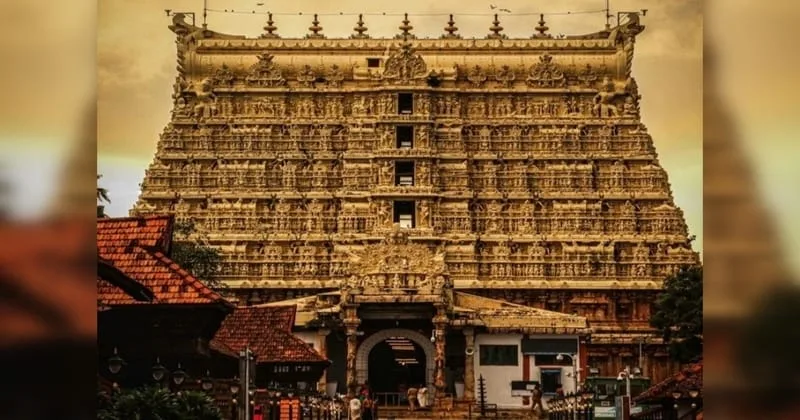
Sree Padmanabhaswamy Mandir
One of the most famous Mandirs in India, the Sree Padmanabhaswamy Mandir, is dedicated to Bhagwan Vishnu in the Anantha Shayana posture, reclining on the serpent Adishesha. The Mandir is renowned for its magnificent Dravidian–Keralam style architecture and the mysterious underground vaults believed to contain immense treasures. Historically, it is closely linked with the Travancore royal family, who ruled the kingdom as servants of the deity. The Mandir also holds spiritual importance through its association with Goddess Bhadrakali, worshipped in nearby shrines as the protector of the region.
Attukal Bhagavathy Mandir
The Attukal Bhagavathy Mandir is dedicated to Maa Bhadrakali, an incarnation of Maa Parvati. The Mandir is world-famous for the Attukal Pongala festival, during which millions of women gather to prepare sacred offerings for the goddess. This extraordinary gathering has even earned a place in the Guinness World Records as the largest congregation of women for a religious ritual.
Kollam District
Oachira Parabrahma Mandir
The Oachira Parabrahma Mandir is one of the most unusual Mandirs in India because it has no sanctum sanctorum, no murti and no enclosing walls. Instead, the shrine represents the concept of Parabrahma, the universal divine presence beyond form. Devotees worship the divine in the open ground, reflecting a philosophical approach to spirituality that emphasises the formless nature of the supreme reality.
Pathanamthitta District
Sabarimala Ayyappa Mandir
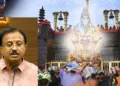
Nestled deep within the Western Ghats, the Sabarimala Mandir is one of the largest pilgrimage centres in the world and is dedicated to Bhagwan Ayyappa. Devotees undertake a strict 41-day vow of discipline and purity before embarking on the pilgrimage to the shrine. The sacred climb of the eighteen holy steps known as Pathinettampadi and the sighting of the Makara Jyothi during the annual festival draw millions of devotees from across India every year.
Alappuzha District
Mannarasala Nagaraja Mandir
The Mannarasala Nagaraja Mandir is the largest serpent Mandir in Keralam and is dedicated to Nagaraja, the Serpent King. Set within a sacred grove filled with more than one hundred thousand serpent murtis, the Mandir is deeply connected to ancient serpent worship traditions. A unique feature of the shrine is that it is traditionally led by a female priest known as the Valiya Amma. Many devotees, especially couples seeking fertility blessings, visit the Mandir with deep faith.
Kottayam District
Vaikom Mahadeva Mandir
The Vaikom Mahadeva Mandir is one of the oldest Shiva Mandirs in Kerala and holds great historical and spiritual significance. The Mandir became the focal point of the Vaikom Satyagraha in the early twentieth century, a historic movement that challenged caste discrimination on roads surrounding the Mandir. It is also believed to be one of the 108 Shiva Mandirs consecrated by the sage Parasurama according to Keralam’s sacred traditions.
Ettumanoor Mahadeva Mandir
Another revered Shiva shrine in Kottayam is the Ettumanoor Mahadeva Mandir, famous for its impressive wooden architecture and ancient mural paintings that reflect Kerala’s artistic heritage. During festivals, the Mandir displays the celebrated Ezharaponnana, a magnificent set of seven-and-a-half golden elephant figurines that symbolise prosperity and devotion.
Idukki District
Thodupuzha Sree Krishna Mandir
Situated near the banks of the Thodupuzhayar River, the Thodupuzha Sree Krishna Mandir enshrines Bhagwan Krishna holding butter, symbolising his playful childhood form. Surrounded by the serene landscape of the hills, the Mandir offers a tranquil spiritual atmosphere that attracts devotees seeking peace and devotion.
Ernakulam District
Chottanikkara Bhagavathy Mandir
The Chottanikkara Bhagavathy Mandir is regarded as one of the most powerful Mandirs in Kerala. Devotees worship Maa Rajarajeswari here in three different forms during the day, Saraswati in the morning, Lakshmi at noon and Durga in the evening. The Mandir is particularly known for its healing rituals, which devotees believe help relieve mental and spiritual afflictions.
Thrissur District
Guruvayur Mandir
Often referred to as the “Dwarka of the South,” the Guruvayur Mandir is dedicated to Bhagwan Krishna in his child form known as Guruvayurappan. The Mandir is among the richest and most visited Mandirs in Keralam and is famous for its vibrant traditions, including the classical dance drama Krishnanattam. Nearby Punnathur Kotta houses a large sanctuary for Mandir elephants that participate in religious ceremonies and festivals.
Vadakkunnathan Mandir
Located at the heart of Thrissur city, the Vadakkunnathan Mandir is an ancient Mandir dedicated to Bhagwan Shiva. The Mandir complex is known for its massive traditional wooden structures and rare mural paintings. It also serves as the central venue for the grand Thrissur Pooram festival, one of the most spectacular temple festivals in India.
Palakkad District
Manappully Bhagavathy Mandir
The Manappully Bhagavathy Mandir is dedicated to Maa Bhadrakali and is known for its powerful rituals and vibrant celebrations. The annual Manappully Pooram festival attracts thousands of devotees who gather to witness traditional ceremonies that honour the fierce and protective form of the goddess.
Malappuram District
Thirumandhamkunnu Mandir
Situated on a hill in Angadipuram, the Thirumandhamkunnu Mandir is dedicated to Maa Durga. The Mandir has long been associated with the Zamorin rulers of Kozhikode and remains one of the most significant spiritual centres in northern Keralam, hosting grand festivals that draw devotees from across the region.
Kozhikode District
Lokanarkavu Mandir
The Lokanarkavu Mandir is an ancient shrine dedicated to Maa Durga and holds an important place in Keralam’s folklore. It is closely linked with the legendary warrior Thacholi Othenan, whose heroic tales are preserved in the traditional Vadakkan Pattukal or Northern Ballads.
Wayanad District
Thirunelli Mandir
Located amidst the scenic Brahmagiri hills, the Thirunelli Mandir is an ancient Mandir dedicated to Bhagwan Vishnu. Believed to be over a thousand years old, the Mandir is especially revered for ancestral rites performed on the banks of the nearby Papanasini River, where devotees pray for the salvation of departed souls.
Sulthan Bathery Jain Mandir
The Sulthan Bathery Jain Mandir is a remarkable 13th-century structure built entirely from granite. Originally established as a Jain Mandir, it later served as an ammunition store during the rule of Tipu Sultan, which eventually gave the town the name Sultan’s Battery, now known as Sulthan Bathery.
Kannur District
Parassinikkadavu Muthappan Mandir
The Parassinikkadavu Muthappan Mandir is unique in its worship of Muthappan, a deity believed to embody both Bhagwan Shiva and Bhagwan Vishnu. Rituals here include vibrant Theyyam performances, and unlike most Mandirs, offerings such as fish and toddy are made to the deity, reflecting the deep connection between local traditions and devotion.
Kasaragod District
Ananthapura Lake Mandir
The Ananthapura Lake Mandir stands beautifully in the middle of a lake and is dedicated to Bhagwan Vishnu as Ananthapadmanabha. The Mandir is widely known for the legendary crocodile named Babiya, believed by devotees to be the sacred guardian of the shrine.
From the sacred serpent groves of Mannarasala to the forested pilgrimage of Sabarimala and the ancient shrines of Shiva and Vishnu across the state, Keralam’s Mandirs together form a remarkable spiritual landscape. These places are not merely centres of worship but living repositories of art, architecture, rituals and community traditions that continue to shape Kerala’s cultural identity and uphold its timeless reputation as “God’s Own Country.”