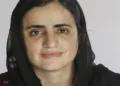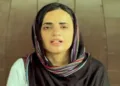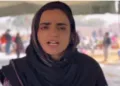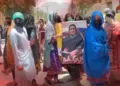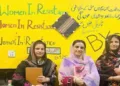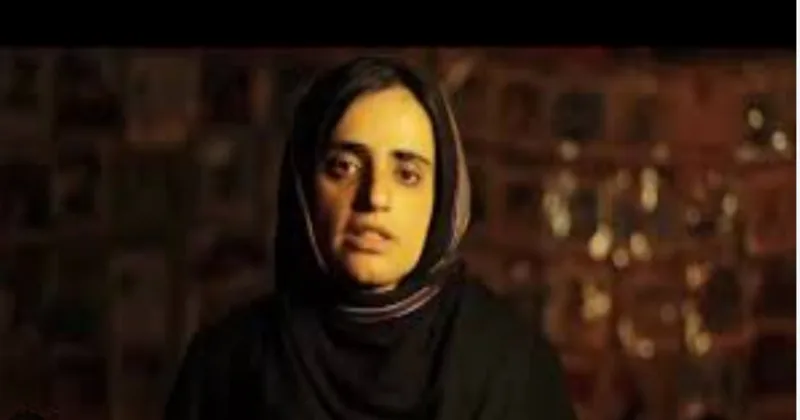
Addressing the 61st session of the United Nations Human Rights Council, Dr Sabiha Baloch, a senior leader of the Baloch Yakjehti Committee (BYC), highlighted serious human rights concerns in Balochistan, a region witnessing extensive foreign-led projects. She drew attention to the persistent issue of enforced disappearances, stating that Baloch individuals continue to go missing under suspicious circumstances. She also expressed alarm over incidents of extrajudicial killings and the discovery of mutilated bodies, describing them as part of a systematic pattern.
She further noted that journalists, students, lawyers, and human rights activists often face harassment, arrests, and legal action under counter-terrorism laws for expressing their views. Several leaders of the BYC, including Dr Mahrang Baloch, remain in prolonged detention. Dr Baloch also urged the United Nations to conduct an independent and impartial review of the human rights situation in Balochistan.
A couple of days ago, the UN Special Rapporteur on human rights defenders, Mary Lawlor, had expressed concern over harassment and attempts to criminalise women’s rights activist Dr Sabiha Baloch and her family. In a statement, Lawlor, who is mandated to monitor and report on the situation of human rights defenders, said she had also received reports of continued state targeting of the Baloch Yakjehti Committee (BYC). She noted that the reported actions appeared to be linked to the individuals’ and organisation’s peaceful advocacy for the promotion and protection of human rights.
She emphasised that harassment and legal action against individuals working in the field of human rights are unacceptable and called for such measures to be halted immediately.
Meanwhile, even as Dr Baloch was talking about “enforced disappearances’’ in Balochistan, two young men have allegedly been forcibly disappeared by Pakistani forces in Turbat, while the body of an 18-year-old student was found days after his disappearance, local sources and a rights group said.
Local sources said a 25-year-old man was detained last week at a checkpoint set up by Pakistani forces in the Jadgal Dun area of Turbat, the main city of Kech district, and later moved to an undisclosed location. The man was identified as Sameer Ahmed, son of Muhammad Arif and a resident of Allah Bakhsh Kalatuk. His whereabouts remain unknown, the sources said.
In a separate incident on April 6, another man, Ilyas, son of Mia Dad, was detained from his home in the Kogdaan area of Turbat by Pakistani forces. His whereabouts also remain unknown. Meanwhile, the BYC said an 18-year-old student, Shayhaq Rahim, was forcibly disappeared by what it described as state-backed “death squads” from the main bazaar in Turbat on March 31 and later found dead on April 5 on a roadside along the Pasni Road.
“This is not just a killing, this is a systematic pattern of enforced disappearances and extrajudicial executions in Balochistan,” the BYC said. The group has repeatedly called on the UN to “take urgent notice of the situation in Balochistan” and urged international human rights organisations to ensure independent investigations and accountability.
Meanwhile, in yet another similar incident, a man identified as Mir Iqbal, son of Haider Baloch, has reportedly been subjected to enforced disappearance from Karachi, according to family members. Relatives said he was taken into custody on the night of 2 April 2026 at around 11:30 pm from Faqir Colony, Umar Baloch Mohalla, by individuals they identified as personnel from Pakistani intelligence agencies and the Karachi Rangers. They alleged that the personnel entered the house by scaling the wall.
According to the family, several members of the household were subjected to physical assault during the operation, and mobile phones belonging to family members were confiscated. Relatives stated that Mir Iqbal’s whereabouts remain unknown, and no information has been provided regarding his location.
The family has called for his immediate recovery and for assurances regarding his safety. They have also appealed to relevant authorities and international human rights organisations to take notice of the case and ensure appropriate action.