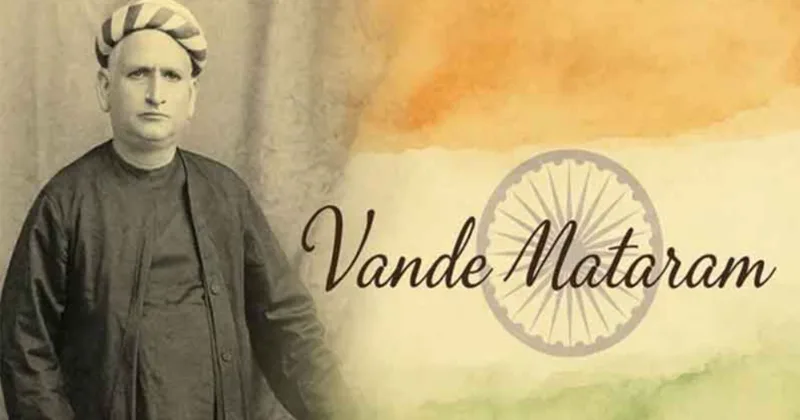
India is commemorating the 150th anniversary of Vande Mataram, the national song that played a pivotal role in shaping the country’s freedom movement. Penned in 1875 by Bankim Chandra Chatterjee, the song continues to resonate as a timeless expression of devotion to the motherland.
Originally composed in a blend of Sanskrit and Bengali, Vande Mataram translates to “I bow to thee, Mother.” The song first appeared in Chatterjee’s celebrated novel Anandamath, published in 1882. Over time, it moved beyond the pages of literature to become a rallying cry during India’s struggle against colonial rule.
Born in June 1838 near Naihati in Bengal, Bankim Chandra Chatterjee was a distinguished novelist, poet, and journalist. He pursued his education at Hooghly Mohsin College and Presidency College in Kolkata, and later graduated from the University of Calcutta in 1858, becoming one of its earliest graduates.
Chatterjee began his professional career in the British Indian Civil Service, where he served as a Deputy Magistrate and Deputy Collector. His administrative career was marked by distinction, eventually leading him to become the first Sub-divisional Magistrate of Arambag. Despite his official responsibilities, his passion for literature remained unwavering.
His literary journey gained momentum with the publication of Durgeshnandini in 1865, widely regarded as the first modern Bengali romance novel. Inspired by the ruins of Gar Mandaran Fort, the work brought him widespread acclaim and established him as a pioneering figure in Indian literature. Revered as “Sahitya Samrat” in Bengali, Chatterjee went on to author fourteen novels along with numerous essays and treatises spanning diverse themes.
The inclusion of Vande Mataram in Anandamath proved to be a turning point. The song was later set to music by Rabindranath Tagore and gained prominence during the Swadeshi movement, particularly in response to the partition of Bengal. It was sung at political gatherings and protests, becoming synonymous with the spirit of resistance and national unity.
In recognition of his service, Chatterjee was conferred the title of Rai Bahadur in 1891 and later honoured with the Companion of the Order of the Indian Empire in 1894.
Even today, 150 years later, Vande Mataram stands as more than just a song—it remains a powerful symbol of India’s cultural identity and enduring quest for unity and freedom.