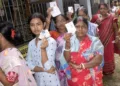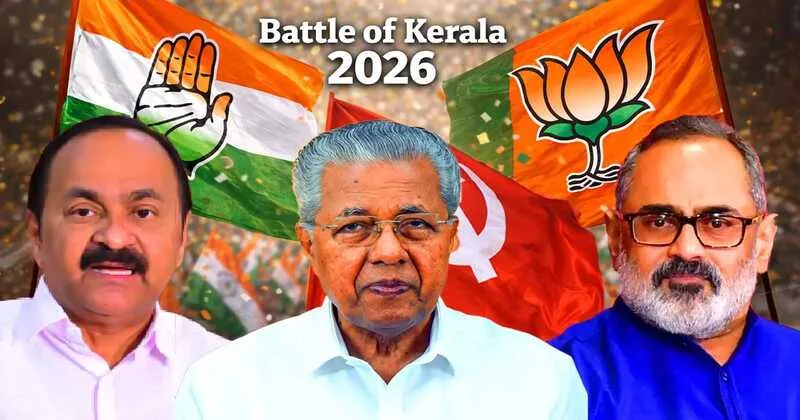
Thiruvananthapuram: As campaigning for the Assembly elections has drawn to a close, Keralam is witnessing an intense triangular contest across the state. The defining feature of this election is the emergence of the NDA as a viable alternative to both the CPI(M)-led Left Democratic Front (LDF) and the Congress and Muslim League-led United Democratic Front (UDF), rather than merely being a marginal challenger. Unlike previous elections, where the two fronts often benefited from tacit cross-voting in select constituencies to keep the BJP and NDA at bay, both now find themselves under significant pressure. For the first time in the state’s political history, a strong three-way contest is visible in nearly every constituency.
Communal undercurrents and campaign narratives
Another notable aspect of this election is the role played by organisations such as the SDPI, widely regarded as the political face of the banned PFI, the Welfare Party linked to Jamaat-e-Islami, and the PDP led by Abdul Nasser Madani. These groups are seen as exerting influence within both the LDF and UDF fronts. From the outset, the campaign discourse was marked by a shift away from development and governance issues, with both fronts focusing instead on communal narratives and controversies.
The LDF and the UDF are accused of attempting to mobilise minority communal sentiments, avoiding discussions on administrative shortcomings and corruption allegations. This strategy, observers suggest, stemmed from a concern that a development-centric debate would favour the NDA. In contrast, the NDA anchored its campaign firmly on the plank of development, projecting itself as a forward-looking alternative. The alliance remains optimistic that voters,particularly the youth and women, will back its vision for the future of Keralam.
Leadership battles, internal strains and candidate controversies
This election cycle was also marked by an unusually short campaign period, with just three weeks available for canvassing. Despite the time constraint, top national leaders campaigned extensively. Prime Minister Narendra Modi, Home Minister Amit Shah, BJP National President Nitin Nabin, along with Union Ministers, Chief Ministers, the Leader of the Opposition Rahul Gandhi, and other prominent figures, visited the state multiple times to energise party workers and voters.
The LDF campaign was largely centred around Chief Minister Pinarayi Vijayan, who emerged as the principal face of the front. He was tasked with countering allegations and articulating the Left’s vision, while other senior leaders, including the party’s general secretary M A Baby and Politburo members, appeared to play a diminished role. The CPI(M) has also been grappling with multiple internal challenges. The inclusion of key leaders in the list of accused in the Sabarimala gold theft case, as well as internal disagreements over candidate selection, created unease within the party. Controversies surrounding the allocation of the Thaliparamba assembly seat to P.K. Shyamala, wife of the party’s state secretary MV Govindan, after his resignation from contesting, have not subsided. Further complicating matters, veteran leader G. Sudhakaran’s decision to align with the UDF camp has added to the CPI(M)’s troubles. The party leadership also faces mounting pressure to clarify its alleged links with the SDPI, which has been accused in the SFI leader Abhimanyu’s murder case, even as concerns persist among its cadre.
The UDF, meanwhile, is contesting the elections amid internal ambiguities, with nearly half a dozen aspirants staking claim to the Chief Minister’s post. The Muslim League is perceived to have consolidated significant influence within the Congress and the broader front. Critics allege that the alliance between the League and Jamaat-e-Islami has further strengthened this dynamic. The UDF is also facing accusations of misleading the public by promising housing for victims of the Wayanad disaster.
In a notable departure from past trends, a significant number of leaders who have left their respective parties are contesting this election. From the CPI(M), prominent figures such as G. Sudhakaran (Ambalapuzha), P.V. Kunjikrishnan (Payyannur), T.K. Govindan (Thaliparamba), P.K. Sasi (Ottapalam), and Aisha Potti (Kottarakkara) are in the fray. From the CPI, candidates include A. Suresh (Malambuzha), C.C. Mukundan (Nattika), K. Ajith (Vaikom), S. Rajendran (Devikulam), and Meenangal Kumar (Nedumangad).
Similarly, leaders who exited the Congress, such as B.S. Anoop (Chirayinkeezhu), R.S. Arunraj (Chadayamangalam), and R. Rashmi (Kottarakkara), are also actively contesting, adding another layer of complexity to an already highly competitive electoral battle.