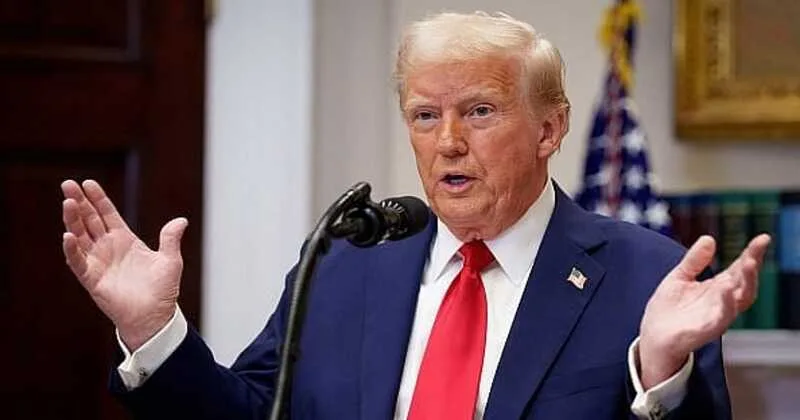
In a dramatic shift from imminent military escalation to cautious diplomacy, US President Donald Trump has agreed to suspend planned strikes on Iran for a period of two weeks. The decision came just hours before a deadline he had set for potential large scale attacks on Iranian infrastructure.
The suspension of strikes is conditional. Trump has linked it directly to Iran agreeing to a ceasefire and ensuring the complete and safe reopening of the Strait of Hormuz, one of the world’s most critical maritime routes for oil transportation.
Last minute decision avoids escalation
The announcement came less than two hours before Trump’s self imposed 8 PM deadline, after which he had warned of devastating consequences for Iran. In earlier remarks, he had suggested that failure to comply with US demands could lead to strikes that would severely damage Iran’s infrastructure and economy.
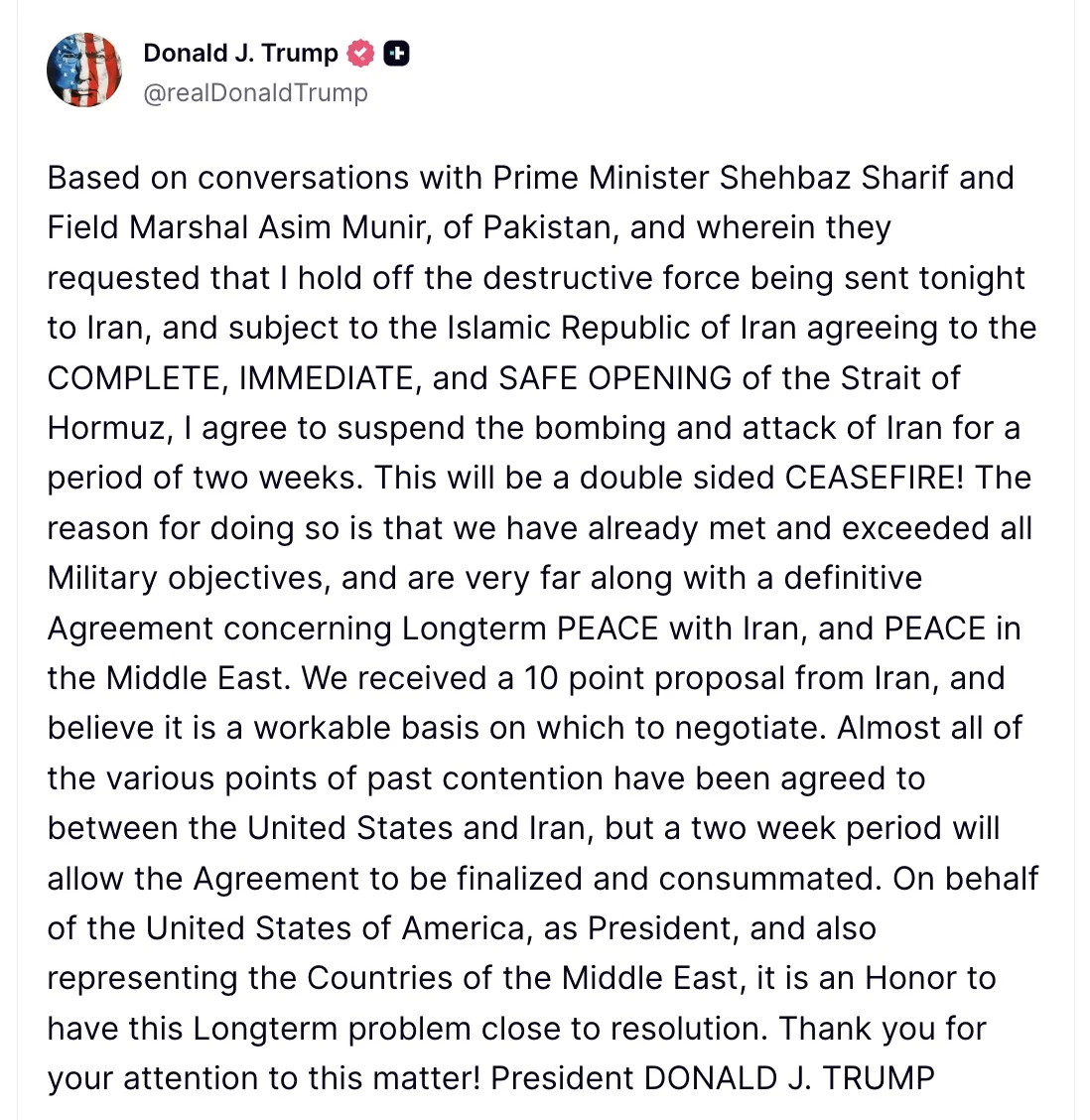
However, a last minute diplomatic push altered the course of events. Trump said his decision followed direct communication with Pakistan’s Prime Minister Shehbaz Sharif and military leadership, including Field Marshal Asim Munir, who urged him to allow more time for negotiations.
‘Double-sided ceasefire’ framework
Trump described the arrangement as a “double-sided ceasefire,” indicating that both Iran and its adversaries, including Israel, would halt offensive operations during this period.
In a post on Truth Social, Trump stated that the United States would suspend bombing and attacks for two weeks, provided Iran commits to reopening the Strait of Hormuz and adhering to ceasefire conditions. He emphasized that the US had already achieved its primary military objectives and was now focused on securing a long term agreement.
The Strait of Hormuz has been at the centre of the conflict, with its disruption affecting global oil supplies and increasing economic uncertainty worldwide.
Iran’s proposal shapes negotiations
A key factor behind Trump’s decision was a 10 point proposal submitted by Iran, which he described as a “workable basis” for negotiations. According to the US President, most of the major points of disagreement between the two sides have already been addressed in preliminary discussions.
The proposed two week pause is intended to provide sufficient time to finalise and formalise a broader agreement. Trump expressed optimism, stating that a long standing geopolitical crisis could be nearing resolution.
Iran’s proposal is believed to include demands related to sanctions relief, access to frozen financial assets, regional security arrangements, and recognition of its strategic role in West Asia.
Israel joins ceasefire understanding
Israel has also agreed to the two week ceasefire framework, according to reports citing US officials. The country is expected to suspend its bombing campaign against Iranian linked targets during this period.
This alignment among key stakeholders is being seen as a crucial step toward stabilising the region, even if only temporarily.
Meanwhile, Iran has accepted the ceasefire proposal, with approval reportedly coming from its top leadership. This indicates a rare moment of convergence among adversaries in a conflict that has otherwise been marked by intense hostility.
The war, now in its sixth week, has had devastating consequences. More than 5,000 people have reportedly been killed across multiple countries, including over 1,600 civilians in Iran. The conflict has spread across nearly a dozen nations, reflecting its wide regional impact.
In addition to the human toll, the disruption of the Strait of Hormuz has severely affected global oil markets. The waterway is a vital artery for energy supplies, and any instability in the region has immediate economic repercussions worldwide.
Threats still loom large
Despite the temporary pause, Trump has made it clear that military action remains an option. He had earlier issued stark warnings, stating that Iran could face unprecedented destruction if it failed to meet US demands.
His comments, including references to the potential collapse of an entire civilisation, drew widespread concern and criticism from international observers.
The reopening of the Strait of Hormuz remains a central condition. Trump had previously set the Tuesday deadline specifically for Iran to end what he described as a de facto closure of the route.
The two week suspension of hostilities represents a narrow but significant opportunity for diplomacy. With negotiations expected to intensify in the coming days, the focus will be on whether both sides can convert this temporary ceasefire into a lasting agreement.
However, the situation remains volatile. The conditional nature of the ceasefire means that any breakdown in talks or failure to meet agreed terms could quickly lead to renewed military confrontation.
For now, the pause offers a moment of relief in a conflict that has already caused widespread destruction. Whether it leads to lasting peace or merely delays further escalation will depend on the success of the upcoming negotiations.