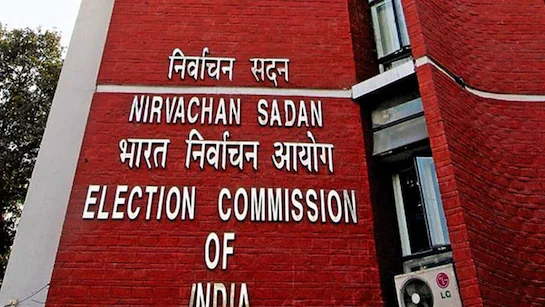
The Election Commission of India has already set the stage for a complex, multi-phase electoral exercise, reflecting both the scale and diversity of India’s democratic landscape. Polling is scheduled across key states including Assam, Kerala, Tamil Nadu, and West Bengal, along with the Union Territory of Puducherry. In addition, several constituencies across different states are heading for by-elections, further adding to the intensity of this electoral cycle. These elections are not merely routine exercises but are being closely watched for their political implications at both state and national levels.
According to official data released by the Commission, a total of 1,955 candidates are currently in the fray in Assam, Kerala, Puducherry, and the constituencies going for bypolls. These regions are scheduled to vote on April 9, 2026, marking the first major phase of polling. The number itself reflects the vibrancy of India’s electoral democracy, where multiple parties and independent candidates continue to test their political strength before the electorate.
At the same time, the nomination process remains underway in Tamil Nadu, while West Bengal is witnessing a staggered, multi-phase polling schedule. West Bengal, in particular, has historically seen high-voltage campaigns, sharp political polarisation, and intense ground mobilisation, making it one of the most politically sensitive battlegrounds in the country.
The timelines governing the electoral process are both tight and crucial. April 9 has been fixed as the last date for withdrawal of candidature in Tamil Nadu and for Phase-I of the West Bengal elections, while April 13 is the deadline for withdrawal in Phase-II of the West Bengal polls. These dates are not mere procedural markers; they define the final shape of the electoral contest, determining which candidates remain in the race and how political equations evolve at the last moment. The compressed schedule underlines the urgency with which candidates must strategise and voters must prepare to make informed decisions.
It is in this backdrop that the Election Commission’s latest initiative, the “Know Your Candidate” feature on ECINet, assumes critical significance. At the core of this initiative lies a digital KYC module designed to bring comprehensive candidate-related information directly to voters’ fingertips. The objective is simple yet powerful: to ensure that no voter goes to the polling booth without access to verified and relevant information about those seeking their mandate.
Through this feature, citizens can now access detailed information about candidates, including their criminal antecedents, financial assets and liabilities, educational qualifications, and even their verified presence on social media platforms. This marks a significant step forward in bridging the information gap that has long existed between candidates and voters. In many cases in the past, such information remained buried in official records or was accessible only to those who actively sought it out through cumbersome processes.
One of the most critical aspects of this system is the availability of Form 26 affidavits. These affidavits, which candidates are legally required to submit at the time of filing nominations, contain sworn declarations about their financial status, legal cases, and personal background. By making these documents easily downloadable and accessible on ECINet, the Commission has effectively democratised access to crucial electoral information. Voters are no longer dependent on intermediaries or selective disclosures; they can independently verify the credentials of candidates in a transparent and authenticated manner.
ECINet itself represents a major leap in the technological evolution of India’s electoral machinery. Far from being a standalone application, it is a comprehensive platform that integrates more than 40 different applications and portals developed by the Election Commission over the years. This consolidation into a single interface has transformed ECINet into what can be described as one of the largest electoral service platforms in the world. It reflects a conscious shift towards simplifying citizen interaction with the electoral system while enhancing efficiency and accountability.
The platform offers a wide spectrum of services that go beyond candidate information. Voters can register themselves, update their details, search for their names in the electoral roll, and track the status of their applications. It also provides mechanisms for grievance redressal, ensuring that complaints and issues are addressed in a structured and time-bound manner.
Additionally, ECINet enables users to download their digital voter ID cards, known as e-EPICs, thereby reducing dependence on physical documentation.
Another important feature is the ability to directly connect with election officials and even schedule interactions with Booth Level Officers. This level of accessibility is particularly significant in a country where logistical challenges and administrative bottlenecks have often hindered smooth electoral participation. By reducing bureaucratic friction and streamlining processes, ECINet is making the system more responsive and citizen-friendly, especially for first-time voters and those living in remote or underserved areas.
Beyond the KYC module, ECINet also integrates several specialised tools that strengthen electoral oversight and inclusivity. Among these is cVIGIL, a mobile-based application that allows citizens to report violations of the Model Code of Conduct in real time. This has effectively turned ordinary voters into active participants in monitoring electoral integrity. Similarly, the Saksham platform has been designed to facilitate electoral participation for persons with disabilities, ensuring that inclusivity remains a core principle of the democratic process.
These technological interventions reflect a broader shift towards governance models that prioritise transparency, accessibility, and citizen engagement. The Election Commission’s approach indicates a clear recognition that in the digital age, the credibility of democratic institutions depends not just on fairness in process but also on openness in information.
The push for informed voting, therefore, lies at the heart of this initiative. The Commission has consistently emphasised that the act of voting is not merely about participation but about making a conscious and informed choice. By placing verified and comprehensive candidate information in the public domain, it seeks to reduce information asymmetry, encourage issue-based voting, and promote greater accountability among those contesting elections. This is particularly important in an environment where misinformation, selective narratives, and perception-driven campaigns often cloud objective assessment.
The significance of this move becomes even more evident when viewed in the context of long-standing demands for greater transparency in electoral politics. Over the years, civil society organisations and judicial pronouncements have repeatedly highlighted the importance of the voter’s “right to know.” The ECINet KYC feature can be seen as a concrete step towards operationalising that principle on a national scale. It ensures that information is standardised, verified, and easily accessible, thereby empowering voters to move beyond hearsay and base their decisions on documented facts.
As India prepares for another round of intense and closely contested elections, the role of digital platforms like ECINet is likely to become increasingly significant. The success of such initiatives, however, will ultimately depend on how actively citizens engage with them. The infrastructure has been created, the information has been made available, and the tools have been placed in the hands of the electorate.