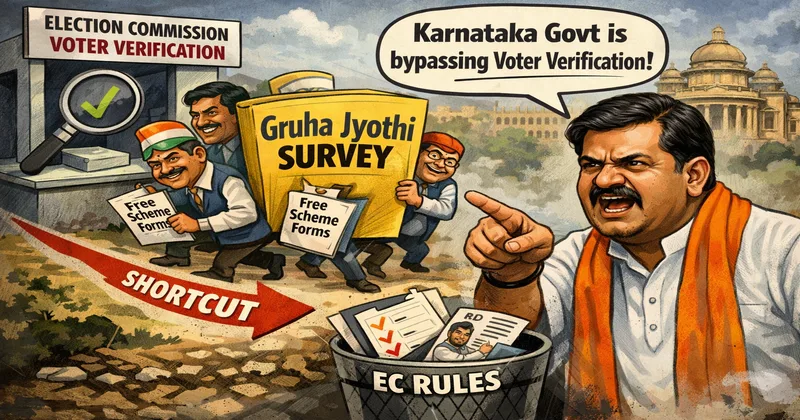
Bengaluru: The Karnataka government’s decision to begin a door-to-door verification of beneficiaries under its flagship Gruha Jyothi free electricity scheme has triggered a fresh political controversy, with the BJP alleging that the exercise is being used as a backdoor mechanism to collect voter data and undermine the Election Commission’s ongoing Special Intensive Revision (SIR) of electoral rolls.
From July 1, officials of the state’s power distribution companies (ESCOMs) have begun visiting households benefiting from the Gruha Jyothi scheme to verify beneficiary details. While the government has described the exercise as a routine verification aimed at identifying ineligible beneficiaries and ensuring transparency, the inclusion of Elector Photo Identity Card (EPIC) details and voter identification has raised serious political questions.
The verification process reportedly seeks details such as voter ID numbers, caste category, and social classification, including Scheduled Castes (SC), Scheduled Tribes (ST), Other Backward Classes (OBC), and minority communities. Opposition leaders have questioned why information that is not mandatory for the implementation of a welfare scheme is being collected during the survey.
ಚುನಾವಣಾ ಆಯೋಗ ನಡೆಸುತ್ತಿರುವ ಎಸ್ಐಆರ್ ಪ್ರಕ್ರಿಯೆಗೆ ರಾಜ್ಯ ಸರ್ಕಾರ ಸರಿಯಾಗಿ ಸಹಕಾರ ನೀಡುತ್ತಿಲ್ಲ. ಸತ್ತವರ ಹೆಸರು ತೆಗೆಯಲು, ಡಬಲ್ ಎಂಟ್ರಿ ತೆಗೆಯಲು, ಅಕ್ರಮ ವಲಸೆಗಾರರ ಮತಗಳನ್ನು ತೆಗೆಯಲು ಡಿಕೆಶಿ ಸರ್ಕಾರ ಅಡ್ಡಿಪಡಿಸುತ್ತಿದೆ. ಕಾಂಗ್ರೆಸ್ ಏಜೆಂಟ್ಗಳನ್ನು ಎಸ್ಐಆರ್ ಕೆಲಸಕ್ಕೆ ರಾಜ್ಯ ಸರ್ಕಾರ ನಿಯೋಜಿಸಿದೆ.#SIR pic.twitter.com/YFMzIPbJiJ
— R. Ashoka (@RAshokaBJP) June 30, 2026
The BJP has alleged that the Congress government is attempting to build an independent database of Karnataka’s electorate by leveraging a welfare scheme, thereby bypassing the constitutional authority of the Election Commission.
Leader of Opposition R Ashoka accused the Congress government of deliberately obstructing the Election Commission’s Special Intensive Revision (SIR) process while simultaneously collecting voter-related information through the Gruha Jyothi verification drive.
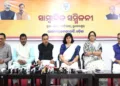
Addressing a press conference at the BJP’s Malleswaram office on Tuesday, Ashoka alleged that the state government was not cooperating with the Election Commission in carrying out the SIR exercise.
“The Election Commission has initiated the Special Intensive Revision to ensure that only genuine voters remain on the electoral rolls. However, the Congress government is creating hurdles by failing to appoint an adequate number of Booth Level Officers (BLOs). In several places, where 30 BLOs are required, only about 10 have been deployed,” Ashoka alleged.
He further claimed that officials had informed the BJP that they had neither received travel allowances nor daily allowances and, in some cases, had not even been granted permission to participate in the electoral revision exercise.
Ashoka also alleged that political interference had crept into the voter verification process. He claimed that in Jayanagar, Congress functionaries who were not government officials had been engaged in the exercise, while in Chamarajpet, personnel visiting households allegedly displayed photographs of local Congress MLA Zameer Ahmed Khan during door-to-door interactions.
“No Booth Level Officer should display the identity or photograph of any political leader while conducting official election-related work. This compromises the neutrality of the process,” he said.
The BJP has linked these allegations to the state’s Gruha Jyothi verification exercise, arguing that the Congress government is attempting to independently consolidate voter information instead of relying solely on the Election Commission’s legally mandated electoral database.
According to the opposition, the collection of EPIC numbers during the electricity subsidy verification could enable the government to compile detailed voter profiles, including caste and demographic information. The BJP alleges that such a database could eventually be used to monitor electoral trends and influence future political strategies.
The party has further argued that the verification process could be used to identify beneficiaries who are not genuine residents of Karnataka or who may not qualify for the scheme. It has also claimed that individuals paying income tax or otherwise falling outside the intended beneficiary category could be removed from the scheme after the verification exercise.
Political observers note that the controversy comes at a time when the Election Commission is undertaking the Special Intensive Revision of electoral rolls to eliminate duplicate, shifted, deceased, and otherwise ineligible voters. The opposition believes the state’s parallel collection of voter-related information could overlap with or potentially dilute the Commission’s independent verification process.