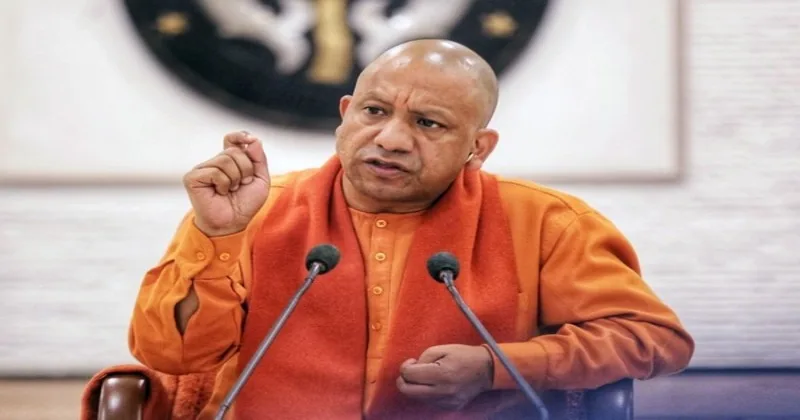
In the political landscape of Uttar Pradesh, Yogi Adityanath has evolved from being just a regional leader to a defining symbol of a governance model. Between 2017 and 2022, his image was firmly rooted in strong law-and-order enforcement popularly branded as the “Bulldozer Baba” approach. The bulldozer became more than an administrative tool; it turned into a political metaphor for decisive governance and state authority.
However, electoral politics does not reward static identities. As the 2027 Uttar Pradesh Assembly elections approach, it is increasingly evident that Adityanath is repositioning himself not by abandoning his earlier image, but by expanding it. The emerging narrative is that of a leader transitioning from a hardline administrator to an architect of economic transformation.
Law and Order: The foundation of political capital
For decades, Uttar Pradesh struggled with a reputation for weak law enforcement, entrenched criminal networks and political patronage. The Adityanath government’s early years focused heavily on reversing this perception. From a pro-government analytical perspective, this phase was not merely about optics. The crackdown on organized crime and illegal encroachments helped restore a sense of state control. More importantly, it created the psychological conditions necessary for economic activity.
In this framework, the “bulldozer” was not just a symbol of toughness, it was the groundwork for a broader development agenda. Without law-and-order stability, large-scale investment and industrial growth would have remained unlikely.
Shifting the political narrative towards development
As 2027 draws closer, there is a visible attempt to recalibrate the political discourse. The Bharatiya Janata Party(BJP) and Adityanath are no longer relying solely on identity politics or law-and-order credentials. Instead, the focus is shifting toward development, infrastructure, investment and job creation. This shift reflects changing voter expectations. Uttar Pradesh has a large and aspirational youth population that is increasingly driven by opportunities rather than rhetoric. Political success in the coming years will depend on addressing these aspirations in concrete terms.
Investment Push: Rebranding Uttar Pradesh’s economy
In recent years, Uttar Pradesh has pursued an aggressive investment strategy. Investor summits, sector-specific industrial policies and targeted incentives signal a clear intent to transform the state’s economic profile. Key focus areas such as defense manufacturing corridors, electronics production and data centers are not incidental choices. They represent high-value sectors capable of generating long-term employment and technological advancement.
Politically, this is an attempt to reposition Uttar Pradesh from a historically underdeveloped “BIMARU” state to a competitive economic hub. If successful, this narrative shift could have far-reaching electoral implications.
Expressway Politics: Infrastructure as visible governance
The rapid expansion of expressways across Uttar Pradesh is both an economic and political strategy. Infrastructure projects are among the most visible indicators of governance, offering tangible proof of development. By connecting regions like Purvanchal and Bundelkhand with major economic centers, these projects are not just reducing travel time—they are reshaping the state’s economic geography.
From a political standpoint, this also helps counter the long-standing perception of regional imbalance. Development is no longer seen as confined to select urban pockets but as a statewide phenomenon.
Cultural projects as economic multipliers
Adityanath’s governance model cannot be understood by isolating economic policy from cultural initiatives. Projects in cities like Ayodhya, Varanasi and Mathura are often viewed through a religious lens, but their economic implications are equally significant.
By promoting religious tourism, the government is boosting sectors such as hospitality, transport, retail, and local crafts. This integrated approach—where cultural identity fuels economic growth—represents a distinctive political strategy.
Welfare Schemes: Consolidating the social base
While the top layer of governance focuses on investment and infrastructure, the bottom layer is anchored in welfare delivery. Free ration schemes, housing programs, healthcare initiatives and direct benefit transfers have strengthened the government’s connect with economically weaker sections. This dual strategy growth at the top and welfare at the bottom creates a broad-based political coalition. It allows the government to appeal simultaneously to investors, the middle class and the rural poor.
The Opposition’s critique and its limits
The opposition continues to raise concerns about unemployment, inflation and agrarian distress. These remain valid political issues, especially in a state with a large young population. However, the pro-government argument emphasizes that structural transformation in a state as large as Uttar Pradesh cannot yield instant results. Infrastructure and investment cycles take time before translating into visible employment gains. Thus, the political contest is not just about present outcomes but also about competing visions of the future.
Yogi Adityanath’s leadership style
A key factor in this transition is Adityanath’s personal leadership style. Known for centralized decision-making, administrative discipline, and a results-oriented approach, he has maintained a consistent governance narrative. Supporters view this as decisive leadership an essential quality when executing large-scale development projects that require coordination and continuity.
2027: A test of governance model, Not just popularity
The 2027 election will not merely be a referendum on popularity; it will be a test of a governance model built over a decade. If law-and-order stability, infrastructure expansion, investment inflows and welfare delivery converge effectively, Uttar Pradesh could present a replicable model of governance in Indian politics.
Yogi Adityanath’s political journey can be understood as a transition from “assertive control” to “structured transformation.” The “Bulldozer Baba” image established authority; the emerging “economic reformer” identity seeks to define legacy. In electoral politics, leaders who successfully evolve their narrative while delivering on governance tend to outlast their contemporaries. Uttar Pradesh now stands at that inflection point—and 2027 will determine whether this shift from enforcement to economic leadership translates into sustained political success.