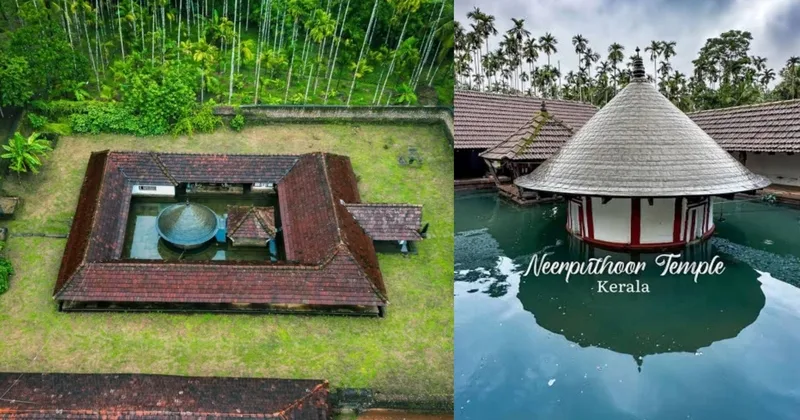
Malappuram: Nestled in the tranquil village of Puthoor in Malappuram district, Kerala, the Neerputhoor Mahadeva Mandir stands as one of the most spiritually evocative and architecturally unusual shrines in South India. Unlike conventional Mandirs, this site is renowned for its permanently water‑filled sanctum sanctorum, where the Swayambhu Shivalinga remains submerged throughout the year. The interplay of devotion, nature, and tradition here creates a divine ambience that attracts pilgrims, scholars, and travellers alike.
Historical Background & Origins
The origins of the Neerputhoor Mahadeva Mandir are rooted in ancient tradition. Local belief holds that the Mandir is over 3,000 years old, making it one of the oldest sites in the region. The principal deity, Bhagwan Shiva, is worshipped in the form of a Swayambhu Shivalinga, believed to have emerged naturally from the earth rather than being formally installed.
The Submerged Sanctum
What truly sets Neerputhoor Mahadeva apart is its water‑filled inner sanctum (garbhagriha). Unlike typical shrines where the sanctum remains dry, here the Shivalinga stands submerged, reflecting an unbroken column of sacred water that covers the sanctum throughout the year. This phenomenon intensifies during the monsoon months, when rains cause the water level to rise significantly, creating a spellbinding visual where the Mandir appears to float. Devotees believe the water embodies divine purity and spiritual cleansing, enhancing the sanctity of darshan.
Rituals, Poojas & Spiritual Practices
The Mandir’s daily rhythm revolves around traditional Shaiva rituals. Offerings and poojas dedicated to Bhagwan Shiva are conducted according to age‑old customs, with pandits performing Abhishekam (ritual bathing of the deity) and Archana (chanting of sacred names). Special homams (fire rituals) such as Mrityunjaya Homam and Ganapathy Homam are performed on auspicious days. The water in the sanctum itself is considered holy, and many devotees regard entering the water or touching its surface as a form of ritual purification and blessing.
Major Festivals & Cultural Significance
Among the most important festivals observed at the Mandir is Mahashivaratri, the grand night of Shiva, when devotees gather in large numbers for extended prayers, fasting, and continuous chanting. Another significant celebration is Sahasra Deepam, a festival of a thousand lamps, during which the Mandir and water’s edge are beautifully illuminated, creating a mesmerising spectacle. These festivals not only highlight deep devotion but also reinforce the temple’s cultural role in the region’s spiritual calendar.
The Neerputhoor Mahadeva Mandir is more than just a place of worship; it is a living testament to India’s spiritual depth, architectural harmony with nature, and centuries‑old tradition. Its perpetually submerged sanctum offers visitors not just a visual marvel but a profound spiritual experience, where water symbolises purity and the eternal presence of the divine. For pilgrims and travellers alike, this “water temple” of Kerala stands as a timeless sanctuary, inviting reflection, reverence, and wonder.