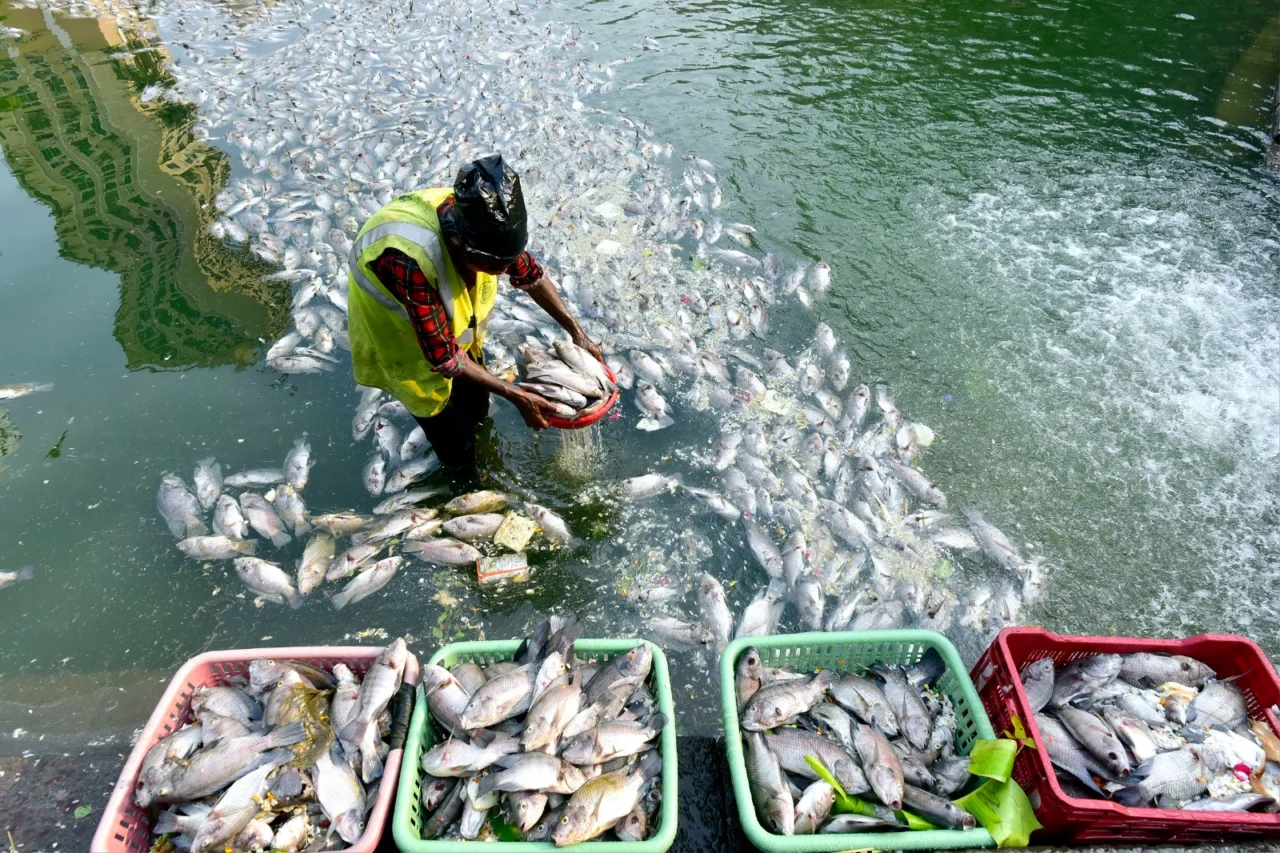
India’s fisheries sector has witnessed remarkable growth over the past decade, evolving into a major contributor to food security, employment generation, and export earnings. According to the Ministry of Fisheries, Animal Husbandry and Dairying, cumulative investments in the sector have reached Rs 39,272 crore since 2015, reflecting sustained government focus and policy support.
The sector today supports nearly 30 million fishers and fish farmers at the primary level, while almost twice as many individuals are engaged across the broader value chain, including processing, transportation, marketing, and exports. This makes fisheries one of the most employment-intensive sectors in the country, particularly benefiting coastal and rural communities.
India emerges as global aquaculture powerhouse
India has now become the second-largest aquaculture producer globally, contributing approximately 8 percent to total global fish production. This milestone underscores the country’s rapid progress in aquaculture practices, technological adoption, and resource management.
Domestic fish production has also recorded significant growth. From 141.64 lakh tonnes in 2019-20, production increased to 197.75 lakh tonnes in 2024-25, registering an average annual growth rate of around 7 percent. This consistent rise reflects improvements in infrastructure, better breeding practices, and increased investment in inland and marine fisheries.
India’s seafood exports have more than doubled over the last decade, rising from Rs 30,213 crore in 2013-14 to Rs 62,408 crore in 2024-25. This growth has been largely driven by strong global demand for Indian shrimp, which alone accounted for exports worth Rs 43,334 crore.
Today, India exports over 350 varieties of seafood products to nearly 130 countries, highlighting the sector’s expanding global reach. The United States remains the largest market, accounting for 36.42 percent of total export value in FY25. Other major destinations include China, the European Union, Southeast Asian nations, Japan, and countries in the Middle East.
Shift towards value-added products
A notable trend in the sector is the increasing share of value-added seafood products. The proportion of such products has risen from just 2.5 percent a decade ago to 11 percent currently, translating to approximately $742 million in exports.
This shift indicates a move away from raw exports towards processed and ready-to-consume products, which fetch higher value in international markets. It also reflects improvements in processing infrastructure and quality standards.
Government push under PMMSY
The government has been actively promoting diversification and sustainability through schemes such as the Pradhan Mantri Matsya Sampada Yojana. Under this initiative, emphasis is being placed on cultivating high-value species including tuna, seabass, cobia, mud crab, tiger shrimp, and seaweed.
The scheme also supports the development of modern infrastructure, including cold-chain networks, fishing harbours, and landing centres, which are critical for reducing post-harvest losses and improving product quality.
Additionally, digital traceability systems are being introduced to ensure compliance with international standards and enhance transparency in the supply chain.
India has taken significant steps to streamline regulatory processes and strengthen its global competitiveness. The Sanitary Import Permit system has been fully digitised and integrated with the National Single Window System, reducing approval timelines from 30 days to just 72 hours.
In a major boost to exports, India secured a comparability finding from the United States in 2025 under the Marine Mammal Protection Act, ensuring uninterrupted access to its largest seafood market.
Environmental sustainability measures are also being implemented, including the large-scale deployment of Turtle Excluder Devices in shrimp trawlers across coastal states. These efforts aim to align India’s fisheries practices with global conservation standards.
The government has outlined an ambitious roadmap for the fisheries sector. Over the next five years, the focus will be on expanding value-added exports, developing inland export hubs, and strengthening India’s presence in key global markets.
Target regions include the United Kingdom, the European Union, ASEAN countries, and West Asia. By diversifying export destinations and product categories, India aims to reduce dependence on a limited number of markets and commodities.
The rapid expansion of India’s fisheries sector reflects a broader transformation driven by policy reforms, infrastructure development, and global demand. As the sector continues to evolve, it is expected to play an increasingly important role in boosting rural incomes, enhancing food security, and strengthening India’s position in global trade.
With sustained investments and strategic initiatives, India is well on its way to becoming a leading global hub for fisheries and aquaculture.