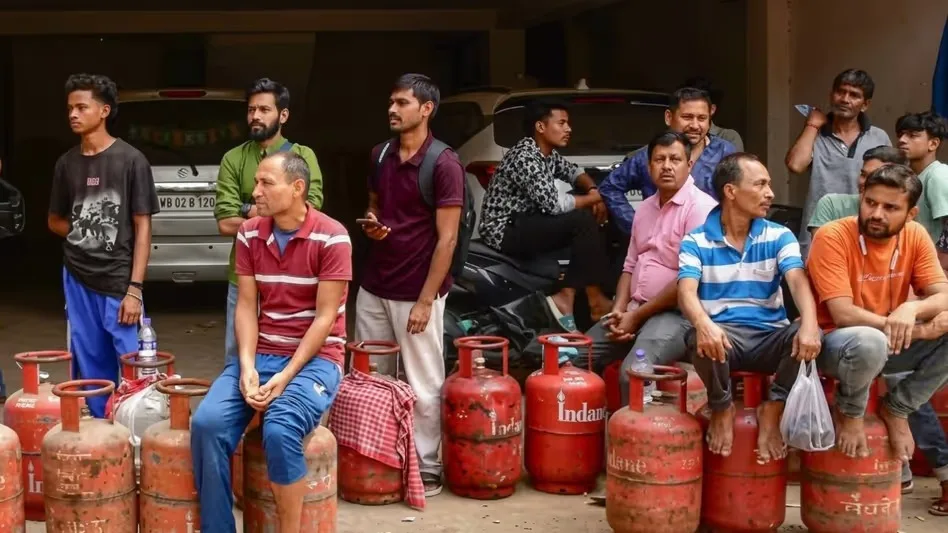
India’s energy security has come under renewed pressure as escalating tensions in West Asia disrupt critical shipping routes and fuel supply chains. The crisis, linked to developments involving Iran, has significantly impacted the movement of liquefied petroleum gas (LPG) through the strategically vital Strait of Hormuz.
The Strait of Hormuz, through which a substantial portion of the world’s oil and gas supplies transit, has witnessed disruptions, leading to tanker delays, rising freight costs, and supply uncertainty. For India, which relies heavily on imports to meet its LPG demand, the consequences have been immediate and far-reaching.
According to industry estimates, nearly 90 per cent of India’s LPG imports traditionally come from Gulf nations. This overwhelming dependence has left the country particularly vulnerable to geopolitical shocks in the region.
Shortages, price pressure, and policy response
The disruption in supplies has triggered a ripple effect across India’s domestic energy landscape. LPG, widely used for cooking in millions of households, is a politically sensitive commodity. Any shortage not only affects daily life but also has economic and social implications.
Reports suggest that the supply crunch has led to delays in deliveries, pressure on inventories, and concerns over price stability. Industrial users have also felt the pinch, with some sectors witnessing disruptions due to constrained LPG availability.
In response, the government has reportedly prioritised household consumption over industrial usage, ensuring that domestic consumers continue to receive essential supplies. However, such measures are temporary fixes, underscoring the need for a more sustainable solution.
Enter Argentina: A distant but crucial supplier
Amid this crisis, Argentina has emerged as an unlikely yet critical partner for India’s LPG needs.
In a dramatic shift, Argentina has ramped up its LPG exports to India in early 2026. Data from energy market trackers indicates that approximately 50,000 tonnes of LPG were shipped from Argentina to India in just three months, more than double the total supply recorded in 2025.
What makes this surge particularly striking is the fact that prior to 2024, shipments from Argentina to India were virtually negligible. The sudden increase is widely seen as a direct response to the ongoing supply crisis.
India relies on Argentina for several imports, especially edible oils such as soybean and sunflower oil. In addition, the country supplies India with finished leather, cereals, residual chemicals, and pulses.
Even as disruptions persisted in West Asia, Argentine shipments continued without interruption, positioning the country as a reliable fallback supplier at a time of urgent need.
Why Argentina could scale up so quickly
The question that arises is: how did Argentina manage to step in so swiftly?
The answer lies in its evolving energy landscape, particularly its expanding natural gas sector. Argentina is home to vast shale reserves, most notably the Vaca Muerta formation, which has significantly boosted the country’s hydrocarbon output in recent years.
This surge in production has created a surplus of LPG available for export. Additionally, Argentina has been actively investing in infrastructure to process and transport natural gas and its derivatives.
Key export hubs such as Bahía Blanca have played a pivotal role in enabling large-scale shipments. These facilities have allowed Argentina to respond quickly to international demand and redirect supplies to markets like India.
Furthermore, Argentine energy companies have been aggressively targeting global markets, making the country one of the few capable of bridging short-term supply gaps during crises.
Can Argentina replace the Gulf?
Despite its growing role, Argentina is not a perfect substitute for traditional Gulf suppliers.
One of the primary challenges is distance. LPG shipments from Argentina take significantly longer to reach Indian ports compared to cargoes from the Gulf. This increases transit times and complicates supply planning.
Freight costs are another concern. Longer routes translate into higher transportation expenses, which can ultimately impact pricing.
Moreover, the scale of supply remains limited. While Argentina can provide crucial support during emergencies, it lacks the capacity to fully replace the massive volumes typically sourced from Gulf countries.
Reports caution that while diversification is essential, the Middle East will continue to remain India’s primary LPG supplier in the foreseeable future.
India moves towards diversification
The emergence of Argentina as a key supplier highlights a broader shift in India’s energy strategy, from dependence to diversification.
Recognising the risks of over-reliance on a single region, India has begun exploring alternative sources of LPG. Countries such as the United States have also become important partners in this diversification effort.
This approach reflects a growing emphasis on energy resilience. By expanding its supplier base, India aims to reduce vulnerability to geopolitical disruptions and ensure a more stable flow of critical resources.
Argentina’s rapid rise as an LPG supplier shows how global energy alliances can evolve under pressure.
What began as an emergency procurement measure is now shaping into a broader strategic partnership. The crisis has opened new avenues for cooperation between India and Argentina, potentially extending beyond LPG to other areas of energy collaboration.
Such “crisis partnerships” are becoming increasingly relevant in a world marked by uncertainty and shifting geopolitical dynamics.
Situation in India
The Ministry of Petroleum and Natural Gas has provided major relief to the states and union territories amid the current gas crisis. The government has increased the gas allocation to 50 per cent of the pre-crisis level. Under this, an additional 20 per cent of LPG will be supplied to the states from March 23.
Petroleum Secretary Dr Neeraj Mittal, in a letter to the Chief Secretaries of all the states and union territories, said that the main objective of this additional allocation is to provide help to key sectors related to food supply and public welfare.
Energy security in an uncertain world
The ongoing LPG crisis offers several key lessons for India.
First, it highlights the risks associated with excessive dependence on a single region. While the Gulf has been a reliable supplier for decades, recent disruptions demonstrate the need for contingency planning.
Second, it shows the importance of flexibility and adaptability. India’s ability to quickly pivot to alternative suppliers like Argentina reflects a proactive approach to crisis management.
Finally, it reinforces the need for long-term investments in energy infrastructure, storage capacity, and domestic production.
A new energy order emerging?
As the West Asia conflict continues, the global energy landscape is undergoing a transformation. Supply chains are being reconfigured, new players are emerging, and traditional dependencies are being reassessed.
For India, this moment represents both a challenge and an opportunity. While the immediate priority is to navigate the current crisis, the larger goal is to build a more resilient and diversified energy system.
In the final reporting, Argentina has proven to be a vital buffer for India during a period of acute supply stress. Its ability to step in quickly has helped ease immediate pressures and stabilise the market.
However, it is not a replacement for the Gulf. Instead, it represents a crucial piece of a broader strategy aimed at ensuring energy security through diversification.
As global uncertainties persist, one lesson stands out clearly: in the world of energy, resilience is not about relying on one source, but about having many options.