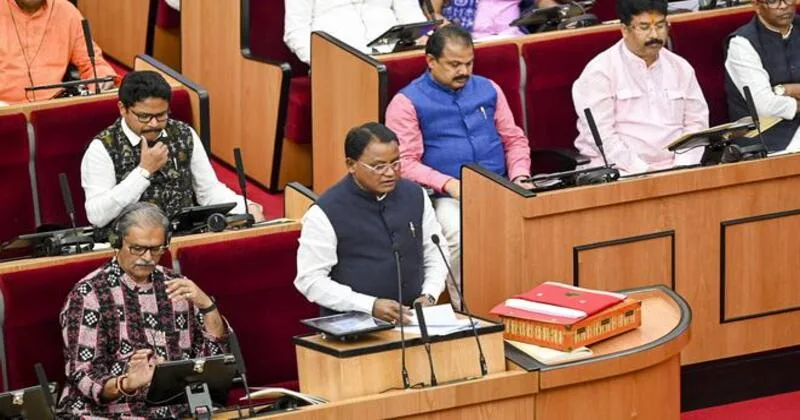
Bhubaneswar: Odisha is nearing a significant milestone in its battle against Maoists, with only 15 active Maoists reported in the state, according to Chief Minister Mohan Charan Majhi. Speaking to the Legislative Assembly on March 23, the Chief Minister noted a substantial decline in insurgent presence, attributed to ongoing security operations and an effective surrender and rehabilitation policy.
Limited Maoist Presence
The Chief Minister informed the Assembly that the remaining Maoist cadres are primarily located in the border areas of Kandhamal, Kalahandi, and Rayagada districts. He emphasised that no Maoist activities have been reported elsewhere in the state, reflecting a marked improvement in the overall law and order situation in Odisha.
Despite this progress, Kandhamal continues to be classified as a Maoist-affected district under the Centre’s Security Related Expenditure (SRE) scheme due to its dense forests and proximity to inter-district borders, which facilitate residual insurgent activity.
Rapid Decline in Numbers Within a Month
The state has experienced a significant reduction in Maoist numbers in a short time. Data presented in the Assembly revealed that the number of active Maoists has dropped from 40 to just 15 within a month. Previously, splinter groups operated across various districts, including Boudh, Balangir, and Bargarh, in addition to Kandhamal, Kalahandi, and Rayagada.
In response to a query from Congress MLA Taraprasad Bahinipati, the Chief Minister reaffirmed that the state is on track to meet the Centre’s March 31 target for eradicating Maoist influence.
96 Maoists Surrender Under Rehabilitation Policy
A crucial factor in this decline is the increase in surrenders. From 2024 to March 15, 2026, a total of 96 Maoists and militia members have surrendered. The state government attributes this trend to a comprehensive surrender and rehabilitation policy designed to facilitate the reintegration of insurgents into society.
Under this policy, surrendered Maoists receive financial assistance, housing support, monthly stipends, and vocational training for up to 36 months. Additional benefits include marriage assistance, healthcare support, and access to ration cards, ensuring long-term rehabilitation and social reintegration.
Extensive Security Deployment Across Affected Areas
To solidify these gains and prevent any resurgence, the state has deployed a substantial number of security forces in Maoist-affected regions. In a separate response to BJD MLA Dhruba Charan Sahoo, the Chief Minister outlined the scale of deployment, which includes 28 companies of the Border Security Force (BSF), 12 companies of the Central Reserve Police Force (CRPF), and 38 teams of the Special Operations Group (SOG).
Additionally, 487 personnel from the District Voluntary Force (DVF), 37 platoons of the India Reserve Battalion, 29 platoons of the Special Security Battalion, and 58 platoons of the Odisha Special Striking Force have been mobilised. These forces are working in coordination to maintain pressure on remaining Maoist elements and secure vulnerable regions.
The financial commitment to these operations has been significant. By April 1, 2024, the state government has allocated Rs 298.67 crore for the deployment of central armed police forces, with an additional Rs 21.44 crore approved for the period from April 2024 to March 2025.
Final Push Before March 31 Deadline
With the central government’s deadline of March 31, 2026, rapidly approaching, Odisha is ramping up efforts to completely eradicate Maoist influence. Security forces have initiated large-scale combing operations, particularly in the tri-junction area of Kandhamal, Rayagada, and Kalahandi districts, where remaining Maoists are believed to be active.
Odisha’s Director General of Police, Y B Khurania, confirmed that recent operations have produced significant results, including the recovery of Maoist caches containing illegal firearms and manufacturing equipment. He expressed confidence that the state is on track to meet the deadline.
“Our operations are ongoing, and we are fully confident of achieving our target by March 31. The remaining Maoist presence is now restricted to a small area, and we are maintaining strict vigilance across all border regions,” the DGP stated.
He also highlighted that Odisha shares borders with Chhattisgarh and Jharkhand, where anti-Maoist operations are concurrently taking place. This increases the risk of insurgent movement across state lines, necessitating heightened vigilance in bordering districts such as Sundargarh, Keonjhar, and Rourkela.
Surrender or Face Action: Police Issue Ultimatum
As part of the intensified crackdown, Kandhamal district police have issued posters identifying 11 Maoists, including senior leaders like zonal committee member Shukru and divisional committee member Sheela. Other identified members include Ranjita, Montu, Santosh, Sandhya, and Sushama, along with four additional cadres.
Authorities have made it clear that surrender is the only viable option for the remaining insurgents. Those who choose to surrender will receive the rewards announced for them and will also be eligible for rehabilitation benefits under government schemes. However, officials have warned that failure to surrender could lead to fatal consequences during ongoing security operations.
Decisive Week for Kandhamal
With only days left before the deadline, Kandhamal district has become the focal point of the state’s anti-Maoist strategy. Since March 19, approximately 60 to 70 teams, consisting of SOG personnel, CRPF units, and district police, have been deployed in and around the district. These forces have effectively cordoned off the area, intensifying search and combing operations.
The situation is now critical, with both security forces and the remaining Maoists at a pivotal juncture. Recent recoveries of weapons and equipment indicate that insurgents are confined to a limited area and facing increasing pressure.
Call for Reintegration into Mainstream Society
Amid these heightened operations, Superintendent of Police of Kandhamal, Harish Bishi, has urged the remaining Maoists to surrender and reintegrate into normal life. He emphasised that the government is committed to supporting those who choose to abandon violence and reintegrate into society.
State Confident of Maoist-Free Status
With ongoing security efforts, robust rehabilitation measures, and a notable decrease in insurgent numbers, Odisha appears poised to achieve its long-standing goal of becoming Maoist-free. Officials remain optimistic that the final phase of operations will eliminate the last pockets of resistance and usher in lasting peace in the region.