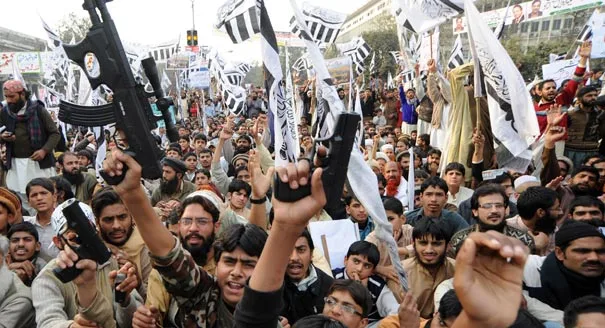
In what is being described as a significant escalation in cross-border strategy, intelligence sources quoted in media reports have indicated a coordinated effort between Pakistan’s military establishment and Lashkar-e-Taiba to exploit high-visibility religious gatherings like Eid for ideological mobilisation and recruitment.
Officials say that such events are being used not just for religious congregation but as platforms to mainstream extremist narratives and revive dormant terror networks aimed at India. The move is being viewed as part of a broader “hybrid warfare” approach that combines propaganda, radicalisation, and proxy militancy.
At the centre of this campaign is Hafiz Talha Saeed, son of Hafiz Saeed, who is believed to be taking a more prominent role in the organisation’s leadership.
According to intelligence inputs, Talha addressed a large Eid gathering at Lahore’s Shalimar Bagh, where he delivered speeches laced with anti-India and anti-Israel rhetoric. His messaging reportedly attempted to frame regional conflicts as part of a larger ideological struggle, expanding the group’s narrative beyond its traditional Kashmir focus.
Security agencies believe such speeches are carefully crafted to attract new recruits and sustain ideological momentum among supporters, particularly targeting younger audiences.
The rhetoric at these gatherings was not limited to India. Senior LeT figure Saifullah Qasuri reportedly made sweeping claims about Pakistan’s role in a multi-front confrontation involving India, Israel, and Afghanistan.
Statements projecting Pakistan as a dominant military force and a global leader for Muslim nations are being interpreted as attempts to create a sense of urgency and unity among followers. Analysts note that such exaggerated claims, while strategically questionable, serve as powerful tools for radicalisation and mobilisation.
Top intelligence officials view these developments as part of a calculated shift toward hybrid warfare. By leveraging the emotional and spiritual significance of Eid, extremist groups are attempting to normalise radical narratives within public discourse.
This approach, often referred to as “religious mainstreaming,” is designed to lower resistance to extremist ideology and facilitate recruitment under the guise of religious duty. The inclusion of global issues such as Israel alongside India is seen as a deliberate attempt to broaden appeal and justify continued hostility.
The reported involvement of Pakistan’s security establishment in enabling such gatherings has once again raised concerns about the enduring nexus between state actors and terror outfits like Lashkar-e-Taiba.
Despite international pressure, this alignment appears to persist, with coordinated messaging indicating a more structured and sustained campaign. Intelligence agencies believe that the transition of leadership to figures like Hafiz Talha Saeed signals continuity and possibly intensification of anti-India operations.
For Indian security agencies, these developments are being treated as more than rhetorical posturing. Officials warn that such gatherings and speeches could serve as blueprints for future operations, combining ideological indoctrination with tactical planning.
The emerging threat is not limited to traditional militancy but extends into psychological and informational domains, making it more complex and harder to counter. Authorities are closely monitoring these patterns, with a focus on pre-empting any attempts at infiltration or proxy attacks.
As the region navigates heightened geopolitical tensions, the use of religious platforms for strategic messaging adds a new dimension to existing security challenges. The developments point to a possible resurgence of proxy warfare tactics, now backed by a more sophisticated ideological campaign.