In the heartlands of Uttar Pradesh, a silent, transformative administrative exercise is underway, which will redefine how governance reaches the farmer. Under the governance of Chief Minister Yogi Adityanath, the state has embarked upon an ambitious mission to achieve 100 per cent Farmer ID coverage by March 31. What could be perceived as merely a bureaucratic exercise, in fact, is a critical reform measure in complete conformity with the overall vision of the Modi-Yogi Double Engine Government to enable annadata through transparency, efficiency and timely delivery.
The exercise is at a large level, as the state of Uttar Pradesh has set a target of generating Farmer IDs for more than 2.88 crores of farmers, and as per the official data, the process of registration is nearing completion, as nearly 1.99 crores of registrations have already been completed.
Campaign Rooted in Ground-Level Mobilisation
One of the most significant aspects of this exercise is a top-down approach, the government has heavily relied on the mobilisation of the people at the grassroots level. The administration has not only relied on the conventional modes of spreading awareness but has taken the campaign to the farmer’s doorstep.
Another significant aspect of this exercise is the role played by the district administration in achieving the target set in the district. The district of Rampur has emerged as a shining example in this regard as the district administration succeeded in achieving the target of 100 per cent, i.e. generating 2.09 lakh Farmer IDs before the deadline.
This administrative intensity is a reflection of the model of governance that the NDA has been pushing for, one where schemes are not just launched but implemented with meticulous attention to detail and outcomes.
Why Farmer ID Matters: A Structural Reform
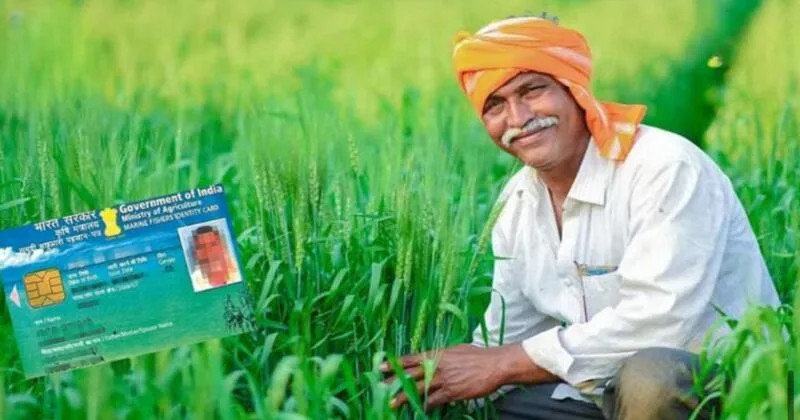
The Farmer ID project is a proposal by the government to give farmers a digital identity where all information pertaining to the farmers’ land, crops and schemes can be accessed and managed under a single umbrella. This is part of the Centre’s wider AgriStack initiative to digitise Indian agriculture.
The advantages of this system can be summarised as follows:
•Access to PM-Kisan Samman Nidhi without bureaucratic hurdles
•Access to fertilisers at regulated prices
•Access to Kisan Credit Cards without the need to repeatedly furnish documents
•Access to newer government schemes without bureaucratic hurdles
•Access to digital crop surveys to enable easier procurement of products at Minimum Support Price (MSP)
For decades, farmers in India have faced issues such as disorganised documentation, bureaucratic hurdles in subsidy delivery and the interference of middlemen. The Farmer ID initiative is designed to overcome these hurdles through the creation of a single source of truth.
Double Engine Push: Modi and Yogi’s Shared Vision
The importance of this initiative can be understood if it is put into the context of the ‘double engine government, ’ a term that is commonly used to denote the synergy between the Centre and the state.
Prime Minister Narendra Modi has been stressing the need to raise the income levels of farmers and to use technology to upgrade farming. From PM Kisan to Soil Health Cards to Direct Benefit Transfers (DBTs), the focus has been made to ensure that there is no leakage and that the farmers get the actual benefits.
Chief Minister Yogi Adityanath focused on the Farmer ID movement, which became a part of this vision at the state level. By ensuring that farmers get proper identification, Uttar Pradesh is strengthening the very backbone of these Centre-run initiatives.
This synergy ensures that policies don’t remain confined to Delhi and are actually implemented on the ground in villages across districts such as Ambedkar Nagar, Barabanki, Hardoi and Kannauj, all of which have been high performers in this movement.
Changing Lives on the Ground
In the case of a small farmer from the eastern part of Uttar Pradesh, the potential of such a system can be life-changing. In the past, farmers had to visit offices, submit documents, and then wait some more, just to avail themselves of the benefits of a government scheme. With the Farmer ID, the experience is likely to be more streamlined.
The role of intermediaries has also been brought into focus through the stories of digitalisation. In the case of benefits being directly associated with the identity of the farmer, the scope of corruption has manifoldly reduced.
The ability of farmers to sell crops at the MSP, as a result of digital surveys, has the potential to bring relief in the case of Uttar Pradesh, as the state has faced the challenge of the logistics of procurement.
Governance Through Data and Accountability
Perhaps one of the most remarkable aspects of this campaign is the focus on data-driven governance. The weekly review of the work of the district magistrates, the incentives for officials based on performance and the strict action taken for poor performance all point to a shift from intent to accountability.
This is a reflection of a wider administrative philosophy of governance as a measurable outcome rather than a mere announcement. It also ensures that the districts compete with each other, thus a healthy environment of administrative excellence created. The fact that Rampur has managed to achieve 100 per cent coverage ahead of schedule is a reflection of the potential of local leadership to achieve remarkable things if it is aligned with the state’s goals.
Bridging the Rural Digital Divide
This initiative tracks and removes the digital divide in rural India. Reaching out to farmers and aiding them in their registration is, in effect, making sure that those who are not digitally literate are also taken care of. This concept of human-assisted digitisation is vital in India, where a large number of farmers are still using traditional methods and are not quite familiar with technology.
A Step Towards Future-Ready Agriculture
The Farmer ID is not just another initiative in India’s agricultural reform journey. It is part of the foundation for more and better innovations in the field. Once this database is in place, it could pave the way for:
•Precision agriculture using data analytics
•Crop insurance according to each farmer’s needs
•Real-time advisory services according to crop cycles
•Disaster compensation schemes
It could be said that this is just the beginning of a more resilient and technology-enabled agricultural ecosystem in India.
Why the Push Now?
The need for this initiative could be understood in the context of India’s economic objectives. Agriculture plays a significant role in India’s economy, employing a large number of people. For farmers to prosper and for this sector to be sustainable, changes are necessary.
PM Narendra Modi and Yogi Adityanath have repeatedly asserted that farmers are at the core of India’s development. It is the goal of doubling farmers’ incomes, natural farming or better irrigation facilities; the focus remains the same. The Farmer ID initiative is part of a broader context. It is about building a platform where every farmer is visible and identifiable.
From Identity to Empowerment
Farmer ID is more than just a registration drive in Uttar Pradesh. It is a revolutionary governance program that aims to include farmers in the digital mainstream. By understanding the grassroots mobilisation with technological integration, the double-engine government is trying to resolve long-pending issues in agricultural governance. The success of the program in Rampur and other districts is a promising start.
If implemented in its true sense, this program can change the relationship between the state and the farmer from a process-oriented relationship to a state-aided relationship. In a country where the farmer is often on the receiving end of systemic inefficiencies, a unified digital ID is a huge leap towards dignity, empowerment and economic security.