Indian weather has always been an unpredictable. From the fear of cyclones on the Indian eastern seaboard to the life-giving rhythm of the monsoon, weather not only changes season but also determines the socio-economic rhythm of India itself. It is in this context that the India Meteorological Department (IMD) has become a major factor in transforming a conventional weather forecasting agency into a technologically empowered agency.
At its core, an integration of Artificial Intelligence and computing technologies along with dissemination mechanisms has not only transformed India into an agency of better weather forecasts but into a new entity of a weather-ready and climate-smart India itself.
AI Turning the Future of Weather Forecasting
The IMD uses AI and ML, which have revolutionised how weather is predicted and understood. The AI-based Advanced Dvorak Technique (AiDT) is now being used for more accurate estimations of cyclone intensity. Cutting-edge global models like Pangu-Weather, GraphCast and FourCastNet are being incorporated into the Indian weather prediction landscape, making it more accurate and quicker.
These models are not standalone models, but they operate in a hybrid environment that combines physics-based models and AI-based analytics. These models help in more accurate predictions of complex phenomena like monsoon variability, cyclone paths and extreme weather events. The use of the Arunika supercomputer by NCMRWF further adds to this capability, allowing for quick processing of large datasets and high-resolution forecasts.
Perhaps one of the most transformative aspects of this technological leap is hyper-local forecasting. With tools like meteoGAN, IMD can now provide rainfall predictions at a spatial resolution as fine as 300 meters. This approach ensures that forecasts are not just accurate but actionable at the level of individual villages and even fields.
From Forecast to Farmer: Democratising Weather Information
The technological sophistication is of utmost importance; its true worth can be gauged by its accessibility. With this in mind, IMD has paid considerable emphasis to the dissemination of weather information in such a manner that its impact can be felt by the people and farmers.
With AI-based platforms such as “Bhashini” weather information can be accessed in regional languages, thus transforming the linguistic divide that could otherwise impede access. With mobile apps such as “Meghdoot” and “Mausam,” along with the integration of these platforms into 21 different state government IT platforms, farmers across the country are able to access weather information in real-time. These are advisory in nature and assist farmers in deciding on sowing, irrigating, fertilising, and harvesting crops.
Another important milestone was achieved by introducing Panchayat-level weather forecasting. With almost all Gram Panchayats being covered and data made available through e-Gram Swaraj and Mausam Gram IMD has achieved data decentralisation.
Precision in Prediction: New Benchmark in Accuracy
One of the most important factors in measuring IMD progress is its accuracy in predicting various weather phenomena. Cyclone forecasting, which is always associated with various degrees of uncertainty, has made tremendous progress. The absolute error in intensity forecasts has significantly decreased compared to previous years, indicating the superior performance of AI-assisted models.
Monsoon forecasting, which is a key factor in determining India’s agricultural output, has achieved high accuracy in its forecasts. The 2025 monsoon season saw a predicted rainfall of 105% of LPA, whereas actual rainfall was 108 per cent. It is not a coincidence; it is achieved by adopting a Multi-Model Ensemble (MME) approach that includes global climate models.
The Probability of Detection for heavy rainfall events reached 0.85. It is important to note that these figures and percentages are not mere statistical measures; they imply saving lives, crops and economies.
Saving Lives and Securing Futures
The most impactful change in IMD’s journey is evident in its contribution to Disaster Risk Reduction. India is highly prone to cyclones, floods and heat waves. This has resulted in substantial loss of life and property in the past. IMD contribution in this area is quite remarkable.
For instance, in 1999, the Odisha super cyclone caused 7,000 fatalities in Odisha. In recent times, cyclones in Odisha and other states have resulted in fewer than 100 fatalities in the affected areas. This is not only a result of better forecasts by IMD but also a result of the synergy between IMD forecasts and government actions. The development of a GIS-based Decision Support System (DSS) has allowed real-time monitoring and effective action by various agencies.
In economic terms, the advantages are just as substantial. Accurate forecasting of a single cyclone has been estimated to save around Rs 1,100 crores by cutting down on the costs of evacuations, infrastructure damage, and compensation.
For fishermen, accurate marine weather forecasts have become a lifeline, thus saving them from venturing into dangerous seas. For city-dwellers, accurate heat wave forecasts have allowed action plans to be put in place, protecting vulnerable groups such as outdoor workers and the elderly.
Climate Resilience and Long-Term Planning
Also the immediate disaster response and IMD capabilities are building long-term resilience in our climate. Seasonal forecasts and climate data services are now an essential part of policy planning in areas such as water resource management, crop insurance and infrastructure development.
The incorporation of ENSO monsoon linkages and long-range reanalysis data in forecasting models has given us greater insights into climate variability. This has allowed policymakers to anticipate and mitigate risks instead of reacting to them after they occur.
Paradigm shift is the move toward impact-based forecasting (IBF) and risk-based warnings (RBW). In the past, IMD would only issue general alerts. IMD provides sectoral alerts that inform the public of the potential impact of weather events on agriculture, health, transport, etc. This ensures that the public does not only receives the warning but also acts on it.
Mission Mausam: Toward a Climate-Smart Bharat
The launch of Mission Mausam by the Ministry of Earth Sciences embodies the vision of India for the future. It is a mission to create a robust, technology-driven weather and climate system to build resilience against extreme weather events.
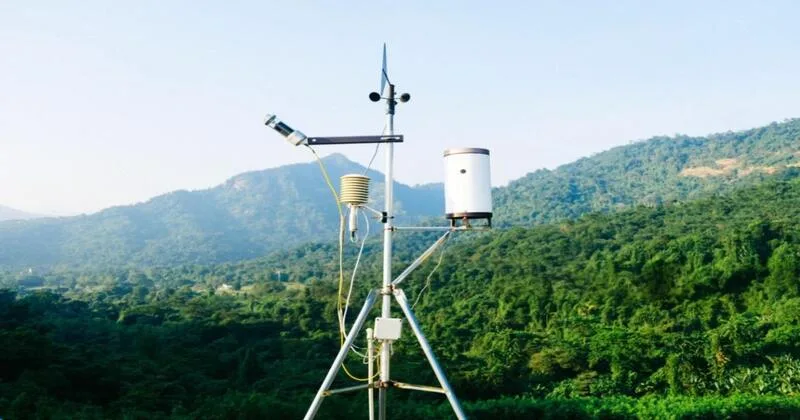
Key features of the mission are the expansion of the existing observation systems by adding new Automatic Weather Stations, Doppler Weather Radars, etc. Improvements in data integration, computing power and resolution of the models are integral to the mission.
With the advent of supercomputers like Arka and Arunika, we are now able to generate models of unimaginable resolutions. The emphasis on the dissemination of weather forecasts ensures that the technology being developed is being translated into useful applications for the public. The idea of Panchayat Mausam Seva is another factor that adds weight to the mission’s focus on being grassroots-oriented, ensuring that every village is provided with timely and accurate weather information.
A Model of Integrated Governance
What makes the Indian meteorological revolution unique is its integrative character. It is not just about technology; it is about technology within a governance framework that is committed to inclusivity and efficiency.
The partnership between IMD, the Ministry of Panchayati Raj, State Governments and private players is a classic example of cooperative federalism. The use of Public-Private Partnerships for dissemination, coupled with digital media and traditional media, creates a robust ecosystem for dissemination. The personalisation of bulletins and warnings ensures that it is relevant to particular groups such as farmers, fishermen and disaster management.
Forecasting a New India Through AI
Indian meteorological journey is no longer just about predicting the weather; it is about making it happen. The AI, advanced computing and grassroots dissemination have given rise to a meteorological framework that not only predicts potential dangers but also does so in a manner that averts them.
In a world increasingly characterised by climatic unpredictability, this revolution provides a template for building strength. It is a template for how technology, in partnership with governance and community participation, can convert weakness into strength.
The IMD’s transformation is not only a scientific revolution; it is a national achievement that protects lives, livelihoods and the pillars of a climate-resilient Bharat. As the monsoon clouds gather and cyclones form in distant oceans, India is supposed to act for the weather like never before.