Foreign powers and proxy politics in Bangladesh
June 23, 2026
  • Read Ecopy
  • Circulation
  • Advertise
  • Careers
  • About Us
  • Contact Us
Android AppiPhone AppArattai
Organiser
  • ‌
  • Bharat
    • Assam
    • Bihar
    • Chhattisgarh
    • Jharkhand
    • Maharashtra
    • View All States
  • World
    • Asia
    • Europe
    • North America
    • South America
    • Africa
    • Australia
  • Editorial
  • International
  • Opinion
  • RSS @ 100
  • More
    • Op Sindoor
    • Analysis
    • Sports
    • Defence
    • Politics
    • Business
    • Economy
    • Culture
    • Special Report
    • Sci & Tech
    • Entertainment
    • G20
    • Azadi Ka Amrit Mahotsav
    • Vocal4Local
    • Web Stories
    • Education
    • Employment
    • Books
    • Interviews
    • Travel
    • Law
    • Health
    • Obituary
  • Subscribe
    • Subscribe Print Edition
    • Subscribe Ecopy
    • Read Ecopy
  • ‌
  • Bharat
    • Assam
    • Bihar
    • Chhattisgarh
    • Jharkhand
    • Maharashtra
    • View All States
  • World
    • Asia
    • Europe
    • North America
    • South America
    • Africa
    • Australia
  • Editorial
  • International
  • Opinion
  • RSS @ 100
  • More
    • Op Sindoor
    • Analysis
    • Sports
    • Defence
    • Politics
    • Business
    • Economy
    • Culture
    • Special Report
    • Sci & Tech
    • Entertainment
    • G20
    • Azadi Ka Amrit Mahotsav
    • Vocal4Local
    • Web Stories
    • Education
    • Employment
    • Books
    • Interviews
    • Travel
    • Law
    • Health
    • Obituary
  • Subscribe
    • Subscribe Print Edition
    • Subscribe Ecopy
    • Read Ecopy
Organiser
  • Home
  • Bharat
  • World
  • Operation Sindoor
  • Editorial
  • Analysis
  • Opinion
  • Culture
  • Defence
  • International Edition
  • RSS @ 100
  • Magazine
  • Read Ecopy
Home World

Battle for dominance: Foreign powers and proxy politics in Bangladesh

Amid intensifying geopolitical undercurrents, Bangladesh is witnessing a shifting political landscape that is drawing increasing international attention. What began as an internal political upheaval in August 2024 has evolved into a complex arena of strategic competition, with global powers such as China, Turkey, and the United States reportedly engaging through indirect channels and local intermediaries

Salah Uddin Shoaib ChoudhurySalah Uddin Shoaib Choudhury
Mar 19, 2026, 10:30 pm IST
in World, Opinion, Asia
Follow on Google News
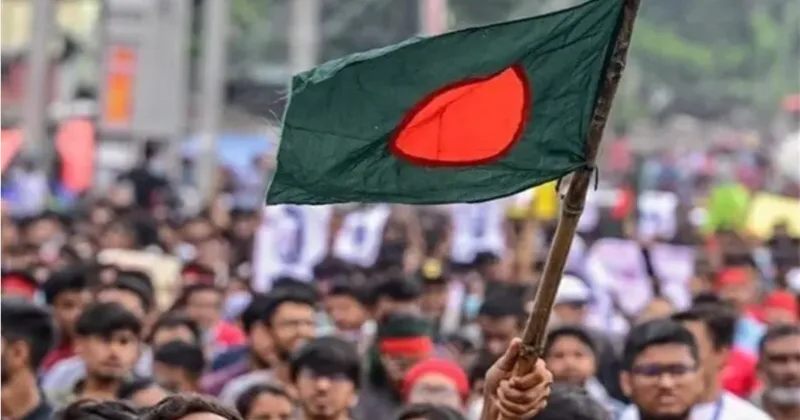
Representative Image

Representative Image

FacebookTwitterWhatsAppTelegramEmail

Since the jihadist-backed upheaval of August 5, 2024, Bangladesh has ceased to function as a purely sovereign political arena. Instead, it has rapidly devolved into a contested battleground where foreign powers are aggressively manoeuvring to establish dominance—using Islamist proxies, covert networks, and political manipulation as their primary tools. What was once an internal political struggle has increasingly transformed into a complex geopolitical contest, where foreign powers are vying for influence through local intermediaries, particularly Islamist networks.

At the heart of this contest lies Jamaat-e-Islami (JeI), widely regarded as an ideological offshoot of the Muslim Brotherhood. While JeI continues to participate in electoral politics, its long-term ideological objective—establishing a Sharia-based state—raises serious concerns about the direction of Bangladesh’s political future.

Three major actors—China, Turkey, and the United States—have emerged as key players in Bangladesh’s evolving political landscape. Despite their global rivalries, these nations appear to share a tactical convergence in leveraging local actors to expand influence.

Operating in the shadows of this competition is Pakistan’s powerful intelligence agency, the Inter-Services Intelligence (ISI), which is widely believed to be acting as a facilitator—simultaneously engaging with both Washington and Beijing. This dual alignment underscores the fluid and transactional nature of modern geopolitics, where ideological differences are often subordinated to strategic interests.

A recent episode involving the Chinese Embassy in Dhaka illustrates how humanitarian initiatives can intersect with political strategy. The embassy distributed Eid al-Fitr food packages at an event attended by Ambassador Yao Wen and Jamaat-e-Islami leader Shafiqur Rahman. Officially described as aid for “residents in Dhaka”, the distribution reportedly took place within the Dhaka-15 constituency—a political stronghold of the Jamaat leader.

Tensions emerged when Jamaat-e-Islami allegedly claimed the aid originated from its own leadership. In response, the Chinese Embassy issued a public clarification, emphasising its support for Bangladesh’s elected government and distancing itself from any political misrepresentation.

However, the broader implications are significant. Despite the electoral victory of the Bangladesh Nationalist Party (BNP), led by Tarique Rahman, China’s engagement with Jamaat suggests a strategic calculation—prioritising long-term ideological influence over immediate political alignment. This selective engagement raises questions about Beijing’s intentions and its willingness to cultivate ties with Islamist actors.

Jamaat-e-Islami’s participation in elections often creates an impression of democratic legitimacy. Yet, analysts argue that this engagement is largely tactical. The party’s foundational objective remains the establishment of a theocratic system rooted in Sharia law.

Reports attributed to The Washington Post earlier suggested that elements within the United States may view Jamaat’s political rise as strategically beneficial. Whether intended as a counterbalance or as part of a broader regional policy, such perceptions contribute to growing unease about external interference in Bangladesh’s domestic affairs.

Perhaps the most alarming development involves reports of an alleged international conspiracy to carve out a new “Christian state” from parts of Bangladesh, Myanmar, and India. India’s premier counter-terrorism agency, the National Investigation Agency (NIA), reportedly detained several foreign nationals, including American citizen Matthew Aaron VanDyke and a group of Ukrainian operatives— namely Hurba Petro, Slyviak Taras, Ivan Sukmanovskyi, Stefankiv Marian, Honcharuk Maksim, and Kaminskyi Viktor.

One of the detained Ukrainian nationals is from the Foreign Intelligence Service of Ukraine (Sluzhba zovnishn’oyi rozvidky Ukrayiny), while some of the detainees are believed to have links to the controversial Azov Brigade, known for its involvement in high-risk operations. Intelligence sources have suggested that such operatives possess expertise in covert activities, including sabotage and targeted violence.

Months before her removal from power, former Bangladeshi Prime Minister Sheikh Hasina issued a series of warnings about foreign conspiracies aimed at undermining her government. She claimed that she had been offered political continuity in exchange for permitting a foreign country to establish a military airbase in Bangladesh.

Hasina also alluded to a broader plan involving territorial fragmentation and the creation of a new state encompassing parts of Bangladesh, Myanmar, and India. Although she refrained from naming the country behind the proposal, her remarks pointed to a coordinated external effort.

Her refusal, she suggested, triggered mounting pressure and ultimately contributed to her ouster in August 2024. While these claims remain contested, subsequent developments have lent them renewed relevance.

The events surrounding Hasina’s departure—involving her relocation to India—have fueled speculation about external involvement in Bangladesh’s internal political transition. Allegations that the August 2024 regime change was facilitated by a combination of foreign powers, including the United States, Turkey, and China, with operational support from Pakistan’s spy agency Inter-Service Intelligence (ISI), reflect a growing narrative of compromised sovereignty. Such claims, whether fully substantiated or not, highlight a broader concern: the erosion of national autonomy in the face of coordinated external influence.

Today, Bangladesh finds itself at a critical juncture. Its geographic location—bordering India, Myanmar, and the Bay of Bengal—makes it a strategic prize in regional geopolitics. Control over its political direction carries implications not only for domestic governance but also for regional stability, trade routes, and security dynamics.

The convergence of foreign interests, coupled with the active role of Islamist groups, risks transforming Bangladesh into a proxy battleground. This scenario could have far-reaching consequences, including heightened tensions in India’s northeast, instability in Myanmar’s Rakhine State, and disruptions to maritime security.

The unfolding situation in Bangladesh underscores the complex interplay between domestic politics and global strategy. As foreign powers deepen their engagement, often through indirect means, the country’s sovereignty and democratic institutions face unprecedented challenges.

For Bangladesh, the path forward will require vigilance, institutional resilience, and a renewed commitment to national unity. For the international community, it is a moment to reflect on the consequences of interventionist policies that risk destabilising an already fragile region.

Ultimately, the future of Bangladesh must be determined by its people—not by the competing ambitions of external powers or the agendas of ideological proxies.


Topics: Proxy PoliticsBangladeshJamaat-e-IslamiBangladesh Nationalist PartyFormer Prime Minister Sheikh Hasina
Salah Uddin Shoaib Choudhury
The writer is an internationally acclaimed multi-award-winning anti-militancy journalist, writer, research-scholar, counterterrorism specialist and editor of Weekly Blitz. [Read more]
ShareTweetSendShareSend
✮ Subscribe Organiser YouTube Channel. ✮
✮ Join Organiser's WhatsApp channel for Nationalist views beyond the news. ✮
Previous News

PM Modi, French President Macron calls for ‘urgent need for de-escalation’ of West Asia conflict during talks

Next News

Cheti Chand: A celebration of faith, culture, and the New Year for the Sindhi Community

Related News

Yoga Day celebrations in Shanghai, China

International Yoga Day: Global celebrations echo the message of health, well-being and timeless ancient Indian wisdom

Illegal Bangladeshi migrants detained by Assam Police

Assam: Police detain 14 suspected Bangladeshi infiltrators from Guwahati lodge in a verification drive

Radical Islamists forced to stop the construction of Bhagwan Ram idol in Bangladesh

Bangladesh: Construction of Bhagwan Ram murti halted amid threats by Islamists; Reflects spiking anti-Hindu hostility

The image of alleged "Kolkotta Bayee" Jewel King living at Pathanamthitta

Keralam: WhatsApp status reveals illegal Bangladeshi who lived in Pathanamthitta for five years as ‘Kolkotta Bayee’

Keralam Chief Minister V.D. Satheeshan

Jamaat-e-Islami Hind Team Meets CM Satheeshan, Senior Ministers, fuel debate over influence in UDF government

MEA spokesperson Randhir Jaiswal highlights India's resolve to deport illegal Bangladeshi migrants via bilateral mechanisms

India reiterates strong resolve to deport illegal Bangladeshis; Flags delay of bilateral procedures from Dhaka

Load More

Latest News

(Left) Fire at the coaching centre in Lucknow (Right) Members of ABVP extending all possible help

Lucknow Coaching Centre Fire tragedy is heartbreaking and deeply unfortunate: ABVP seeks action against culprits

Andhra Pradesh Minister and TDP National General Secretary Nara Lokesh

Nara Lokesh dismisses rumours of TDP sabotaging Modi government, reaffirms unconditional NDA support

With new military deployments, export opportunities and potential Russian production, BrahMos is entering a new era of strategic relevance

BrahMos enters high-volume production as military demand and global export orders surge

Dr Mahrang Baloch

Pakistan: Mahrang Baloch gets life sentence, Balochistan erupts in protest; BYC calls for shutdown

Prime Minister Narendra Modi

‘Maoism is breathing its last’: PM Modi highlights crackdown on red terror in last 12 years and growth in tribal areas

(Left) Dr Shyama Prasad Mookerjee (Right) West Bengal CM Suvendu Adhikari

Syama Prasad Mookerjee was instrumental in creation of West Bengal’: CM Suvendu Adhikari

Female recruitment in Jihadist networks emerges as major security concern

Khadija Terror Case: Female recruitment, online radicalisation in Jihadi networks poses major security concern

Outcry grows after Dalits in Theeyathur village carry deceased woman across paddy fields due to lack of burial access

Tamil Nadu: Dalits forced to carry deceased woman through paddy fields as Pudukkottai village lacks road access

ASI transfers Rakhigarhi skeletal remains to Anthropological Survey of India for detailed examination

Rakhigarhi’s ancient secrets to be unveiled as human skeletal remains reach AnSI for advanced scientific analysis

Dr Syama Prasad Mookerjee: A Life That Still Guides Bharat’s National Resolve

Load More
  • Privacy
  • Terms
  • Cookie Policy
  • Refund and Cancellation
  • Delivery and Shipping

© Bharat Prakashan (Delhi) Limited.
Tech-enabled by Ananthapuri Technologies

  • Home
  • Search Organiser
  • Bharat
    • Assam
    • Bihar
    • Chhattisgarh
    • Jharkhand
    • Maharashtra
    • View All States
  • World
    • Asia
    • Africa
    • North America
    • South America
    • Europe
    • Australia
  • Editorial
  • Operation Sindoor
  • Opinion
  • Analysis
  • Defence
  • Culture
  • Sports
  • Business
  • RSS @ 100
  • Entertainment
  • More ..
    • Sci & Tech
    • Vocal4Local
    • Special Report
    • Education
    • Employment
    • Books
    • Interviews
    • Travel
    • Health
    • Politics
    • Law
    • Economy
    • Obituary
  • Subscribe Magazine
  • Read Ecopy
  • Advertise
  • Circulation
  • Careers
  • About Us
  • Contact Us
  • Policies & Terms
    • Privacy Policy
    • Cookie Policy
    • Refund and Cancellation
    • Terms of Use

© Bharat Prakashan (Delhi) Limited.
Tech-enabled by Ananthapuri Technologies