At a time when artificial intelligence and automation are disrupting industries and raising fears of job losses, a unique profession linked to India’s ancient spiritual traditions is emerging as a promising and stable career. Temple management, once an informal responsibility handled by priests and hereditary temple families, is now being taught as a professional discipline in universities across Bharat.
The growing interest in this field reflects a deeper reality about Indian society: devotion and faith remain constant in both prosperity and adversity. This very nature of religious life makes temple-related professions relatively insulated from both technological disruption and economic downturns.
For many young Indians, the career is not merely about employment but about serving faith and community while ensuring that sacred spaces function smoothly and respectfully.
One such student is 18-year-old Parth Kurandale from Pune, who recently enrolled in a temple management programme at Savitribai Phule Pune University. Growing up in a devotional environment filled with bhajans, kirtans and ritual prayers, Kurandale felt naturally drawn to the spiritual ecosystem.
“I grew up amid the chants of mantras, bhajans, and kirtans. My father is part of a kirtan toli that performs spiritual hymns at pujas and family ceremonies,” Kurandale told India Today, explaining the influence of his upbringing.
But his motivation was not only spiritual. Living in Pune, a city dotted with historic temples, Kurandale had witnessed the difficulties pilgrims often face while visiting sacred sites.
According to the report, Kurandale noticed how devotees sometimes struggled with mismanagement, overcrowding, and occasional exploitation by middlemen or vendors around temple premises. These experiences inspired him to pursue temple management as a profession where he could contribute to improving the pilgrim experience.
For Kurandale, the course represents both a career opportunity and a form of seva, service to society through the preservation and better administration of religious institutions.
Classroom that reflects generations
Interestingly, Kurandale’s batch includes students from vastly different age groups. Among them is Shrikant Pandharipande, a retired engineer from Nashik who has already spent four decades in the professional world.
Pandharipande told India Today that after completing a long corporate career, he wanted to pursue something meaningful and intellectually stimulating.
“I have already completed a 40-year stint in my first innings. I wanted to explore an option that was not as mundane as a regular MBA,” he said.
Unlike younger students seeking jobs, Pandharipande sees the programme as an opportunity to contribute to temple administration through consultancy or mentorship.
“I am not looking for placement after this course. I would be more interested in either being a consultant to temples or guiding students in the future,” he explained to India Today, adding that he is currently undergoing practical training at a temple site in Nashik.
Despite their generational gap, both Kurandale and Pandharipande share a common belief: better temple management can transform the experience of millions of pilgrims who visit sacred sites each year.
Universities introducing temple management courses
Temple management as an academic discipline is relatively new in India. Over the past few years, several institutions have started offering specialised courses that blend traditional knowledge with modern administrative skills.
Universities currently offering such programmes include:
- Savitribai Phule Pune University
- Mumbai University
- Tamil University
- National Sanskrit University, Tirupati
- Sampoornanand Sanskrit Vishwavidyalaya, Varanasi
- Welingkar Institute of Management Development and Research, Mumbai
- ICPS Bhopal
- Uni Trust Mahila Arts College in Gujarat
Most programmes run for six months to one year and include both classroom teaching and field internships.
For instance, the one-year programme at Sampoornanand Sanskrit Vishwavidyalaya reportedly costs around Rs 11,000, while Welingkar Institute offers a six-month course priced at approximately Rs 26,000.
Students must also complete internships ranging from 120 hours to three months, often at temples or pilgrimage sites where they gain hands-on experience managing devotees, organising rituals, and handling logistics.
What temple management actually teaches
Behind the spiritual serenity that devotees experience at temples lies a complex administrative system. Managing large pilgrimage sites requires coordination across multiple areas, finance, crowd control, infrastructure, security, rituals, and hospitality.
Temple management courses therefore, combine modern managerial training with knowledge of religious traditions.
Subjects typically include:
- Temple economy and financial management
- Public Trust Act and legal compliance
- Infrastructure and facilities management
- Crowd control and pilgrimage logistics
- Heritage conservation
- Event and festival management
- Human resource management
- Community engagement and cultural understanding
In addition to these practical skills, students are also taught about the spiritual and cultural significance of temple rituals so that administrative decisions remain aligned with tradition.
An official from Mumbai’s Welingkar Institute explained to India Today that temple management is fundamentally different from corporate management.
“Temple management focuses on the administration of religious institutions rather than corporate businesses,” the official said.
More inclusive temple ecosystem
Another striking aspect of these programmes is the diversity of students enrolling in them.
Traditionally, temple administration in India was dominated by hereditary priestly families or specific communities. However, temple management courses are attracting students from varied social backgrounds.
According to the report, classrooms today include students from different castes and communities, including Dalits and Brahmins studying together. Women also make up a significant portion of the cohort, with some batches reporting nearly one-third female participation.
Professor Ravikant Sangurde from Mumbai University noted that many students still come from religious or temple-associated families, but the demographic base is widening.
“Many students enrolling come from religious or priestly backgrounds, temple-associated families, or trust members,” he told India Today, while also noting the growing participation of young candidates.
Scholars believe this diversity may gradually transform how temples are managed in the future, making administration more transparent, professional, and inclusive.
Preserving dharma in a changing world
Religious scholars also see these programmes as an important step toward preserving India’s spiritual heritage.
Varanasi-based priest and scholar Bhaskar Dwivedi noted how temple administration has evolved over time.
“In our time, temple management was not even a thing. All the work was handled almost entirely by pandits and pujaris,” Dwivedi told India Today.
He welcomed the growing interest among both young and older students, emphasising that protecting Sanatan Dharma is a shared responsibility.
“The responsibility of preserving Sanatan Dharma should not rest on Brahmins alone. Dharma belongs to everyone,” he said.
Dwivedi also dismissed debates over modern job titles associated with temple management.
“Devotion can come in any name. It is service to God, chahe kisi naam se kariye,” he said.
Expanding temple economy
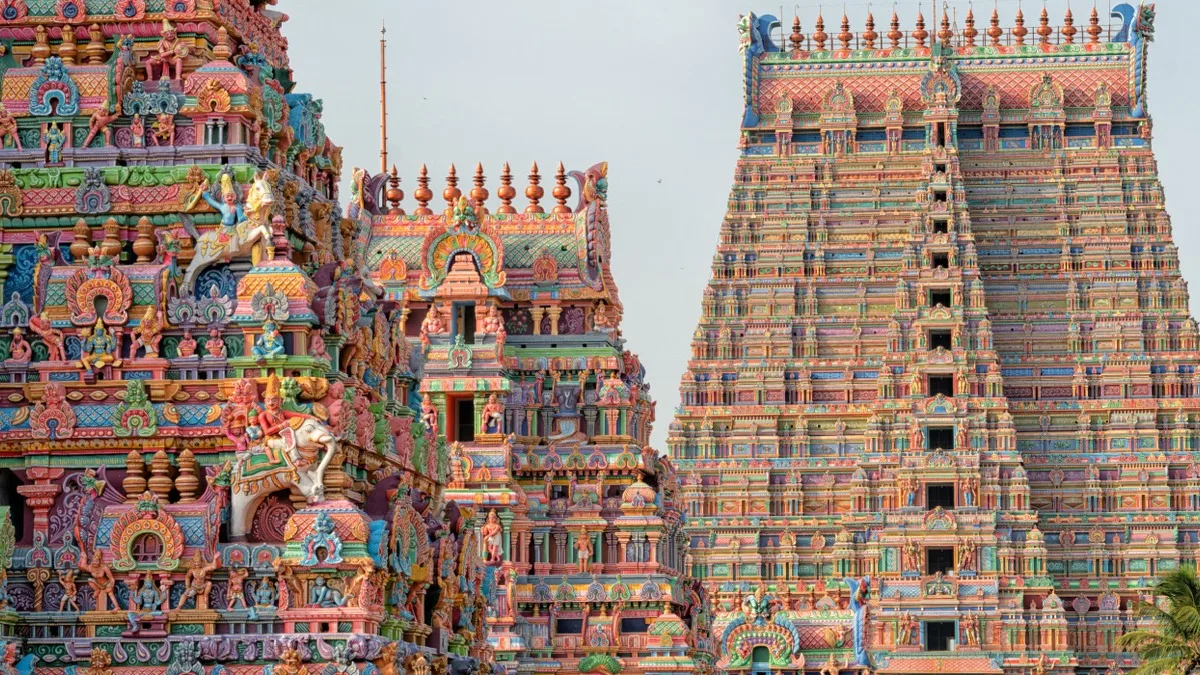
The emergence of temple management as a profession is closely tied to the rapid expansion of India’s temple economy.
Estimates suggest that India has around 30 lakh temples, forming a massive religious infrastructure that attracts millions of pilgrims every year.
Pilgrim numbers at major temples have surged dramatically in recent years. For example:
The Kashi Vishwanath Temple reportedly saw visitor numbers grow from around 67 lakh in 2017 to nearly 11 crore in 2024.
The Tirumala Venkateswara Temple recorded annual footfall rising from around 2.3 crore in 2019 to more than 3 crore in 2024-25.
With such massive crowds, managing temples requires skilled professionals who can balance tradition with modern systems of organisation.
These roles may include: Temple administrators, Pilgrimage coordinators, Religious tourism managers, Cultural heritage managers and Temple development consultants.
A career that AI may struggle to replace
Unlike many corporate jobs that are increasingly vulnerable to automation, temple management relies heavily on human interaction, cultural sensitivity, and spiritual understanding.
Career counsellor Esha Mohite explained this distinction while speaking to India Today.
“Managing temples requires handling devotees, organising rituals and festivals, resolving crowd issues, and navigating community sensitivities. Much of it depends on cultural understanding and emotional engagement,” she said.
Because of these human-centric responsibilities, she believes automation will struggle to replace such roles.
“It makes total sense that it could be one of the safest jobs in the coming future,” Mohite added.
Another factor contributing to the profession’s stability is the nature of religious devotion itself.
Unlike many industries that fluctuate during economic crises, religious activity often continues uninterrupted. In fact, reports say that temple visits and donations sometimes increase during difficult times, as people seek spiritual comfort.
This phenomenon makes temple-related professions relatively resilient during economic downturns.
For many students, the field therefore offers not only spiritual fulfilment but also long-term career security.
Recognising the potential of the temple economy, several state governments are also exploring ways to institutionalise training in temple administration.
Recently, Madhya Pradesh Chief Minister Mohan Yadav announced plans to introduce temple management courses in state universities.
The aim, he explained, is to understand how proper temple management can contribute to economic growth and religious tourism.
As temples become major cultural and tourism hubs, professional management may help improve facilities, attract more pilgrims, and generate employment opportunities.
For now, placement opportunities are still evolving because most universities have only recently launched these programmes. However, organisations like Temple Connect are working to connect graduates with temple trusts and religious institutions.
Social worker Girish Kulkarni told India Today that Temple Connect played a major role in shaping the curriculum for temple management courses.
Today, the organisation is helping students find internships and employment opportunities within the temple ecosystem.
For many young aspirants, the profession also serves as a backup career option. One UPSC aspirant studying the course told India Today that he hopes to contribute to large religious events like the upcoming Kumbh.
Faith as the foundation of a new career
India’s temples have always been centres of spirituality, community life, and cultural heritage. Now they are also emerging as spaces of professional opportunity.
In a world increasingly dominated by machines and algorithms, temple management represents something deeply human, the ability to organise sacred spaces where millions seek peace, hope, and blessings.
As one student observed, people turn to God both in moments of joy and in times of distress. And as long as faith continues to guide millions of lives, the need for those who can serve and manage these sacred institutions will remain strong.
Temple management, therefore, may not just be a profession. For many, it is a calling, where career meets devotion, and administration becomes a form of spiritual service.