Ancient villages and environmental wisdom
June 13, 2026
  • Read Ecopy
  • Circulation
  • Advertise
  • Careers
  • About Us
  • Contact Us
Android AppiPhone AppArattai
Organiser
  • ‌
  • Bharat
    • Assam
    • Bihar
    • Chhattisgarh
    • Jharkhand
    • Maharashtra
    • View All States
  • World
    • Asia
    • Europe
    • North America
    • South America
    • Africa
    • Australia
  • Editorial
  • International
  • Opinion
  • RSS @ 100
  • More
    • Op Sindoor
    • Analysis
    • Sports
    • Defence
    • Politics
    • Business
    • Economy
    • Culture
    • Special Report
    • Sci & Tech
    • Entertainment
    • G20
    • Azadi Ka Amrit Mahotsav
    • Vocal4Local
    • Web Stories
    • Education
    • Employment
    • Books
    • Interviews
    • Travel
    • Law
    • Health
    • Obituary
  • Subscribe
    • Subscribe Print Edition
    • Subscribe Ecopy
    • Read Ecopy
  • ‌
  • Bharat
    • Assam
    • Bihar
    • Chhattisgarh
    • Jharkhand
    • Maharashtra
    • View All States
  • World
    • Asia
    • Europe
    • North America
    • South America
    • Africa
    • Australia
  • Editorial
  • International
  • Opinion
  • RSS @ 100
  • More
    • Op Sindoor
    • Analysis
    • Sports
    • Defence
    • Politics
    • Business
    • Economy
    • Culture
    • Special Report
    • Sci & Tech
    • Entertainment
    • G20
    • Azadi Ka Amrit Mahotsav
    • Vocal4Local
    • Web Stories
    • Education
    • Employment
    • Books
    • Interviews
    • Travel
    • Law
    • Health
    • Obituary
  • Subscribe
    • Subscribe Print Edition
    • Subscribe Ecopy
    • Read Ecopy
Organiser
  • Home
  • Bharat
  • World
  • Operation Sindoor
  • Editorial
  • Analysis
  • Opinion
  • Culture
  • Defence
  • International Edition
  • RSS @ 100
  • Magazine
  • Read Ecopy
Home Bharat

Sacred Trees, Living Science: How ancient Indian villages protected the environment long before modern ecology

Long before modern science explained oxygen or photosynthesis, Indian villages had already developed a practical system to protect life-sustaining trees. By making Peepal and Banyan sacred, ancient communities encoded ecological wisdom into culture and ensured environmental protection for generations

WEBDESKWEBDESK
Mar 14, 2026, 10:30 am IST
in Bharat, Culture
Follow on Google News
Representative image

Representative image

FacebookTwitterWhatsAppTelegramEmail

Long before modern science formally identified oxygen or explained the chemistry of photosynthesis, Indian villages had already developed an intuitive system to protect the environment. At the centre of this system stood two trees that became deeply embedded in the social and cultural life of the subcontinent, the Peepal (Ficus religiosa) and the Banyan (Ficus benghalensis). These trees were not merely part of the landscape; they were revered, protected and integrated into everyday life.

2000 years before we named oxygen, villagers already knew which trees kept them alive.

Banyan and Peepal. Every settlement. Every temple compound.

Protected as divine.

But here's what colonial scholars missed — the sacred wasn't spiritual theater. It was encoded survival.… pic.twitter.com/Lt9nuNXbZq

— GemsOfINDOLOGY (@GemsOfINDOLOGY) March 9, 2026

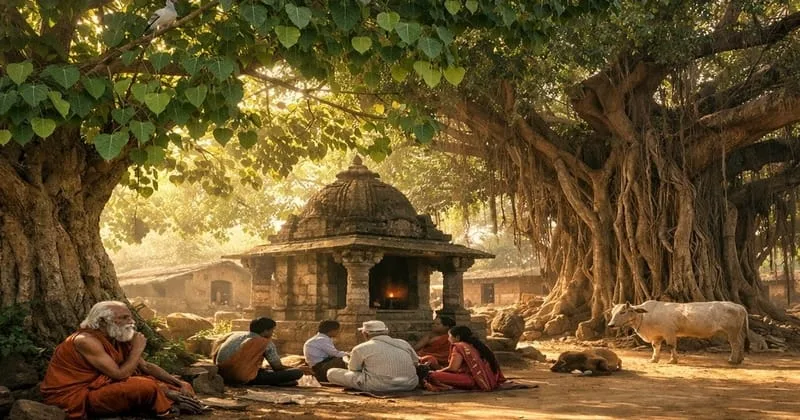
Across India, it was common to find a Peepal or Banyan tree at the centre of a village, near a temple or at a community gathering space. People prayed near them, tied sacred threads around their trunks and held social meetings beneath their shade. Colonial scholars and early modern observers often interpreted these traditions as religious superstition or ritualistic symbolism. However, what they overlooked was the practical ecological logic embedded within these customs.

Ancient communities did not possess the scientific vocabulary that modern ecology uses today. They did not know about oxygen molecules or carbon dioxide cycles. Yet they understood something equally powerful, the value of careful observation.

Generations of villagers noticed that sitting under certain trees brought relief, especially during the intense summer heat. The air beneath these trees felt cooler and lighter. Breathing seemed easier, and the shade created a calm and comfortable space even when the surrounding land was hot and dry. People returned again and again, experiencing the same effect over days, seasons and generations. These repeated experiences slowly transformed into collective knowledge.

Over time, this knowledge evolved into cultural norms. Instead of writing scientific papers or conducting laboratory experiments, communities encoded their observations into traditions that would be remembered and followed by future generations.

Observation Before Explanation

The Peepal and Banyan trees are among the largest and most ecologically significant trees in the Indian subcontinent. Both species have enormous leaf areas and expansive canopies that allow them to exchange large volumes of gases with the atmosphere. Their thick shade reduces ground temperature, while the moisture retained around them helps create cooler microclimates.

Modern science now explains what ancient communities simply experienced. Large trees help regulate air quality, provide shade, support biodiversity and create natural cooling systems in hot climates. In rural settlements, where temperatures could become extreme, the presence of such trees could significantly improve the comfort and health of the local population.

Villagers may not have known the chemical formula for oxygen, but they understood the physical experience of cleaner and cooler air. When people repeatedly observed that certain trees improved their surroundings, those trees naturally gained importance within the community. Observation, repeated across generations, gradually became knowledge. And that knowledge needed a system of protection.

Also Read: Cultural Heritage Restored: Thirumangai Alvar bronze returned by Ashmolean Museum to its Mandir in Tamil Nadu

Culture as an Environmental Protection System

The solution that emerged was remarkably effective: make the trees sacred. By associating Peepal and Banyan trees with religious reverence, communities created a powerful social rule that prevented them from being cut down. When a tree became sacred, it was no longer just a plant, it became part of the moral and spiritual order of the village. Cutting it would not only damage the environment but also violate cultural norms.

As a result, nearly every settlement preserved at least one large tree. Temple compounds, village squares and roadside shrines often grew around them. These trees became natural gathering points where people rested, discussed village matters or conducted rituals.

In effect, ancient society created a decentralised environmental management system. There were no government ministries, environmental laws or climate conferences. Instead, cultural traditions ensured that key ecological assets were preserved.

This system worked for centuries because it was simple and deeply rooted in daily life. By embedding environmental protection within culture and belief, communities ensured that the next generation would automatically continue the practice.

In many ways, this approach represents a different form of science, one based on observation first and explanation later. Modern chemistry eventually explained the biological processes behind what people had already experienced for centuries.


 

Topics: Environmental Wisdom IndiaIndian Cultural TraditionsPeepal TreeBanyan TreeAncient Indian EcologyTraditional Ecological KnowledgeSacred Groves India
ShareTweetSendShareSend
✮ Subscribe Organiser YouTube Channel. ✮
✮ Join Organiser's WhatsApp channel for Nationalist views beyond the news. ✮
Previous News

Chhattisgarh: Cabinet approves Freedom of Religion Bill 2026, imposes strict punishments for fraudulent conversions

Next News

Keralam’s Divine Heritage: Exploring the most revered Mandirs across every district of ‘God’s Own Country’

Related News

No Content Available
Load More

Latest News

Assam government restrict s issuance of Aadhaar Cards

Assam’s Aadhaar Crackdown: Why people above 18 now face new restrictions; What CM Himanta Biswa Sarma said

12 cases raise claims of alleged bias and anti-India narrative framing on Wikipedia, questioning its editorial neutrality and content representation

Wikipedia Exposed: 12 cases that raise serious questions about Anti-Hindu bias and narrative manipulation

Sri Rama Sene chief Pramod Muthalik slams Prakash Raj in the Dharmasthala Mass burial case

Dharmasthala ‘Mass Burial’ Case: Prakash Raj faces public fury: Protesters burn effigy, Hindu groups demand SIT Probe

Intelligence inputs suggest a shift from mass-casualty attacks to a sustained campaign of fear driven by targeted killings and underworld operatives

Pakistan’s Proxy War 2.0: How Dawood-ISI network is building a new sharpshooter army in India

PM Modi’s era through the prism of strategic governance

From Gujarat Model to Global Leadership: Assessing PM Narendra Modi’s 12-year journey of strategic governance

G7 Summit: A strategic opportunity for India to script human-centric AI ecosystem with sovereign models

From Bankura’s red soil, Panchmura’s terracotta tradition blends clay, devotion, and craft into a living heritage of West Bengal

Story of Bankura Terracotta: West Bengal’s living legacy of clay, devotion & timeless craft

Kangra Miniatures and Chamba Rumal to take centre stage in IIAS Shimla

IIAS Shimla showcases rural Himalayan life through Kangra miniatures and Chamba rumal at Heritage art camp

MP and UP ATS detains terror suspect Naeem Abdullah

Uttar Pradesh: Terror link surfaces again in Saharanpur, UP & MP ATS detains Naeem Abdullah

Police Search Abhishek Banerjee’s Home, ED Raids Madan Mitra Properties in Twin Blow to TMC

Fresh Trouble for TMC in Bengal: Police search Abhishek Banerjee’s home, ED raids Madan Mitra properties in twin blow

Load More
  • Privacy
  • Terms
  • Cookie Policy
  • Refund and Cancellation
  • Delivery and Shipping

© Bharat Prakashan (Delhi) Limited.
Tech-enabled by Ananthapuri Technologies

  • Home
  • Search Organiser
  • Bharat
    • Assam
    • Bihar
    • Chhattisgarh
    • Jharkhand
    • Maharashtra
    • View All States
  • World
    • Asia
    • Africa
    • North America
    • South America
    • Europe
    • Australia
  • Editorial
  • Operation Sindoor
  • Opinion
  • Analysis
  • Defence
  • Culture
  • Sports
  • Business
  • RSS @ 100
  • Entertainment
  • More ..
    • Sci & Tech
    • Vocal4Local
    • Special Report
    • Education
    • Employment
    • Books
    • Interviews
    • Travel
    • Health
    • Politics
    • Law
    • Economy
    • Obituary
  • Subscribe Magazine
  • Read Ecopy
  • Advertise
  • Circulation
  • Careers
  • About Us
  • Contact Us
  • Policies & Terms
    • Privacy Policy
    • Cookie Policy
    • Refund and Cancellation
    • Terms of Use

© Bharat Prakashan (Delhi) Limited.
Tech-enabled by Ananthapuri Technologies