London/ Melbourne: The Home Secretary has finally agreed to withdraw permission for a pro-Iran demonstration scheduled to take place this weekend in London, following mounting political pressure and security concerns. The decision came after a senior minister earlier warned that there was no place in British society for what he described as a divisive display linked to extremist narratives. Nearly 100 leaders from the Labour Party, including Members of Parliament and peers in the House of Lords, had written to Home Secretary Shabana Mahmood, urging her to stop the march. In their letter, they warned that allowing the demonstration could create an atmosphere that might encourage extremist activities and deepen tensions within British society.
A spokesperson for the Home Office confirmed that the government had accepted a request from Scotland Yard to prohibit the demonstration. According to officials, police had expressed concerns that the gathering could potentially lead to a breach of public order.
The Home Secretary stated that she was satisfied with the decision to ban the rally, emphasising that public safety and social harmony must remain a priority. She noted that allowing demonstrations that could trigger unrest would only worsen tensions at a time when the situation in West Asia is already volatile. Mahmood further stated that the government would take firm action against individuals or groups who attempt to spread hatred, incitement, or extremist propaganda. She stressed that while the United Kingdom strongly supports the right to peaceful protest, that freedom should not be misused to promote division or violence.
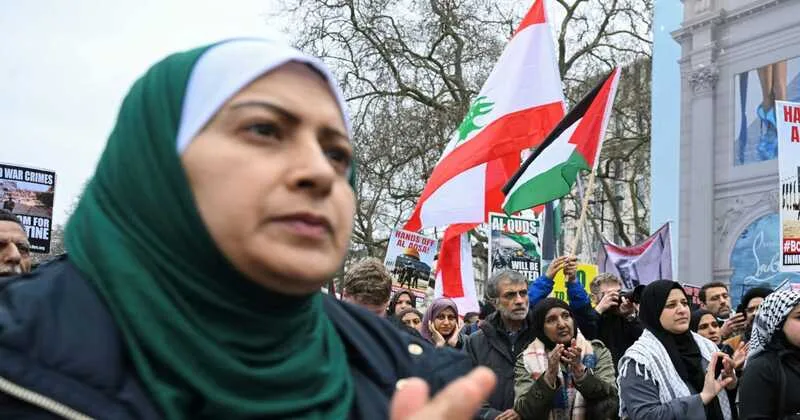
The planned march was part of the annual Al-Quds Day demonstrations organised in London by the Islamic Human Rights Commission. The event has historically drawn controversy because of its perceived political messaging and associations with groups that some critics link to extremist ideologies.
Australia moves to tighten immigration laws
Meanwhile, Australia’s centre-left Labour government has also adopted a tougher stance on immigration in response to escalating geopolitical tensions. The government is preparing to amend immigration laws to prevent individuals from certain countries from entering Australia on temporary visas and subsequently applying for permanent residency or asylum. The proposed policy shift comes shortly after Home Affairs Minister Tony Burke announced that five members of Iran’s women’s national football team would be granted asylum in Australia. The players had refused to sing the Iranian national anthem during an international match, a gesture interpreted as a protest against the Iranian government.
In parallel, Assistant Minister for Citizenship Julian Hill moved quickly to introduce amendments to immigration legislation in Parliament. The proposed changes would allow Australia’s Department of Home Affairs to block entry for people from specific countries who already hold temporary visas but have not yet travelled to Australia.
Hill argued that the measure is necessary to safeguard the integrity and stability of Australia’s immigration system. According to him, the government must ensure that visa arrangements are not misused by individuals who may attempt to remain in the country beyond the permitted period or seek asylum under changing geopolitical circumstances.
If approved by Parliament, the amendment could effectively prevent Iranian tourists who obtained visas before the recent US-Israeli military strikes on Iran from travelling to Australia. Authorities fear that some visa holders may attempt to overstay or submit asylum claims once they arrive.
Although the proposed legislation does not explicitly name any country, explanatory notes circulated among Members of Parliament refer directly to the rapidly evolving situation in West Asia, according to a report by The Guardian Australia. The document states that developments in the region highlight how quickly circumstances can change for visa applicants and temporary visa holders who have not yet entered Australia. The note also suggests that future visa applications from the region may face greater scrutiny, indicating that new applicants are unlikely to receive approvals until the situation stabilises.