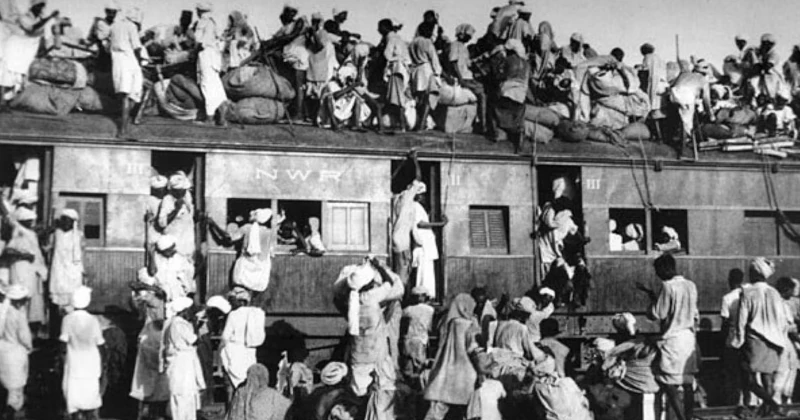
The anguish stemming from the Partition, the greatest tragedy following independence, remains deeply etched in the hearts and minds of the Sindhi community to this day. As a member of the Sindhi community myself, I deeply understand that the country’s partition was not merely a division of land; it was akin to losing one’s entire homeland, culture, and centuries-old identity forever. After the Partition, the Sindhi community was left with virtually nothing. Unlike Punjab or Bengal, where the region was split, the entire province of Sindh went to Pakistan. Consequently, Sindhi Hindus were forced to become refugees without any territory of their own. Yet, it is a testament to the Sindhi community’s resilience and profound patriotism that, starting from scratch, they carved out a new life in India through tireless hard work, courage, and entrepreneurial acumen. While fully integrating into the Indian ethos and enduring the trauma of Partition, they always placed their love for the nation above all else.
It is not widely known that Sindhi refugees received very little compensation in India for the valuable assets they had left behind in Sindh. However, it is also true that instead of relying on government doles or charity, the community immediately established a distinct identity by engaging in small-scale trade, street vending, and manufacturing.
Unlike Punjab and Bengal, Sindh did not undergo a geographical division; the entire province went to Pakistan, leaving no land within the country for the Sindhis. Due to the Partition, over 1.2 million Hindu Sindhis were forced to leave their homelands and ancestral homes. Upon arriving in India, they had to live in extremely difficult conditions within refugee camps set up across various parts of the country. Since the Sindhi community did not have a specific territory of its own in India, preserving the Sindhi language and culture posed a significant challenge. However, the community did not believe in lamenting its fate; instead, it took charge of its own destiny. By settling in various parts of the country, the community not only uplifted itself but also played a vital role in strengthening the nation.
We are all aware that the military camp at Kalyan, near Mumbai, was named ‘Ulhasnagar.’ Following the Partition, it became India’s largest rehabilitation centre for Sindhis. Today, thanks to the tireless efforts of the Sindhi community, it has evolved into a major commercial hub for textiles, electronics, and manufacturing. Similarly, Bairagarh near Bhopal in Madhya Pradesh, now known as Sant Hirdaram Nagar, served as a major Sindhi camp. Under the guidance of the revered Sant Hirdaram, this area transformed into a prominent centre for education, healthcare, and commerce. Bhai Pratap Dialdas established Gandhidham and Adipur in the Kutch region of Gujarat. This region was developed to compensate for the loss of the Karachi port in Sindh. A primary objective was to provide new homes to the Sindhis who had been displaced from Sindh. Kuber Nagar in Ahmedabad and Rajajipuram in Lucknow also became places where Sindhi refugees established themselves after enduring immense hardship. Although the Partition dealt a severe blow to Sindhi culture, the community formed Sindhi Panchayats and various religious-cultural organisations across the country to keep their culture, folk songs, fairs, and festivals alive.
I believe that the tragedy of India’s Partition was not merely a division of land, territory, or borders. It was a conspiracy that shattered human emotions and relationships, as well as the ideology of an undivided nation, a wound the country continues to bear to this day. We are grateful to the Prime Minister of the country, Narendra Modi, for taking the initiative to observe August 14 as ‘Partition Horrors Remembrance Day’ (Vibhajan Vibhishika Smriti Diwas). This day is significant as it allows us to keep alive the memory of the millions of brothers and sisters who struggled and lost their lives during the Partition. The Sindhi community is an integral part of India’s culture. Despite enduring the worst brunt of the Partition, this community, dedicated to ‘Mother India’, has worked for the nation with remarkable resilience; their spirit serves as a source of inspiration.
The Partition was a massive tragedy. The wounds inflicted upon hearts run deep. Let us draw inspiration from the past to shape a better future. Let us move forward continuously, upholding our culture while embracing the spirit of ‘Nation First.’