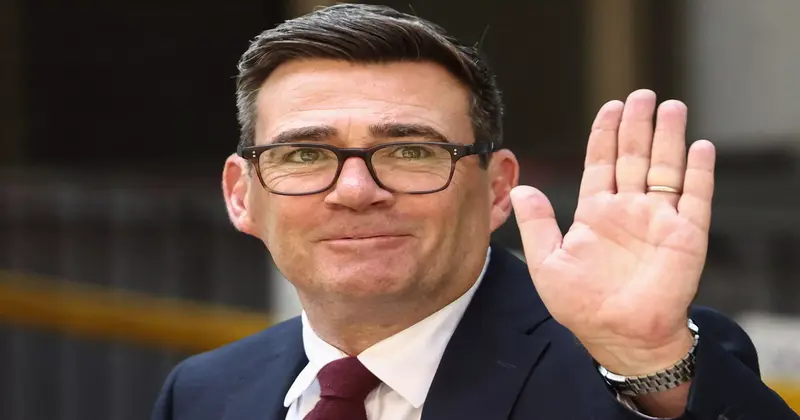
The United Kingdom enters a new political chapter as Andy Burnham is set to assume charge as the country’s Prime Minister, replacing Keir Starmer. The former Mayor of Greater Manchester has pledged to revive Britain economy by easing the cost-of-living crisis, eradicating political instability and restoring the trust in public services. With his appointment, Britain is set to witness seventh Prime Minister in just a decade, reflecting country’s steep political crisis and uncertainity.
Maximum security with police Helicopter 🚁 at Downing Street for Uk Labour Party leader Pm Andy Burnham pic.twitter.com/To99zmcEBe
— Zonjy (@zonjy_) July 20, 2026
Burnham promises fresh political direction
Andy Burnham promised to deliver a more stable, responsible and people-centric government. Following Keir Starmer’s resignation and the formal transfer of power at Buckingham Palace, Burnham is expected to unveil his new cabinet.
The 56-year-old Andy Burnham, is widely known as the “King of the North” for his leadership as Mayor of Greater Manchester. upon being selected as the next Prime Minister of the United Kingdom, Burnham argued that Britain needs a fundamental reset after years of political uncertainty and economic challenges. He also pledged to improve the standard of living, make everyday life more affordable and ensure economic growth benefits communities across the country rather than a select few.
Cabinet decisions and economic challenges
Even before formally taking office, attention shifted to Burnham’s cabinet appointments, particularly towards the choice of Finance Minister, as the country grapples from economic crisis and inflationary pressure. The position is also regarded as one of the most influential in government, with relations between Prime Ministers and Finance Ministers often shaping the success or failure of British governments and intra-party bonhomie or stability.
While Energy Security and Net Zero Secretary Ed Miliband had initially emerged as a frontrunner for the post of Finance Minister, recent speculation suggests Home Secretary Shabana Mahmood is now the leading contender. However, Burnham dismissed the speculations, saying he has not yet finalised his cabinet.
Meanwhile, Burnham’s early policy decisions related to digital identity documents has already attracted attention, as they were abandoned. The proposal, originally intended to tackle illegal migration, had faced widespread criticism and was labelled a “fiasco” by a cross-party parliamentary committee. Questions also remain over Burnham’s approach to taxation, public spending, energy policy and the future of struggling utility companies.
The new government is also expected to adopt a tougher stance on Britain’s underperforming utility companies. For example, Thames Water, burdened by billions of pounds in debt and repeated sewage pollution scandals, has become a symbol of wider concerns about the country’s privatised infrastructure. Deputy Labour Leader Lucy Powell has indicated that the company could be placed under special measures, allowing the government to take operational control if required.
Burnham is also expected to review taxation, public spending, energy policy and investment priorities as part of his broader strategy to re-engineer Britain’s economy.