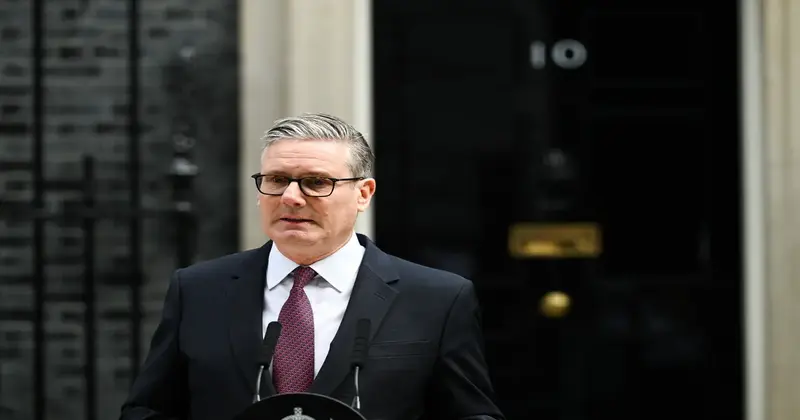
London: In a significant political development, the Prime Minister of United Kingdom Keir Starmer has announced his resignation from the position following mounting pressure within the Labour Party. In his address, Starmer acknowledged the internal questions regarding his leadership and the party’s future, stating, “I know the question being asked now is, who is best charged to take labour forward. The question the party is asking is, if I am best placed to lead party into the next election”.
“I have heard that answer from my party colleagues and I accept. Every decision I’ve taken has been about putting the country I love first. That is why will resign as leader of the Labour Party. I have spoken to His Majesty the King this morning to inform him of my decision. I will ask the Labour National Executive to start the process to ensure a new leader is in place before the next parliament session in September”, Keir Starmer further added.
Watch live: My statement. https://t.co/MX7ga3FRGq
— Keir Starmer (@Keir_Starmer) June 22, 2026
“I will give my successor the full support knowing that they will inherit a stronger Britain to ensure labour gets a second term. I want to thank all my colleagues for their support”, he said. An emotional Starmer then thanked his wife Victoria for being a rock by his side in good times and bad. “When I leave the biggest job in the country, I shall spend more time on the most important job, being the best husband I can to my fantastic wife Vic. And being the best dad I can to my beautiful children who are my pride and joy”, Keir Starmer stated.
Nominations for the Prime Miniter post to commence on July 9
Starmer has asked Labour’s National Executive Committee to set out a timetable for a Labour leadership contest, with nominations opening on July 9. Nominations will close before the summer parliamentary recess, on July 16. In the case of a contest, this will ensure there is a new Labour leader by the time parliament returns in September.
Political pressure on Starmer had intensified in recent months. The crisis escalated sharply after Labour Party rival Andy Burnham won a parliamentary seat, a development that could place him at the forefront as a potential leader for Labour. Starmer’s grip on power had been weakened by disastrous local election results and his decision to appoint the Jeffrey Epstein-associated Peter Mandelson as the UK’s envoy to the US.
Following consultations with cabinet colleagues, advisers, donors and trade union leaders, Starmer concluded that his position was becoming untenable. Just two years after the Labour government swept into power in the UK with a landslide majority, London will now enter a period of uncertainty with new Prime Minister set to occupy the apex position. With this, the United Kingdom will have its sixth Prime Minister in seven years, reflecting steep and prolonged political instability and faultlines within the party system.
(With Inputs from ANI)