



Supreme Court allows first ever passive euthanasia
October 21, 2026
  • Read Ecopy
  • Circulation
  • Advertise
  • Careers
  • About Us
  • Contact Us
Android AppiPhone AppArattai
Organiser
  • ‌
  • Bharat
    • Assam
    • Bihar
    • Chhattisgarh
    • Jharkhand
    • Maharashtra
    • View All States
  • World
    • Asia
    • Europe
    • North America
    • South America
    • Africa
    • Australia
  • Editorial
  • International
  • Opinion
  • RSS @ 100
  • More
    • World Hindu Congress 2026
    • Op Sindoor
    • Analysis
    • Sports
    • Defence
    • Politics
    • Business
    • Economy
    • Culture
    • Special Report
    • Sci & Tech
    • Entertainment
    • G20
    • Azadi Ka Amrit Mahotsav
    • Vocal4Local
    • Web Stories
    • Education
    • Employment
    • Books
    • Interviews
    • Travel
    • Law
    • Health
    • Obituary
  • Subscribe
    • Subscribe Print Copy
    • Subscribe & Read Ecopy
Organiser
  • Home
  • Bharat
  • World
  • Operation Sindoor
  • Editorial
  • Analysis
  • Opinion
  • Culture
  • Defence
  • International Edition
  • RSS @ 100
  • Magazine
  • Read Ecopy
Home Bharat

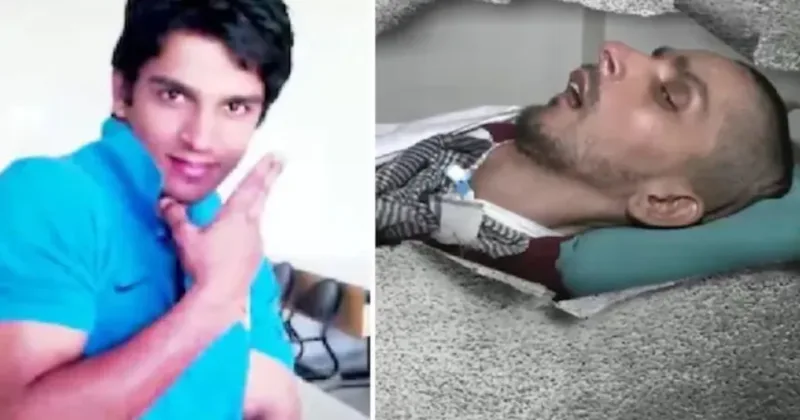
SC allows India’s 1st passive euthanasia, permits withdrawal of life support for 31-year-old in vegetative state

In a landmark ruling reinforcing the constitutional principle of the right to die with dignity, the Supreme Court of India permitted passive euthanasia for a 31-year-old man who has been in a persistent vegetative state for more than a decade following a severe accident

WEBDESKWEBDESK
Mar 11, 2026, 01:00 pm IST
inBharat, Law, Health
Supreme Court allows first ever passive euthanasia for 31-year-old patient in vegetative state

Supreme Court allows first ever passive euthanasia for 31-year-old patient in vegetative state

Facebook
Twitter
WhatsAppTelegramEmail

NEW DELHI: In a landmark judgement reaffirming a patient’s right to die with dignity, the Supreme Court on March 11, for the first time ever, allowed for a 31-year-old man who has been in a vegetative state to undergo passive euthanasia in order to ensure that the best interest of the patient and to give him the right to die with dignity.

A bench of Justices JB Pardiwala and KV Vishwanathan reasoned that, as per various medical reports, further administration of CAN (Clinically Assisted Nutrition) will not be in the best interest of the patient.

The applicant, Harish Rana, has been in a vegetative state for the last thirteen years after an accidental fall from a building in 2013. Passive euthanasia is the practice of withdrawing life-sustaining treatment from patients in a persistent vegetative state, in order to allow them a natural death.

The Court has also directed the All India Institute of Medical Sciences (AIIMS) to provide facilities to transfer the patient to its palliative care department to carry out a robust withdrawal of medical care in a manner that ensures the patient’s dignity is preserved to the highest degree.

Also Read: From Campuses to Encrypted Chats: How educated Islamist youths are emerging in India’s new radicalisation pattern

“The famous literary Shakespeare quote ‘To be or not to be’ is now being used for judicially interpreting the ‘Right to Die'”, Justice Pardiwala noted at the beginning of the judgment.

The Court also expressed its appreciation to the patient’s parents for their resilient care for their son.
“You are not giving up in your son. You are allowing him to live with dignity”, Justice Pardiwala said while concluding the judgment.

The top court has applied the guidelines passed in its earlier ruling in the Common Cause case.

“However, the present case represents the first instance where the guidelines laid down in Common Cause v. Union of India are being applied in their full measure before this Court,” the bench said.

In November 2025, the top court had set up a medical board at the Noida district hospital to explore the idea of passive euthanasia for the person.

In October 2024, the Union Health ministry had released the draft of “Guidelines for Withdrawal of Life Support in Terminally ill Patients”. The guidelines issued state that it should be based on a “considered decision” taken by doctors on withdrawal of life support in terminally ill patients, based on certain conditions.

According to the draft guidelines, the withdrawal includes four conditions: a) any individual declared brainstem death as per the THOA Act. b) Medical prognostication and considered opinion that patient’s disease condition is advanced and not likely to benefit from aggressive therapeutic interventions c) Patient/surrogate documented informed refusal, following prognostic awareness, to continue life support d) Compliance with procedure prescribed by the Supreme Court. (ANI)

Topics: Supreme Court
Share
Tweet
SendShareSend
✮ Subscribe Organiser YouTube Channel. ✮
✮ Join Organiser's WhatsApp channel for Nationalist views beyond the news. ✮
Previous News

From Campuses to Encrypted Chats: How educated Islamist youths are emerging in India’s new radicalisation pattern

Next News

RSS ABPS 2026 to be held in Samalkha, Haryana; Statement to be issued on Sant Ravidas’s 650th birth anniversary

Related News

Protesters at the Parliament building in Kathmandu, Nepal, after it was set on fire, in September, 2025

How youth protests are being weaponised to discredit institutions

Albania Protests: Supreme Court set blaze, police attacked with firebombs; PM Rama calls it obstacle to EU membership

“State is custodian, not owner”: SC quashes Tamil Nadu temple land transfer

Supreme Court voids gift of temple land to Tamil Nadu Government, rebukes state for claiming deity’s property

ECI Calls Rahul Gandhi’s ‘Illegal Form 6 Change’ Claim Misleading

Fact Check: ECI calls Rahul Gandhi ‘Illegal form 6 change’ claim misleading, cites Bihar SIR verdict by Supreme Court

The constitution is not a political tool!

Beyond the Realm of Faith: The Supreme Court on Religious Conversion, Caste and Reservation

Load More

Latest News

Union Home Minister Amit Shah

From Narcotics Control to National Security: Amit Shah sets December 31, 2029, deadline to make India drug-free

Barkha Tamrakar, Deputy Secretary, Ministry of External Affairs

India slams UN’s ‘selective targeting’ over human rights, warns against turning unverified claims into verdicts

B. L. Santhosh said that the term “Saffron Terror” was coined to target the BJP and remove its leaders, revisiting the political controversy surrounding the phrase

‘Saffron Terror’ word was coined to target BJP and purge its leaders: BL Santosh 

From Paris to Delhi, the protest narrative shifts from restoring public order to alleging state repression, raising questions about double standards in Western media coverage

Western media hypocrisy under fire as India gets crackdown labels while protests at home get softer coverage

RSS Sarsanghchalak Dr Mohan Bhagwat

RSS Vijayadashami Utsav 2026 | Build Bharat that can offer world a new path towards happiness & peace: Dr Mohan Bhagwat

B. L. Santhosh weighs in on the “communal-secular” debate, arguing that Hindus are labelled communal for asserting their religious identity.

‘If you are a Hindu, you are called communal’: BL Santhosh on the ‘Communal-Secular’ debate

B. L. Santhosh reflects on how Dr Syama Prasad Mookerjee and Pandit Deendayal Upadhyaya shaped the BJP’s ideological foundations and political journey

From Political to ideological identity – How Dr Syama Prasad Mookerjee and Pt Deendayal Upadhyaya shaped BJP

B. L. Santhosh on RSS-BJP Relationship

BL Santhosh on RSS-BJP Relationship: ‘We are there because of each other and for each other’

UNESCO adds three sites from Andaman and Nicobar Islands and Chhattisgarh to India’s Tentative World Heritage List

Tentative world heritage list of UNESCO: Three Indian sites from Andaman & Nicobar Islands and Chhattisgarh added

B. L. Santhosh explains why the BJP can be described as a “Rebel Party,” reflecting its ideological roots and political journey

Why BL Santhosh called BJP a ‘Rebel Party’: The story of its ideological roots

Load More
  • Privacy
  • Terms
  • Cookie Policy
  • Refund and Cancellation
  • Delivery and Shipping

© Bharat Prakashan (Delhi) Limited.
Tech-enabled by Ananthapuri Technologies

  • Home
  • Search Organiser
  • Bharat
    • Assam
    • Bihar
    • Chhattisgarh
    • Jharkhand
    • Maharashtra
    • View All States
  • World
    • Asia
    • Africa
    • North America
    • South America
    • Europe
    • Australia
  • Editorial
  • Operation Sindoor
  • Opinion
  • Analysis
  • Defence
  • Culture
  • Sports
  • Business
  • RSS @ 100
  • Entertainment
  • More ..
    • Sci & Tech
    • Vocal4Local
    • Special Report
    • Education
    • Employment
    • Books
    • Interviews
    • Travel
    • Health
    • Politics
    • Law
    • Economy
    • Obituary
  • Subscribe Magazine
  • Read Ecopy
  • Advertise
  • Circulation
  • Careers
  • About Us
  • Contact Us
  • Policies & Terms
    • Privacy Policy
    • Cookie Policy
    • Refund and Cancellation
    • Terms of Use

© Bharat Prakashan (Delhi) Limited.
Tech-enabled by Ananthapuri Technologies