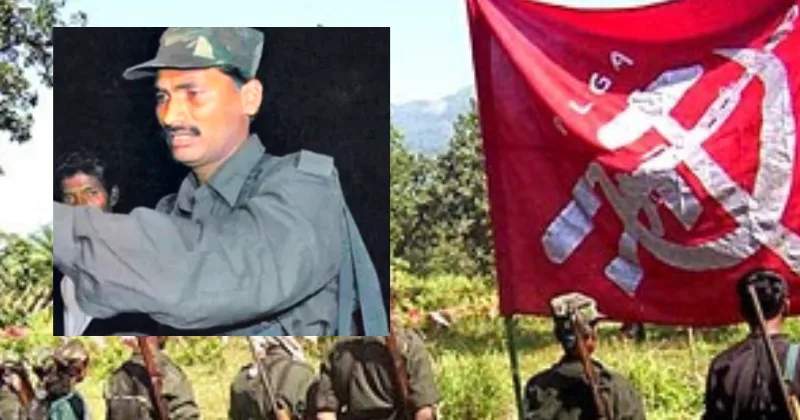
In a significant development, wanted Maoist leader Thippiri Tirupati alias Devji, 63, who carried a reward of ₹5 crore, surrendered before Telangana Police, dealing a major blow to the banned CPI (Maoist). Along with him, Central Committee member Mallaraji Reddy alias Sangram alias Meesala Sattanna, who had a ₹1 crore reward, and State Committee member Noone Narasimha Reddy alias Ganganna also chose to lay down arms. Devji was associated with the People’s Liberation Guerrilla Army (PLGA).
As per reports, around 40–50 Maoist cadres linked to PLGA and other wings have come under the police radar, and their surrender could be formally announced in the coming days.
Devji hails from Korutla of Jagtial district, Sangram from Shastrulapalle in Manthani mandal of Peddapalli district in Telangana, and Ganganna from Valluru in Guntur district of Andhra Pradesh.
Sources said Devji and Sangram had initiated talks with Telangana intelligence through mediators about a week to ten days ago, and after discussions progressed, state police informed central intelligence agencies on February 22.
Chhattisgarh Deputy Chief Minister Vijay Sharma also publicly stated to the media that Devji and Sangram had surrendered, though Telangana Police have not yet made an official announcement.
Meanwhile, clarity is awaited on whether Telangana State Committee secretary Bade Chokka Rao alias Damodar has also surrendered.
Following these reports, Telangana CPI state secretary and MLA Kunamneni Sambasiva Rao demanded that Maoist leaders, including Devji and Sangram, be immediately produced before a court.
Last week, security forces intensified their coordinated anti-Maoist push in the Karregutta hill region along the Telangana–Chhattisgarh border under Operation-2 Kagar, with a clear focus on dismantling the remaining leadership structure of the banned CPI (Maoist) by March 31 as the deadline to clear Maoist presence. Central and state forces, including the CRPF and state police units, have moved deeper into the forested terrain as part of an expanded combing strategy aimed at tightening surveillance and restricting Maoist movement.