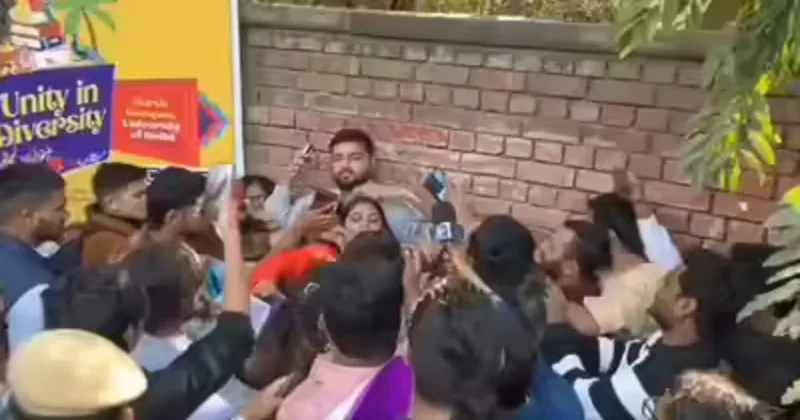
The National Human Rights Commission of India has taken suo motu cognisance of the reported physical and sexual assault of a woman journalist who was covering a students’ protest at the North Campus of University of Delhi. The incident, which has triggered widespread concern over the safety of media professionals, is also being examined for alleged caste-based targeting.
NHRC, India takes suo motu cognizance of the reported physical and sexual assault on a journalist covering students' protest in the North Campus of Delhi University. May like to refer to the press release at: https://t.co/2nwboHd3Bn#HumanRightsViolation #Journalist #Assault pic.twitter.com/cFsgS1U44p
— NHRC India (@India_NHRC) February 20, 2026
In a statement posted on its official handle, the Commission said it had taken note of media reports alleging that the journalist was attacked while performing her professional duties. According to the initial reports, the assault took place during a protest gathering on the university’s North Campus. It is further alleged that the attackers targeted her after she identified her caste. The alleged assault on a woman journalist at the North Campus of the University of Delhi took place earlier this week during a student-led demonstration that had drawn significant participation and heightened tensions. While exact police timelines are expected to be clarified in the official report sought by the National Human Rights Commission of India, media reports indicate that the incident occurred amid a protest gathering that escalated into confrontation.
According to initial accounts, the journalist was present to cover the demonstration when she was allegedly physically and sexually assaulted. It is further claimed that the attackers targeted her after she identified her caste. The NHRC has taken suo motu cognisance of the matter and issued a notice to the Commissioner of Delhi Police, directing the force to submit a detailed report within two weeks.
Why the victim’s mame has not been disclosed
The identity of the journalist has not been made public and for good reason. Under Indian law, particularly Section 228A of the Indian Penal Code, the disclosure of the name or any identifying details of a victim of sexual assault is prohibited. This provision exists to protect survivors from further trauma, stigma and public scrutiny.
Media organisations, law enforcement agencies and public bodies are legally bound to withhold such information unless a court permits disclosure or the survivor herself chooses to come forward. The principle behind this confidentiality is rooted in safeguarding dignity and ensuring that victims are not re-victimised by exposure.
In cases involving allegations of sexual assault, especially where caste-based targeting is also alleged, the sensitivity of the matter is compounded. Protecting the identity of the complainant is both a legal obligation and a moral imperative.
What was the demonstration about?
The protest at Delhi University’s North Campus was reportedly linked to ongoing student grievances over campus policies and administrative decisions. While student demonstrations are not uncommon at the university, particularly during politically charged periods, tensions have been high over issues ranging from academic reforms to representation and campus governance.
Initial reports suggest that the gathering had drawn participants from various student groups. As often happens in crowded protest environments, the situation appears to have turned volatile. It was during this period of commotion that the journalist was allegedly attacked while carrying out her professional duties.
The fact that the assault is said to have occurred in the midst of a political demonstration adds another layer of concern. Journalists covering protests perform a critical democratic function, documenting events and providing the public with verified accounts. Any violence directed at them undermines press freedom and raises questions about the safety of media personnel in politically sensitive spaces.
NHRC’s intervention and the road ahead
The NHRC’s decision to step in suo motu signals the seriousness with which the allegations are being viewed. The Commission has sought details from the Delhi Police regarding the registration of an FIR, the sections invoked, arrests made, and steps taken to ensure the victim’s protection.
If the allegations of caste-based targeting are substantiated, additional legal provisions relating to discrimination and atrocities may come into play. The coming weeks will therefore be crucial in establishing the factual sequence of events and determining accountability.
At its core, the incident raises three pressing questions: the safety of women in public spaces, the security of journalists on assignment, and the persistence of caste prejudice in contemporary India. As the Delhi Police prepares its response to the NHRC’s notice, attention will remain focused on whether due process is followed swiftly and transparently. A democratic campus must remain a space for debate, dissent, and dialogue, not intimidation or violence.