Malayalam cinema has long been hailed as the crown jewel of Indian storytelling, celebrated for its realism, restraint and intellectual depth. For decades, it held a mirror to society, dissecting human contradictions without spectacle or propaganda. That reputation, however, now shields a far more troubling reality. What masquerades as artistic courage has increasingly become a systematic demoralisation of Sanatana Dharma, executed not through open polemics but through selective realism, symbolic targeting and narrative engineering.
This is not accidental. Nor is it organic. Under the guise of neutrality, the screen has become a one-way cultural weapon, interrogating, humiliating and delegitimizing Hindu civilizational symbols while extending conspicuous restraint toward others. The cinema may be silent, but the assault is loud, sustained and deliberate.
Symbolism as Subversion
The ideological intent becomes clearest in the use of symbolism, especially when symbolism is not narratively required but insistently foregrounded. In Theerppu, hostility toward Hindu identity is not incidental. It is foundational. The antagonists are named Ram Kumar and Mythili, names that in the Indian civilizational imagination signify dharma, sacrifice and moral restraint. This is not random casting. It is narrative signalling. By transforming Ram, a womaniser, greedy, treacherous land grabbers who destroy a Muslim family, the film performs a psychological inversion.
The highest ethical archetypes are recoded as moral rot. Hindu identity itself becomes shorthand for oppression, leaving no space for complexity, counter voices or moral balance. This is not a critique. It is delegitimisation written into character design. When sacred names are consistently weaponised as symbols of decay, the intent is not social reform. It is civilizational erosion. Contrast this with Tiyaan. Tiyaan also deals with conflict, ideology and violence. Yet the antagonism is grounded in a strong narrative logic. The villain’s motivations are developed. The ideological clash has depth. The film does not require civilisational humiliation to make its point. That is why Tiyaan, despite its intensity, was not widely perceived as a communal assault. The difference is intentional framing.
The whitewashing of the 1921 genocide
This pattern did not emerge overnight. It is the culmination of a long-standing effort to sanitise history, most notably the repeated cinematic reframing of the 1921 Moplah Riots. What was, by all serious historical accounts, a brutal genocide of Hindus in Malabar has been persistently repackaged as a benign agrarian revolt or a misunderstood anti-colonial uprising. This reframing collapses under scrutiny. Dr B. R. Ambedkar, Mahatma Gandhi and Annie Besant, all moral authorities of modern India, explicitly condemned the violence. Ambedkar documented unspeakable atrocities, while Besant described the misery of the most terrible kind. Yet Malayalam cinema routinely erases the victims, edits out communal intent and preserves only what aligns with a politically convenient narrative. This is not ignorance. It is selective memory.
Selective realism as propaganda
Realism ceases to be realism when it only indicts in one direction. If exploitation is universal human greed, why must the villain almost always be an upper-caste Hindu? If patriarchy is a global social disease, why is it overwhelmingly anchored in Hindu ritual life? In The Great Indian Kitchen, a woman’s suffocation is collapsed entirely into Hindu domestic ritual, culminating in a direct symbolic confrontation with Sabarimala traditions. The implication is clear. Liberation is impossible without rejection of faith itself. Comparable narratives of liberation in other communities are never framed through the abandonment of religious identity. Feminism here is not universal. It is selectively weaponised to manufacture civilizational guilt.
Violence, memory and political engineering
The same asymmetry defines the portrayal of political violence. In the much-anticipated Empuraan, concerns persist about the one-way depiction of the Gujarat riots, divorced from provocation, context or reciprocal suffering. Equally telling is what cinema chooses to ignore. The ethnic cleansing of Kashmiri Pandits. The communal nature of 1921. Islamist political violence within Kerala itself. Cinema that highlights one riot while erasing others is not bearing witness. It is editing history to serve present ideology.
Identity as Pathology
In Puzhu, caste arrogance is not merely critiqued. It is pathologised through a Brahmin protagonist whose identity itself is framed as terminal psychological decay. There is no reformist voice, no ethical counterweight. Identity is the disease. Similarly, Jana Gana Mana manipulates geography and power structures, relocating real events to BJP-ruled states to imply systemic rot. Dialogues like “India doesn’t belong to anyone’s father” are not character expressions. They are ideological instructions designed to weaken civilizational continuity and belonging.
The same director’s subsequent work inserts a Pakistani character stating that “if a religious book becomes the constitution of a nation, that nation will be destroyed”. The implication is unmistakable: India is being framed as sliding toward religious tyranny. This is a projection, not realism. Even comedy is conscripted. In films like Malayalee from India and Iyer in Arabia, Brahmin identity becomes a perpetual caricature while nationalism is portrayed as a refuge for the incompetent. Satire, when aimed at only one faith, mutates into indoctrination.
The false alibi of “anti-right”
The industry’s most dishonest defence is that it critiques political Hindutva, not Hinduism. If that were true, the targets would be policy, power and governance, not temples, rituals, sacred names and civilizational symbols. The contrast is stark. Malayalam cinema displays fearless zeal when interrogating Hindu customs but retreats into silence when faced with Abrahamic absolutism, blasphemy doctrines or gender injunctions elsewhere. Hinduism is safe to attack because its adherents respond with debate rather than threats. This is not secularism. It is selective aggression.
The misuse of Nirmalyam
Those who defend today’s excesses often ask whether films like Nirmalyam would be “allowed” today. Nirmalyam, directed by M. T. Vasudevan Nair and featuring a velichappadu (oracle), is not an attack on Hinduism. It is a tragic portrayal of a human being crushed by circumstance, poverty and neglect. When the velichappadu spits on the idol and dies, it is an expression of existential despair, not an ideological insult. The act is not celebratory, not mocking, not instructional. It emerges organically from suffering. That is why Nirmalyam is accepted as art, not propaganda. Compare that with today’s films, where Hindu symbols are inserted intentionally, repeatedly and gratuitously. The difference is ethical honesty.
An ecosystem of rewarded contempt
What now exists in Kerala is an ecosystem where ideological conformity is rewarded with awards, acclaim and social validation. Counter-narratives vanish. Balance disappears. A generation is conditioned to see its heritage as shame, its faith as fraud and its ancestors as oppressors. This demoralisation is not harmless. A society stripped of cultural anchors becomes vulnerable to imported ideologies, moral confusion and political manipulation.
The selective shield of “Freedom of Expression”
“Freedom of expression” has become the most aggressively deployed shield in the Malayalam cinema ecosystem. Any portrayal that mocks Hindu symbols, questions civilizational continuity or undermines national identity is instantly protected under this slogan. Filmmakers and critics present themselves as fearless truth tellers standing up to power. Questioning their intent is dismissed as intolerance, insecurity or authoritarian thinking. But this moral posture collapses the moment the ideological direction of a film changes. Freedom of expression, it turns out, is conditional.
The false distinction between religion and politics
A common defence offered by the industry is that these narratives critique political Hindutva rather than Hinduism itself. However, cinematic targeting often focuses not on policy or governance, but on temples, rituals, sacred symbols and civilizational archetypes embedded in cultural life. Political critique operates through examination of state power, legislation and leadership decisions. Cultural critique operates through symbolic inversion of inherited traditions. When the latter becomes dominant while the former is claimed rhetorically, the distinction begins to blur. The issue is not that Hindu practices are criticised, but that comparable symbolic interrogation of other traditions is rare, creating an imbalance that audiences increasingly recognise.
The Kerala story controversies and the collapse of the freedom argument
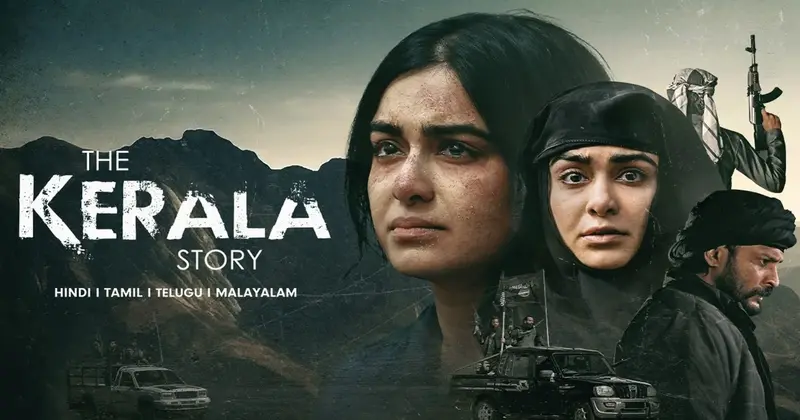
The reactions to The Kerala Story and its sequel provide the clearest real-world demonstration of this cultural asymmetry. When the first film was released, organised protests, political denunciations and institutional resistance emerged rapidly across Kerala. The film was widely labelled propaganda and socially dangerous and efforts were made to discourage or prevent screenings. The sequel has triggered a similar response, including legal challenges, public campaigns and renewed demands that the film be restricted because it threatens communal harmony.
The significance of these reactions lies not in the criticism itself, which is natural in any democratic society, but in the simultaneous abandonment of the very principle of artistic freedom that Kerala’s cultural establishment routinely invokes when defending other controversial films. Malayalam cinema has repeatedly argued that discomfort, provocation and symbolic confrontation are essential components of artistic truth. Yet when a narrative emerges that challenges the ideological comfort zone of this ecosystem, the language shifts from artistic freedom to social danger.
Expression once described as courageous becomes labelled propaganda. Demands for restriction replace debate.This contradiction exposes that the operative principle is not freedom of expression as a universal democratic value, but ideological acceptability as a cultural filter. Speech aligned with dominant intellectual narratives is defended as art. Speech that challenges those narratives is treated as a threat requiring institutional intervention.
Cinema as influence rather than innocence
Cinema is not merely entertainment; it shapes moral perception, cultural belonging and generational memory. To deny this influence while simultaneously using cinema to frame social identity is intellectually inconsistent. If storytelling is powerful enough to challenge social injustice, it is powerful enough to influence civilizational perception. A film industry that claims cultural impact when advancing certain narratives cannot simultaneously claim harmless neutrality when those narratives consistently move in one direction. Influence cannot be invoked selectively.
The Real Crisis: Not suppression but selective freedom
This asymmetry reveals the real function of the freedom of expression argument. It is not about liberty. It is about narrative monopoly. Their worldview must circulate freely, unquestioned and celebrated. Any counter-narrative must be delegitimised before it gains cultural traction. Mocking Hindu rituals is framed as subversion. Depicting Hindu identity with dignity is labelled indoctrination. Portraying the state as oppressive is called realism. Portraying order, continuity or national cohesion is condemned as fascism. The standard never applies both ways.
Perhaps the most revealing aspect of this ecosystem is its intolerance of being questioned. An industry that prides itself on questioning power reacts with outrage when its own narratives are examined. Historical inaccuracies, selective memory and ideological bias are brushed aside as irrelevant. Those who raise objections are branded communal, regressive or dangerous. This is not artistic confidence. It is ideological insecurity. Freedom of expression is quietly redefined as freedom from accountability.
Freedom must survive the story one dislikes
A democratic cultural space is ultimately tested not by how it treats agreeable speech, but by how it treats speech that unsettles its assumptions. Malayalam cinema’s legacy was built on its reputation for fearless storytelling and moral complexity. That legacy can endure only if freedom of expression remains a structural principle rather than an ideological privilege. When cinema repeatedly interrogates one civilizational tradition while seeking restriction against narratives that question prevailing cultural assumptions, the issue ceases to be artistic disagreement and becomes a question of cultural consistency. A society that defends expression only when it confirms its worldview does not strengthen democracy; it replaces open discourse with narrative permission. True intellectual confidence lies not in silencing uncomfortable stories, but in allowing them to be heard and answering them with a strong truth.