The United States may be forced to return billions of dollars collected from foreign exporters after the Supreme Court of the United States struck down President Donald Trump’s global tariff war. Initial estimates suggest that more than $175 billion (around Rs 15.59 lakh crore) could be subject to refunds, according to researchers at the University of Pennsylvania. Several companies have already approached the courts seeking reimbursement following the landmark ruling.
The Supreme Court held that the president does not possess unilateral authority to impose sweeping tariffs on other countries. However, the judgment did not explicitly instruct the US government to return duties already collected, leaving the matter open to interpretation. The Trump administration’s response will be critical in determining whether exporters actually receive refunds.
Justice Brett Kavanaugh, in a dissenting opinion, warned of the complexity ahead. He noted that the US could be required to refund billions of dollars even though many exporters had already passed those costs on to consumers. “The refund process could be messy,” he wrote, adding that government records show the US has entered into trade arrangements worth billions with countries such as China, United Kingdom and Japan. The ruling, he cautioned, could introduce fresh uncertainty into existing trade agreements.
Small businesses demand refunds
The advocacy group ‘We Pay the Tariff’, representing more than 800 US entrepreneurs affected by the levies, has urged the government to begin refund procedures immediately. Calling the verdict a major victory for small businesses, the group said the ruling would be meaningless unless excess payments are returned. They also demanded clarity on future trade policy to avoid further disruption.
Despite these calls, legal experts point out that the Supreme Court stopped short of ordering repayments, making any refund process dependent on administrative and political decisions. This uncertainty has left exporters and importers alike in limbo.
Will countries recover their losses?
Attention has now turned to whether countries will receive back excess duties paid during the tariff period. Trump imposed a 25 per cent countervailing duty on Indian exports on April 2 last year, which was later raised to 50 per cent in the name of India’s purchase of Russian oil. The added costs were borne by the exporters and US importers, who subsequently passed them on to consumers through higher prices on a wide range of products. As a result, experts believe refunds, if they occur, are unlikely to be immediate. Many also stress that the court’s ruling does not specifically mandate repayment.
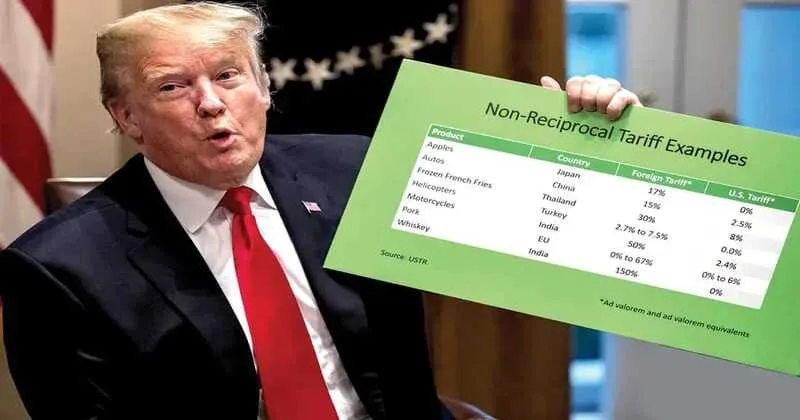
Trump began imposing tariffs on multiple countries last year, accusing several countries of exploiting access to the US market. He claimed the measures would significantly boost the American economy. While tariff revenues did rise, analysts estimate they account for only about five per cent of total US government income. Revenues could have been higher had certain products and countries not been exempted.
US media reports further suggest that several companies shifted production to lower-tariff countries, undermining the policy’s intended impact. As the legal and political fallout continues, the ruling has raised fresh questions about global trade stability and whether exporters will ever see their money returned.