The belief that language forms the foundation of national progress is not new. Bharatendu Harishchandra famously wrote, “Nij bhasha unnati ahai, sab unnati ko mool” (One’s own language is the root of all progress). His assertion reflected a larger cultural conviction that knowledge acquired in the mother tongue strengthens both intellect and identity.
Over the past four decades, several global studies have concluded that early education in the mother tongue significantly enhances children’s comprehension, analytical skills, and confidence. Scholars argue that language learning begins even before birth, as a child absorbs linguistic rhythms and sounds from the mother. Therefore, primary education in the native language aligns naturally with cognitive development.
Scientific Studies and Cognitive Development
Indian researchers have also contributed to this discussion. Studies attributed to neuroscientists such as Dr. Nandini Singh of the National Brain Research Centre suggest that learning in Indian languages may activate broader regions of the brain compared to learning exclusively in English. Such findings are often cited to demonstrate the neurological advantages of mother-tongue education.
Similarly, educationists have pointed to observations by Indian scientists indicating that students trained in Indian languages frequently demonstrate strong research aptitude. The argument is not against English as a language, experts clarify, but against making it the sole gateway to higher learning in fields like medicine and engineering.
Critics of English-dominant systems argue that students must first master a foreign language before grasping complex scientific concepts, resulting in additional cognitive load. This, they say, places unnecessary barriers before young learners.
Voices from India’s Intellectual Tradition
Among the strongest advocates of education in Indian languages was Madan Mohan Malaviya, founder of Banaras Hindu University. Despite his command over English, Sanskrit, and Urdu, Malaviya firmly believed that national progress depended on education in the country’s own languages. He described Hindi as the “daughter of Sanskrit” and saw Indian languages as sisters sharing a common heritage.
Malaviya maintained that science and technology must reach the masses in a language they understand. Only then, he argued, could modern knowledge become a national asset rather than remain confined to elite circles.
Mahatma Gandhi echoed similar sentiments. Writing in Young India, Gandhi stated that unless education is imparted in indigenous languages, original thinking would remain stifled. He compared the importance of the mother tongue in mental development to the role of mother’s milk in physical growth.
The English Question and Social Divide
The debate often turns to the socio-economic implications of English education. Critics argue that the dominance of English has created a linguistic divide between urban elites and the wider population. English proficiency frequently determines access to better employment opportunities, higher education, and administrative services.
This linguistic hierarchy, observers say, risks deepening inequality. While English serves as a global link language, overreliance on it in domestic education may marginalise millions who are more comfortable in Indian languages.
Data from examination boards often show higher failure rates in English and mathematics, leading some experts to question whether language barriers contribute to academic underperformance.
Global Comparisons and Lessons
Supporters of mother-tongue education frequently cite international examples. Countries such as Japan, Russia, Finland, and France conduct education, governance, and research primarily in their native languages. In each of these nations, strong policy support and societal commitment ensured that scientific and technological progress occurred without abandoning linguistic identity.
Educational commentators have pointed out that many European languages once faced similar developmental challenges. Their growth into modern academic mediums occurred through sustained usage and policy backing.
Statements attributed to educationists like Ramananda Chatterjee emphasised that objections to native-language instruction often overlook historical precedents. Languages evolve and modernise through application, he argued, not neglect.
Language, Culture and Identity
Language is more than a medium of communication; it is a carrier of culture, values, and collective memory. Cultural scholars note that when language declines, traditions and ethical frameworks may also weaken. Words shape thought patterns, and changes in linguistic expression can influence social norms.
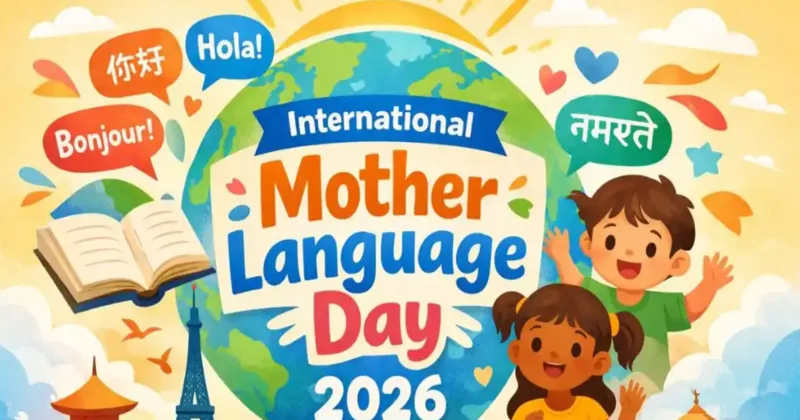
International Mother Language Day, observed globally on February 21, highlights the importance of linguistic diversity and cultural preservation. In India, with its vast linguistic heritage, the day carries particular resonance.
Advocates encourage practical steps such as promoting Indian languages in official communication, educational institutions, and everyday transactions. They argue that fostering pride in native languages can coexist with learning global languages for international engagement.
Balancing Global Integration with Local Roots
The discussion is not framed as a rejection of English but as a call for balance. Experts emphasize multilingual proficiency as an asset in a globalized world. Knowledge of major international languages—such as Russian, Chinese, Japanese, Spanish, German, Arabic, French, and English—can strengthen diplomatic and economic ties.
However, they caution that intellectual independence requires strong foundations in one’s own linguistic ecosystem. Research, literature, and scientific inquiry conducted primarily in foreign languages may limit accessibility for the broader population.
The larger concern, scholars argue, is knowledge creation. While information can be accessed in any language, genuine innovation flourishes when thinkers can conceptualise ideas in their most natural linguistic framework.
A Renewed National Conversation
As India aspires to expand research output, technological innovation, and inclusive education, the mother-tongue debate has resurfaced with renewed urgency. Policymakers, educators, and civil society organisations are revisiting longstanding recommendations from educational commissions advocating regional-language instruction, especially in early and technical education.
International Mother Language Day serves not only as a celebration of linguistic diversity but also as a reminder of unfinished conversations about equity, identity, and intellectual sovereignty.
For many scholars, the message is clear: strengthening Indian languages does not diminish global engagement. Rather, it ensures that progress remains rooted in cultural confidence and accessible to every citizen.
As India moves forward in science, technology, and global diplomacy, the call to preserve and promote mother tongues remains intertwined with the broader vision of national development.