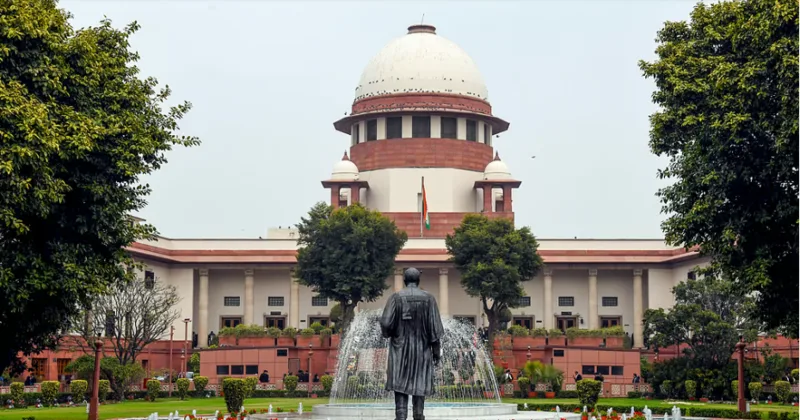
The Supreme Court of India on Feb 17 expressed serious concern over what it termed an “alarming” trend of lawyers relying on Artificial Intelligence tools to draft petitions without proper verification. The court noted instances where filings cited judgments and extracts that “do not exist,” raising questions about professional diligence and accountability.
A Bench led by Chief Justice of India Surya Kant flagged the growing misuse of AI in legal drafting, observing that inaccurate and fabricated references were making their way into official court records.
During the hearing, the CJI remarked, “We have been alarmingly told that some lawyers have started using AI for drafting.” He further pointed out that in a matter listed before Justice Dipankar Datta, all the precedents cited by counsel were found to be non-existent. “All precedents cited never existed,” the Chief Justice said, underlining the gravity of the issue.
Justice B V Nagarathna also drew attention to a striking example. “There was a case of Mercy vs Mankind which does not exist,” she observed, highlighting how entirely fictitious case laws were being cited in pleadings submitted to the apex court.
The Bench further noted that in some instances, lawyers had cited genuine Supreme Court judgments, but the portions quoted in their petitions were fabricated. Justice Nagarathna stated, “Then some are citing real supreme court cases, but those quoted portions do not even exist in the judgment.” The remarks signal the court’s concern not only about fictional precedents but also about selective or incorrect AI-generated extracts from authentic rulings.
The observations come amid increasing use of generative AI tools in professional environments, including legal practice. While AI can assist in research and drafting, the court’s comments emphasise that ultimate responsibility lies with advocates to verify accuracy before filing documents.
The Supreme Court’s warning is likely to prompt discussions within the legal fraternity about ethical guidelines, verification standards and the responsible use of AI in litigation.