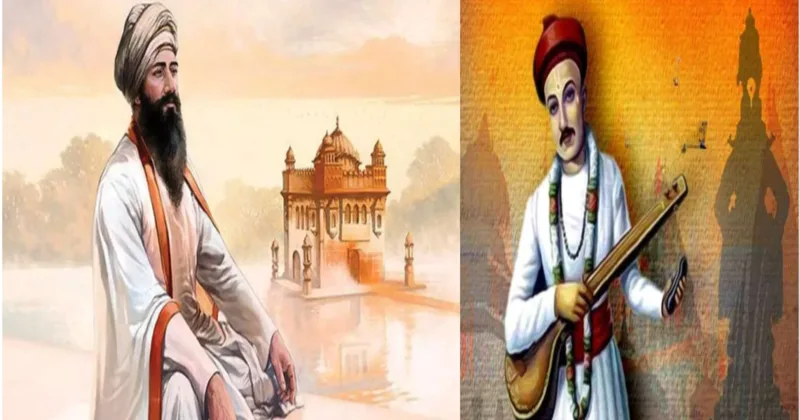
The Indian cultural and spiritual tradition is enriched by the contributions of numerous saints, gurus, and thinkers. Two towering figures from different eras — Sant Namdev Maharaj of the Warkari tradition in Maharashtra (c. 1270–1350) and the ninth Sikh Guru, Sri Guru Tegh Bahadur Sahib (1621–1675) — were born centuries apart, yet a close study of their lives and teachings reveals remarkable commonalities in their core principles. The special initiative “Hind Di Chadar,” held in Nanded, highlights and underscores this intellectual and spiritual affinity.
The statewide “Hind Di Chadar” programme commemorating the 350th Shaheedi (martyrdom) anniversary of Sri Guru Tegh Bahadur was organised across Maharashtra. Jointly conducted by the Minority Development Department, the state-level coordination committee, and community groups including Sikh Sikkaligar, Banjar, Lubana, Mohyal, Sindhi, Valmiki, Udasin and the Bhagat Namdev communities, the events in Nagpur and Nanded were successful and drew hundreds of thousands of devotees from across the state and the country. Through these programmes, efforts are being made to pass on the heroic history of Guru Tegh Bahadur to younger generations. The main commemorative events are scheduled for February 28 and March 1 at Kharghar, Navi Mumbai, where the Prime Minister Narendra Modi, Union Minister Amit Shah and Chief Minister Devendra Fadnavis are expected to be present.
Devotion, Equality and a Universal Conception of God
Sant Namdev Maharaj, through his abhangs (devotional poems), championed devotion, truth, simplicity and human equality. He strongly opposed discrimination based on caste, ritual and social status. The central idea of his teachings was that “God is everywhere.”
Similarly, Sri Guru Tegh Bahadur advocated the universality of God and the equality of all human beings. He stood firmly against religious intolerance, injustice and coercion, defending human values and dignity.
Fearlessness, Truthfulness and Sacrifice
Sant Namdev fearlessly raised his voice against social injustice. He emphasised that truth and the remembrance of the divine (nama-smaran) constitute true religion. He valued inner purity, ethical living and self-respect over outward rituals and display.
Sri Guru Tegh Bahadur made the supreme sacrifice to protect truth, culture and human dignity. He upheld the principle that religious freedom is a fundamental human right and demonstrated this through his actions. His martyrdom stands as an immortal example of religious tolerance in human history.
The Significance of the “Hind Di Chadar” Initiative
The “Hind Di Chadar” initiative in Nagpur and Nanded conveys a message of social harmony, national unity and communal amity. It promotes the humanitarian and sacrificial ideals of Guru Tegh Bahadur while also highlighting the philosophical parallels between his teachings and those of Maharashtra’s saintly tradition represented by Sant Namdev Maharaj.
Social Harmony and National Unity
The teachings of Sant Namdev Maharaj and Guru Tegh Bahadur reinforce tolerance, brotherhood and equality in society. Even in changing social contexts, their ideas remain guiding principles. Through the “Hind Di Chadar” campaign, efforts are being made to strengthen mutual respect and coordination across religions and communities.
Although Sant Namdev and Guru Tegh Bahadur lived roughly three centuries apart, the universal themes of truth, fearlessness, human freedom, social equality and devotion to God form the common thread in their thought. The “Hind Di Chadar” events held on the occasion of the 350th Shaheedi anniversary serve as a timely reminder of this great tradition and as an inspiring legacy for future generations.