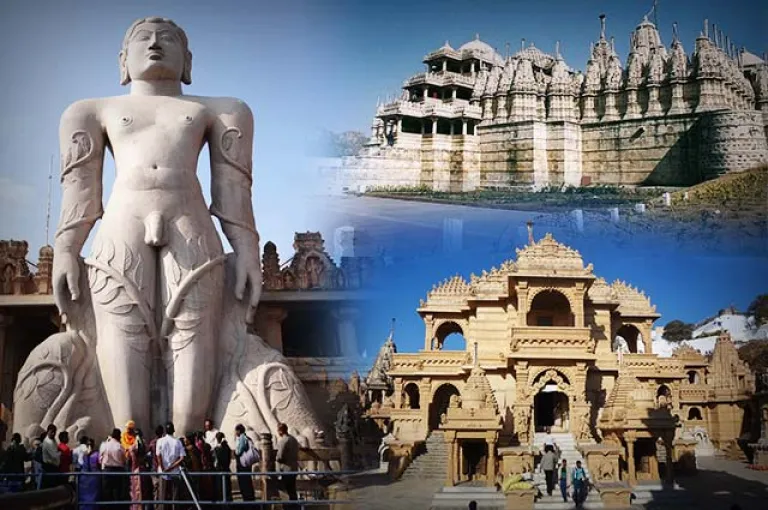
The development and promotion of tourism destinations in India is primarily the responsibility of State Governments and Union Territory Administrations. Identification of tourist sites, preparation of project proposals and on-ground implementation are undertaken at the State level.
The Ministry of Tourism supplements these efforts by extending financial assistance under its various schemes for infrastructure development and enhancement of tourism experiences. Funding is provided based on project proposals submitted by States and Union Territories, in accordance with scheme guidelines, government priorities, availability of funds and inter-se priority among competing proposals.
This cooperative federal approach ensures that tourism development aligns with regional strengths while benefiting from central financial and technical support.
Swadesh Darshan Scheme and Jain Circuit
The Ministry of Tourism launched the Swadesh Darshan Scheme in 2014-15 as a central sector scheme for integrated development of theme-based tourist circuits across the country.
Under the scheme, 76 projects were sanctioned with a total outlay of Rs 5,290.33 crore across various identified thematic circuits. Among these themes were the Heritage Circuit and the Tirthankar Circuit, also known as the Jain Circuit.
The Jain Circuit focuses on destinations associated with the lives and teachings of Jain Tirthankaras, aiming to promote spiritual tourism, improve infrastructure and enhance visitor facilities at sacred Jain sites.
In 2016-17, the Ministry sanctioned a project titled Development of Vaishali-Arrah-Masad-Patna-Rajgir-Pawapuri-Champapuri in Bihar under the Tirthankar Circuit theme. The sanctioned cost of this project was Rs 33.96 crore. According to official information, the project has been physically completed.
This project sought to upgrade infrastructure, improve accessibility and provide better amenities at important Jain pilgrimage sites in Bihar, thereby strengthening the State’s position on the Jain spiritual tourism map.
Revamp into Swadesh Darshan 2.0
Building upon the earlier scheme, the Ministry revamped the programme into Swadesh Darshan 2.0, shifting focus from circuit-based development to destination-centric planning.
Under Swadesh Darshan 2.0, 53 projects have been sanctioned so far. The revamped scheme emphasises sustainable and responsible tourism development, experiential tourism, and holistic destination enhancement rather than isolated infrastructure creation.
The sanctioned projects span a wide range of themes, including spiritual tourism, eco-tourism, cultural tourism, heritage conservation and adventure tourism. While Jain-specific projects are not currently included in the newly sanctioned list, several destinations under spiritual and heritage categories align with broader Indic religious tourism.
Challenge-based destination development Sub-Scheme
In addition to Swadesh Darshan 2.0, the Ministry has introduced the Challenge-based Destination Development initiative as a sub-scheme.
Under this competitive model, 38 projects have been sanctioned across States and Union Territories with a total approved cost of Rs 697.94 crore. The projects fall under categories such as Culture and Heritage, Spiritual Tourism, Eco-tourism and Amrit Dharohar Sites, and Vibrant Village Programme.
States are empowered to conceptualise innovative proposals tailored to local cultural and natural assets. Projects are selected based on predefined criteria, promoting quality infrastructure and enhanced visitor experiences.
Although the CBDD framework supports spiritual and heritage destinations, no Jain Tourism Circuit proposal is currently being processed under this sub-scheme.
Heritage circuit projects across states
Under the Heritage Circuit theme of the original Swadesh Darshan Scheme, projects were sanctioned across multiple States including Assam, Gujarat, Madhya Pradesh, Puducherry, Punjab, Rajasthan, Telangana, Uttar Pradesh and Uttarakhand.
These projects involved development of historically significant towns, forts, temples, cultural landscapes and heritage clusters. Sanctioned project costs ranged from approximately Rs 36.65 crore to Rs 96.90 crore, reflecting diverse scales of intervention.
For example, integrated heritage development was undertaken in regions such as Gwalior–Orchha–Khajuraho in Madhya Pradesh, Ahmedabad–Rajkot–Porbandar in Gujarat, and Qutub Shahi Heritage Park in Telangana. Such initiatives demonstrate the government’s broader commitment to preserving and promoting India’s civilizational heritage.
Swadesh Darshan 2.0: Destination-Wise Highlights
The 53 projects sanctioned under Swadesh Darshan 2.0 amount to a total approved cost of Rs 2,208.31 crore.
Projects include development of beach experiences in Andhra Pradesh and Goa, eco-wellness clusters in Sikkim, biodiversity parks in Ladakh, spiritual experience zones in Madhya Pradesh and Rajasthan, and immersive heritage projects in Tamil Nadu and Telangana.
For instance, the Development of the Buddhist Meditation and Experience Centre at Bodh Gaya in Bihar has been sanctioned at Rs 165.44 crore. Similarly, projects such as Shivshrusthi Theme Park in Maharashtra and the Suryalanka Beach Experience in Andhra Pradesh reflect diversified tourism offerings.
These initiatives aim to enhance visitor facilities, improve connectivity, develop interpretation centres and create sustainable tourism ecosystems.
CBDD Projects: Competitive and Thematic Development
The 38 projects under the Challenge Based Destination Development scheme cover a wide geographical spread and thematic diversity.
Projects include development of Buddhist heritage experiences at Nagarjuna Sagar in Andhra Pradesh, transformation of Sharmishtha Lake in Gujarat, spiritual tourism development at Rameswaram in Tamil Nadu and heritage infrastructure at Ahmednagar Fort in Maharashtra.
The sanctioned amounts typically range around Rs 25 crore per project under Culture and Heritage and Spiritual Tourism categories, while eco-tourism and Vibrant Village projects are sanctioned at lower amounts aligned with their scope.
Collectively, these initiatives seek to promote balanced regional tourism growth, strengthen local economies and generate employment opportunities.
Beyond infrastructure development, the Ministry of Tourism undertakes promotional activities to showcase various tourism destinations and products across the country. Jain tourism destinations are promoted through the Ministry’s website, digital campaigns, social media outreach and participation in tourism events and exhibitions.
The holistic promotion strategy integrates Jain pilgrimage sites within broader heritage and spiritual tourism campaigns, thereby enhancing visibility among domestic and international tourists.
The information regarding the status of Jain Tourism Circuit development and related tourism schemes was provided by Union Minister for Tourism and Culture Shri Gajendra Singh Shekhawat in a written reply in the Rajya Sabha on 12 February 2026.
The statement clarified that while one Jain Circuit project in Bihar has been completed under the earlier Swadesh Darshan framework, no fresh proposal for Jain Circuit development is currently under examination.
The development of a Jain Tourism Circuit remains part of India’s thematic tourism planning architecture, as reflected in the inclusion of the Tirthankar Circuit under the Swadesh Darshan Scheme. The completed Bihar project demonstrates prior commitment to strengthening Jain pilgrimage infrastructure.
However, future expansion depends on the submission of new project proposals by State Governments and Union Territories. With the transition to Swadesh Darshan 2.0 and the introduction of Challenge Based Destination Development, the framework for tourism infrastructure funding has evolved toward destination-centric and competitive models.
As India continues to promote its diverse spiritual and heritage traditions, Jain tourism remains integrated within the broader national tourism promotion strategy, awaiting fresh proposals to shape the next phase of circuit development.