The Union Budget for the fiscal year 2025-26, presented by Union Finance Minister Smt. Nirmala Sitharaman has allocated a total expenditure of Rs 50.65 lakh crores while maintaining a targeted budgetary deficit of 4.4 per cent. This Budget is characterised by its consistency, comprehensiveness and transformative nature, introducing structural reforms across key sectors such as agriculture, Micro, Small, and Medium Enterprises (MSMEs), investment, exports, and the middle-class tax relief, aligning with the national vision of Viksit Bharat. The primary focus of the Budget is to accelerate economic growth, promote inclusive development, stimulate private sector investments, enhance household sentiments, and increase the disposable income of India’s expanding middle class.
Fillip to Education & Research
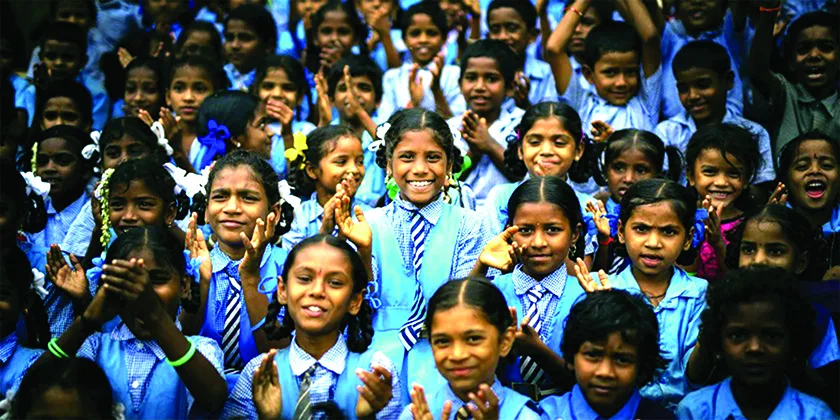
Budget prioritises education and skill development through the establishment of five National Centres of Excellence for Skilling in collaboration with global institutions. Expansion of Atal Tinkering Labs across 50,000 schools over five years and the creation of a Centre of Excellence in Artificial Intelligence (AI) for Education, with an initial allocation of Rs 500 crores, are other features.
Budget for Education & Skilling
- 50,000 Atal Tinkering Labs – To be set up in government schools over five years to promote STEM learning
- Broadband Connectivity for Schools – Under BharatNet, all government secondary schools will be connected
- Bharatiya Bhasha Pustak Scheme – Digital books in Indian languages for school & higher education
- 5 National Centres of Excellence for Skilling – Industry collaboration for advanced manufacturing training
- Expansion of IITs – 6,500 more students to be accommodated, hostel expansion at IIT Patna
- Centre of Excellence in AI for Education – Rs.500 crore allocation for AI-driven education research
Additionally, broadband connectivity will be extended to all Government schools and primary health centres in rural areas, facilitating digital inclusion.
Further, the PM Research Fellowship will fund 10,000 students pursuing technological research at premier institutions such as the Indian Institutes of Technology (IITs) and the Indian Institute of Science (IISc). The allocation of Rs 20,000 crores for private-sector-driven research, development, and innovation underscores Government’s commitment to fostering a knowledge-driven economy. Initiatives such as the Gyan Bharatam Mission and the National Digital Repository of Indian Knowledge Systems (IKS) aim to document and preserve India’s rich manuscript heritage, reinforcing cultural and academic advancements.
Moreover, expanding medical education through an additional 10,000 seats, cumulatively reaching 75,000 over five years, will enhance healthcare accessibility and human resource development. Increased capacity in IITs is anticipated to strengthen scientific education and research. Additionally, initiatives such as PM SVANidhi—offering formal credit access, UPI-linked credit cards, and entrepreneurial capacity-building—will further empower aspiring entrepreneurs.
Boost to Tourism
Bharat’s economy is deeply rooted in its cultural heritage, with traditional practices significantly sustaining economic dynamism. Recognising this, the Union Budget has strategically incentivised homestays through MUDRA loans and introduced performance-linked incentives for States to enhance tourism and pilgrimage-related initiatives. A key proposal in the Budget includes development of 50 prominent tourist destinations in collaboration with State Governments, aligning with the vision of Sabka Saath, Sabka Vikas. This initiative aims to establish critical tourism infrastructure, improve travel accessibility, and strengthen connectivity to major cultural and historical sites.
Furthermore, the Budget has allocated financial support for 40 projects across 23 States, providing interest-free loans for 50 years, amounting to Rs 3,295.8 crore under the Special Assistance to States for Capital and Investment. The Swadesh Darshan scheme has been allocated approximately Rs 1,900 crore, while Swadesh Darshan 2.0 (SD 2.0) will emphasise sustainable and responsible tourism. The revised scheme will continue to expand the 34 already approved projects, which have received a total funding of Rs 793.2 crore, as part of the overall Rs 2,541.06 crore allocation by the Ministry of Tourism. These measures are expected to encourage private investment in cultural tourism hubs and generate substantial employment opportunities.
The Swadesh Darshan Scheme between 2014-2024, has played a pivotal role in enhancing the tourism sector by integrating cultural, spiritual and ecological wealth into well-defined circuits. Launched in 2014 under the leadership of the BJP-led NDA Government, the scheme reflected a visionary approach to develop the country by promoting tourism as a driver of economic growth and cultural preservation. With a sanctioned funding of over Rs 5,294.11 crore across 76 projects, the scheme fosters regional economic growth, employment opportunities, and infrastructure development.
India’s rich cultural and spiritual heritage finds expression in the Spiritual Circuit, which has received Rs 672.61 crore across 13 projects, strengthening religious tourism and pilgrimage centers. The Buddhist Circuit, with Rs 319.01 crore for five projects, has facilitated global recognition of India’s Buddhist heritage, drawing international visitors. Similarly, the Ramayana Circuit (Rs 196.66 crore) and Krishna Circuit (Rs 153.19 crore) emphasise India’s deep-rooted mythological traditions, making ancient epics accessible to tourists.
Natural beauty and biodiversity are key aspects of the Eco Circuit, Himalayan Circuit, and Wildlife Circuit, promoting sustainable tourism. The Coastal Circuit and Heritage Circuit (Rs 742.85 crore) capitalise on India’s vast coastline and historical landmarks to boost tourism.
Under the Swadesh Darshan 2.0 initiative, 57 destinations across various States and Union Territories have been identified for further development. These destinations include Hampi and Mysuru in Karnataka, Gaya and Nalanda in Bihar, Prayagraj and Naimisharanya in Uttar Pradesh, Mamallapuram in Tamil Nadu, Amritsar in Punjab and Dwarka in Gujarat, among others. These sites not only hold immense historical and religious significance but also contribute to the local economy by attracting pilgrims and tourists from across the world.
The development of pilgrimage destinations under the PRASHAD Scheme further aligns with the Swadesh Darshan initiative, integrating modern infrastructure while preserving spiritual heritage. The BJP-led NDA Government has ensured that these projects are executed with a long-term vision to strengthen India’s identity as a global tourism hub. By prioritising connectivity, infrastructure and sustainable practices, this initiative reflects India’s commitment to harnessing tourism for economic prosperity and national pride.
The tourism-driven economic strategy under Swadesh Darshan highlights its cultural pride and the potential of sustainable tourism to uplift local communities. Through these initiatives, the Government has successfully laid the foundation for a self-reliant and culturally enriched Bharat, where tourism is not just a revenue generator but a means to celebrate and preserve the nation’s glorious past.
Tapping Pilgrim Centres
The potential of pilgrim centres as engines of economic growth is immense. Every State in India has thousands of temples—ranging from Jyotirlingas to ancient temples with centuries-old histories and the legacy of rishis. With the right financial input, these sacred sites can drive the local economy, creating sustainable employment and stable infrastructure. Investment in these sites not only fosters economic development but also instills a deep sense of pride among local communities.
Most pilgrim centres come with cultural and economic corridors that drive economic activity in surrounding areas. Enhancing connectivity and infrastructure in these regions would decentralise economic benefits, ensuring prosperity reaches remote towns and villages. The growing purchasing power of people and the ease of mobility have significantly altered the dynamics of travel, making it imperative to unlock the full potential of India’s spiritual destinations.
Andhra Pradesh features Gandikota, often referred to as the “Grand Canyon of India.” It is known for its ancient fort and spectacular landscapes, alongside Arakku-Lambassingi, which is known for its coffee plantations and serene tribal culture. In Arunachal Pradesh, the scenic towns of Nacho and Mechuka offer both natural beauty and cultural heritage, making them prime spots for adventurous travelers. Assam’s Jorhat, a historical gateway to tea gardens, and Kokrajhar, known for its rich Bodo culture, are destinations that draw those interested in nature and cultural diversity.
Bihar boasts the religiously significant Gaya and the ancient university town of Nalanda, key sites for those tracing India’s spiritual and educational history. In Chhattisgarh, Bilaspur and Jagdalpur are emerging as notable tourist destinations for their tribal culture and natural reserves, attracting those interested in exploring untouched landscapes. Goa’s Porvorim and Colva are famous for their beaches, while Gujarat’s Dholavira and Dwarka showcase the ancient and sacred remains of the Harappan civilisation and Bhagwan Krishna’s legendary ties to the region.
Haryana’s Panchkula (Morni) is known for its scenic hills and lakes, while Himachal Pradesh’s Pong Dam attracts bird watchers and nature lovers. Jammu & Kashmir’s Basholi is steeped in history, with a rich art and craft tradition, making it a perfect example of cultural tourism. Jharkhand’s Chandil, with its scenic landscape and lakes, and Karnataka’s historical Hampi and Mysuru offer an amalgamation of heritage and grandeur, perfect for those seeking a glimpse into ancient royal life.
Kerala’s Kumarakom and Kozhikode (Beypore) offer coastal beauty and historical sites related to the spice trade and maritime history, while Madhya Pradesh is home to Gwalior, with its fortress and rich Mughal heritage, and Chitrakoot, a sacred town tied to the Ramayana. Maharashtra’s Sindhudurg offers a coastal charm steeped in the Maratha legacy, and the Ajanta-Ellora caves are some of the finest examples of ancient rock-cut temples and Buddhist artwork.
Manipur’s Moirang is linked to India’s freedom struggle, and Meghalaya’s Shillong and Sohra are perfect for nature tourism, thanks to their breathtaking waterfalls and tribal traditions. Mizoram’s Aizawl and Champhai are less explored, offering insights into the state’s vibrant culture. Nagaland’s Niuland and Chumukedima are key to understanding the rich traditions and diversity of Naga tribes.
Odisha’s Koraput and Debrigarh are known for their untouched landscapes and tribal heritage, while Punjab’s Amritsar, with the iconic Golden Temple, is a hub for both religious and historical tourism. Kapurthala, with its architectural beauty, adds to the cultural diversity of the State. Rajasthan’s Bundi and Jodhpur, with their majestic forts and palaces, offer travellers a chance to explore the State’s royal history.

Budget for Tourism & Cultural Development
- Top 50 Tourist Sites Development – Special focus on Buddhist circuits, spiritual & historical sites
- PM SVANidhi Expansion – Credit support for 68 lakh street vendors, now with Rs.30,000 UPI-linked credit limit
- Medical Tourism & ‘Heal in India’ Initiative – Easier visa norms & global partnerships
Sikkim’s Gangtok and Gyalshing provide scenic beauty and Buddhist heritage, while Tamil Nadu’s Mamallapuram, a UNESCO World Heritage site, and the Nilgiris, with their tea plantations and hill stations, add both cultural and natural appeal. Telangana’s Bhongir and Ananthagiri are significant for their historical fort ruins and tribal culture. Tripura’s Agartala and Unakoti are lesser-known jewels with historical temples and ancient sculptures, while Uttar Pradesh’s Prayagraj and Naimisharanya are key pilgrimage destinations. Uttarakhand’s Pittoragarh and Champavat offer opportunities for both adventure and spiritual tourism. Chandigarh and Lakshadweep are special for their modern developments and serene islands, respectively.
Puducherry’s coastal charm and colonial legacy are well known, while Ladakh, with its rugged beauty, offers a unique blend of Tibetan culture and Buddhist sites. Together, these destinations under the Swadesh Darshan Scheme 2.0 contribute significantly to India’s tourism, showcasing a tapestry of the country’s diverse history, culture, and natural wonders.
The Heal in India initiative under medical tourism also seeks to attract international visitors by leveraging India’s rich cultural and heritage connections. The Budget also prioritises the development of Buddhist tourism circuits, linking them to the life and teachings of Buddha. This initiative is expected to contribute to the holistic development of these sites, fostering both spiritual enrichment and economic growth.
The Union Budget 2025-26 addresses key developmental pillars such as youth and women’s empowerment, scientific education, culture and tourism, agricultural modernisation, MSME growth, infrastructure expansion, digital connectivity and socio-economic upliftment. By integrating forward-looking policies and targeted interventions, the Budget is poised to be a transformative force, fostering inclusive and sustainable development. Consequently, the 2025-26 Budget is not only a game-changer but a strategic blueprint for realising the vision of Viksit Bharat.