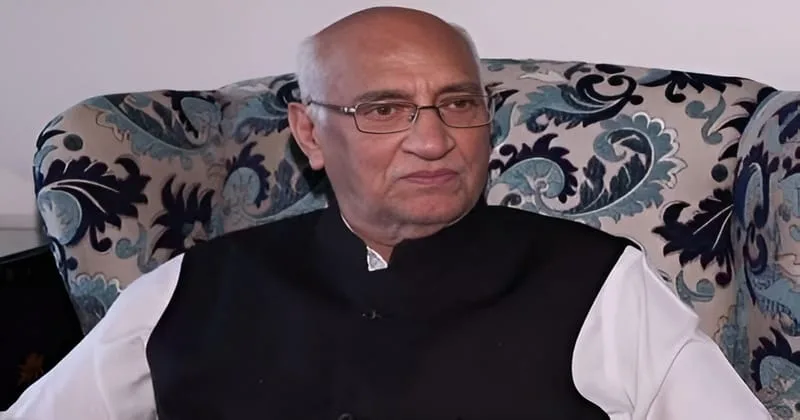
Former senior Indian diplomat Vidya Bhushan Soni has said that China now recognises that BRICS “can’t really get anywhere” without India’s active participation and leadership, describing the latest India–China Strategic Dialogue as a pragmatic reset ahead of New Delhi assuming the bloc’s chairmanship in 2026.
Speaking to the media, Soni said Beijing’s recent outreach reflects a growing understanding of India’s central role within BRICS, particularly at a time when global alignments are rapidly shifting. His remarks followed talks held in New Delhi on February 10 between India’s Foreign Secretary Vikram Misri and China’s Executive Vice Minister of Foreign Affairs Ma Zhaoxu. During the meeting, both sides agreed to support each other’s work as BRICS Chair for 2026 and 2027, signalling an effort to strengthen coordination well ahead of India formally taking over leadership of the grouping. “It is very important that they have come up with this kind of approach. I think that is a sensible approach,” Soni told the media, emphasising that India will be steering BRICS deliberations across multiple sectors next year. “Please bear in mind that India will be chairing the BRICS session, so we will be steering the deliberations in various sectors,” he said, adding that major global changes since the previous summit make early engagement between key members essential.
Beijing realises BRICS needs India’s leadership
Soni also pointed to attempts by some “interested parties” to diminish the relevance of the grouping. India, he stressed, remains firmly committed to multilateral diplomacy and continues to view BRICS as a cornerstone of its international engagement. “For us, BRICS is important because we are one of the founding members. I think China has realised that BRICS without India’s active participation and leadership role can’t really get anywhere,” he said.
According to Soni, Beijing’s decision to initiate discussions before India’s chairmanship begins reflects a desire to minimise differences and establish common ground in advance. “So, they took the initiative of coming and before our chairmanship starts, we agree on various points so that there is no divergence of view and there is commonality so that we can move forward,” he explained.
The official readout of the dialogue described the exchanges as “friendly, candid and in-depth,” covering international and regional developments, internal and external policies, and bilateral relations.
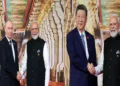
Both sides underlined that China and India should regard each other as cooperative partners rather than rivals, and treat each other’s development as an opportunity rather than a threat, language that mirrors broader messaging following interactions between President Xi Jinping and Prime Minister Narendra Modi. They also reaffirmed support for multilateralism, the central role of the United Nations, unity among the Global South, and the pursuit of a multipolar world order.
With BRICS expanding its footprint and global power equations in flux, India’s 2026 chairmanship is shaping up as a critical test, one that will reveal whether the current diplomatic messaging evolves into coordinated action.