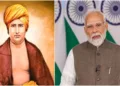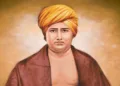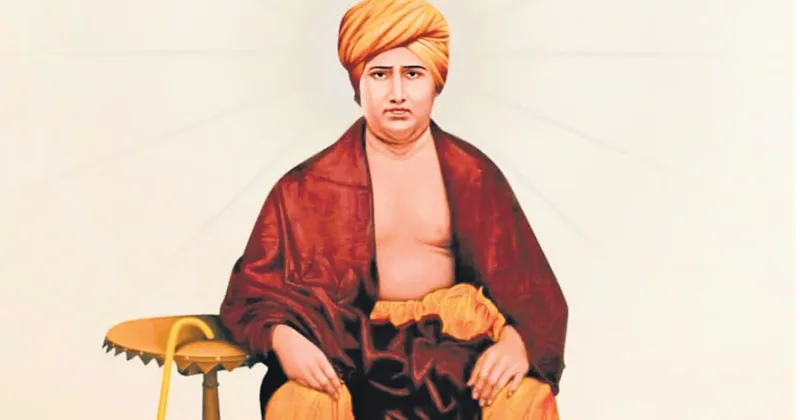
Maharishi Dayanand Saraswati emerged in nineteenth-century India as one of the most transformative religious and social reformers, whose influence deeply shaped the cultural, spiritual, and political consciousness of Punjab. At a time when Punjab was witnessing intense religious contestation, colonial intrusion, and social fragmentation, Dayanand’s call to return to the Vedas provided intellectual and spiritual confidence to Punjabi Hindus and Khatri Sikhs alike. His ideas did not promote narrow sectarianism but instead offered a civilizational framework rooted in rational inquiry, ethical living, and cultural self-respect. Through the Arya Samaj movement, he helped protect indigenous faith traditions from erosion while simultaneously modernising social thought.
In pre-Partition Punjab, religious identity was not rigidly compartmentalised. Punjabi Hindus and Khatri Sikhs shared social spaces, family ties, and cultural practices. However, aggressive proselytisation by Christian missionaries and Islamic revivalist movements, backed indirectly by colonial patronage, created anxiety among indigenous communities. Maharishi Dayanand Saraswati responded to this challenge not through fear or withdrawal, but through intellectual engagement. His insistence on the supremacy of the Vedas as a rational and universal source of truth instilled a sense of pride among Punjabis who were increasingly made to doubt their own traditions under colonial discourse.
For Punjabi Hindus, Dayanand’s teachings acted as a shield against cultural dilution. He rejected superstition, idol worship, and ritualism not to weaken Hindu society, but to strengthen it by restoring its philosophical core. This reformist zeal resonated strongly in Punjab, where the Arya Samaj rapidly expanded as a platform for social reform, education, and religious assertion. The movement encouraged Hindus to reconnect with Sanskritic learning, Vedic ethics, and a shared civilizational memory, thereby reinforcing their identity in a region marked by intense demographic and ideological shifts. Equally significant was Dayanand Saraswati’s influence on Khatri Sikhs, many of whom historically occupied an in-between space shaped by both Hindu and Sikh traditions. Arya Samaj offered them an intellectual vocabulary to assert continuity with Vedic heritage without negating Sikh distinctiveness. In Punjab, Arya Samaj often worked in close proximity to Singh Sabha reformers, and while ideological differences existed, both movements shared a common goal of resisting colonial distortions of indigenous faiths. Dayanand’s emphasis on monotheism, ethical conduct, and scriptural authority found echoes in Sikh reformist thought, fostering mutual reinforcement rather than antagonism.
The institutional strength of Arya Samaj in Punjab cannot be separated from its educational mission. The establishment of the Dayanand Anglo-Vedic institutions marked a decisive intervention in the colonial knowledge system. These institutions sought to combine modern scientific education with Vedic moral philosophy, challenging the colonial assumption that progress required cultural alienation. In Punjab, DAV schools and colleges became centres of intellectual awakening, producing generations of students who were rooted in tradition yet equipped to engage with modernity. This synthesis played a crucial role in preserving traditional knowledge systems at a time when indigenous epistemologies were systematically marginalised.
Before Partition, DAV institutions in Punjab were not merely educational spaces but hubs of nationalist consciousness. They fostered pride in Indian history, Sanskrit literature, and Vedic philosophy while also encouraging critical thinking and public service. Teachers and students associated with these institutions often participated in social reform movements, language preservation efforts, and nationalist activities. Even after Partition, the legacy of DAV institutions continued to shape North Indian education, ensuring that traditional knowledge and cultural memory were not erased by displacement and trauma.
Maharishi Dayanand Saraswati’s views on women’s empowerment were radical for his time and deeply influential in Punjab’s reformist circles. He strongly opposed child marriage, advocated widow remarriage, and insisted on women’s right to education. By grounding gender equality in Vedic authority, he dismantled the argument that patriarchy was divinely ordained. In Punjab, where social conservatism coexisted with reformist impulses, Arya Samaj became a space where women could access education and participate in public life. This had a long-term impact on the emergence of educated, socially aware Punjabi women.
Dayanand’s emphasis on women’s education also had nationalist implications. Educated women became transmitters of cultural values within families and communities, reinforcing social cohesion during periods of political instability. In Arya Samaj households, women were encouraged to study scriptures, engage in debate, and raise children with a sense of ethical responsibility and national pride. This silent yet powerful transformation contributed significantly to the cultural resilience of Punjabi society in the decades leading up to Partition.
The ideological influence of Maharishi Dayanand Saraswati extended into the freedom struggle, inspiring revolutionaries and nationalists alike. His call for self-respect, intellectual independence, and resistance to foreign domination resonated deeply with young minds. Bhagat Singh, one of Punjab’s most iconic revolutionaries, was raised in an environment influenced by Arya Samaj ideals. His family’s association with reformist and nationalist movements reflected the broader impact of Dayanand’s thought on revolutionary consciousness.
Bhagat Singh’s emphasis on rationalism, social justice, and ethical courage can be traced to the intellectual climate shaped by Arya Samaj in Punjab. While Singh moved beyond religious frameworks, the foundational values of fearless inquiry and resistance to oppression remained central to Dayanand’s teachings. The insistence that no authority, religious or political, should escape rational scrutiny formed a crucial bridge between religious reform and political revolution.
Maharishi Dayanand Saraswati’s role in Punjab was not limited to religious revival but encompassed cultural preservation, social reform, educational innovation, and political awakening. His ideas helped Punjabi Hindus and Khatri Sikhs navigate a period of profound upheaval with confidence and clarity. Through Arya Samaj and DAV institutions, he ensured that tradition was not fossilised but revitalised, capable of responding to modern challenges without losing its essence.
In contemporary times, the relevance of Dayanand’s legacy in Punjab remains unmistakable. DAV institutions continue to serve as custodians of balanced education, while Arya Samaj principles inform debates on social reform and cultural identity. In an era once again marked by ideological confusion and historical amnesia, Maharishi Dayanand Saraswati’s vision offers a reminder that true progress lies in harmonising reason with tradition, reform with continuity, and freedom with responsibility.