
Universalism has long been among the most ambitious moral projects of the modern world. Born of the European Enlightenment, it promised a vision of humanity bound together by shared reason, rights, and moral equality. Yet even within Western political thought, there has been sustained unease about the manner in which this promise has travelled. As Michael Walzer once observed with characteristic clarity, “Every universalism is the universalisation of some particularity.” This description aptly fits western universalism, which in practice often moved outwards as abstract imposition. What was presented as morally neutral thus came to be experienced, across much of the non-Western world, as epistemically intrusive and ethically homogenising.
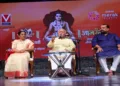
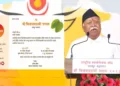
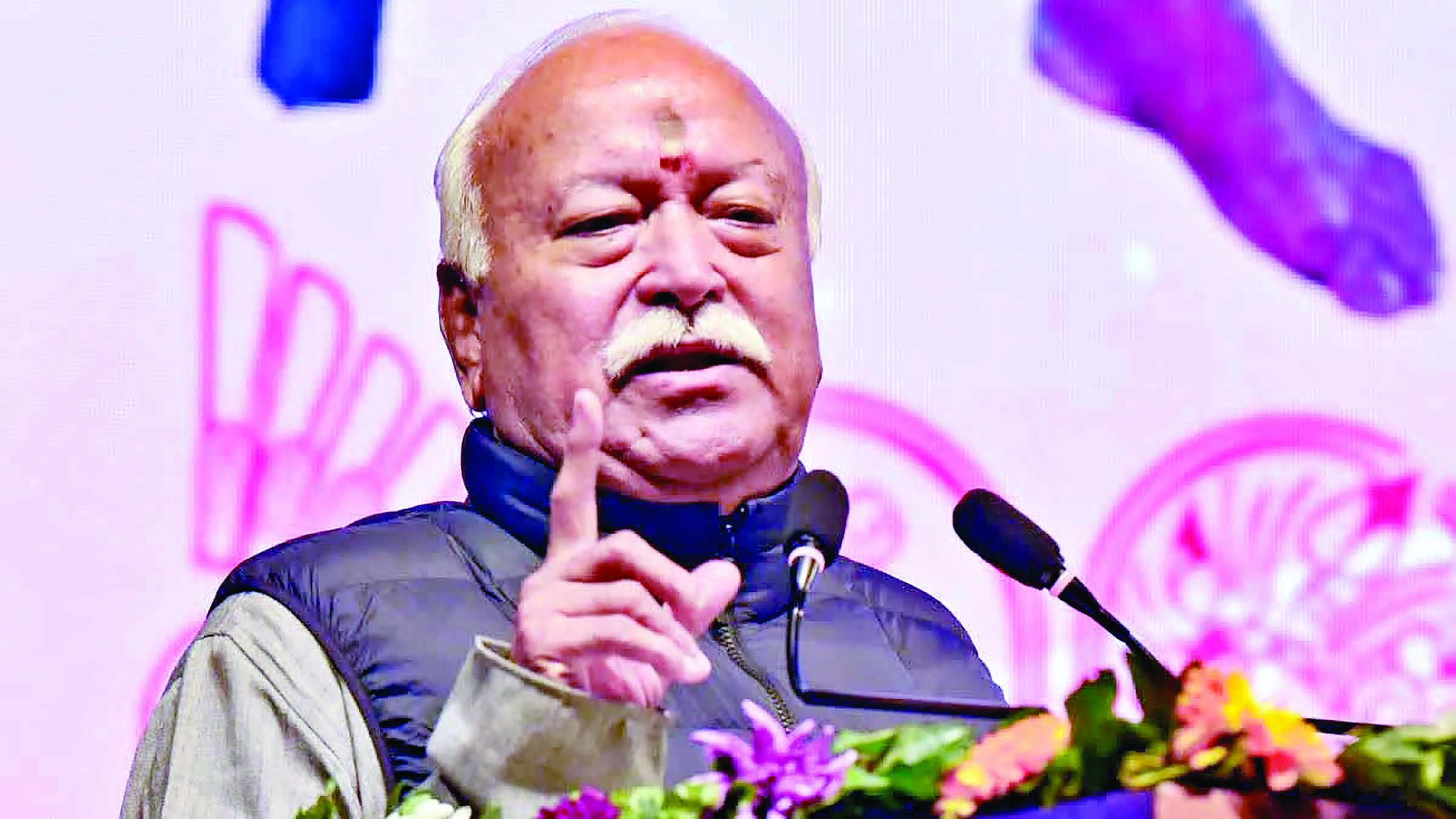
However, this chicanery did not produce a rejection of universality itself. Rather, it opened a more unsettling epistemological question within social sciences and political theory: whether Western universalism represents a neutral moral horizon, or globalisation of a culturally specific way of being human? Post-colonial societies such as Bharat have long had to negotiate this tension, seeking to remain rooted in its civilisational inheritance while simultaneously engaging with a universalism that emerged from a very different historical and cultural experience. It is in this wider intellectual context that organisations such as the Rashtriya Swayamsevak Sangh (RSS) have sought to preserve a sense of civilisational moral clarity. RSS Sarsanghchalak Dr Mohan Bhagwat’s recent address in Raipur, delivered at the Virat Hindu Sammelan on the occasion of the Sangh’s centenary year precisely reflects the same.
Grammar of Ethical Universality
Dr Bhagwat begins by returning to a foundational question – what does it mean to be together (sangathit)? The idea of sangathan, as he presents it, is not merely passive tolerance of difference or management of diversity. It essentially means to achieve something purposeful together. Unity, is thus, not achieved by erasing plurality but by cultivating a moral orientation that allows plurality to coexist without fragmentation. This thought is essentially rooted in the idea that the deepest crises facing individuals, societies, and nations today are not resolved through external strength, but through an inner moral orientation that looks for unity within. How, then, is such an inner moral orientation cultivated? This is where Dr Bhagwat outlines the Bharatiya imagination of ethical universality. One that does not rely on coercion, conversion, or ideological expansion but rather on ethical exemplarity which radiates from a society that has learned to live well with itself. He discusses five forms of ethical practices that can be undertaken within the ordinary rhythms of life, without the need for additional resources. The first is samajik samarasata (social harmony) where he urges individuals to form friendships across caste, sect, and linguistic boundaries, and to inhabit the conviction that all are one’s own.
The second is kutumb prabodhan (Family enlightenment). In our national imagination, moral values do not gain strength by detaching themselves from tradition. They become meaningful and widely shared when they are discussed at home, remembered through family histories, and practised across generations. Recognising that the fate of the individual and the family is inseparable from that of the nation, Dr Bhagwat raises a simple question – how much time and attention can one devote each day to society and country? It expands outwards in graduated form, from the self to the family, from the family to society, from society to the nation, and finally to the world. Each layer presupposes the health of the one before it. This appreciates the ideal that the world cannot be cared for meaningfully if the moral fabric of domestic life remains frayed.
Closely linked to this is the call to ecological responsibility and swabodh, ethical self-awareness. Caring for the environment is not a matter of rights and regulations but a matter of conscious daily practices that has beautifully been intertwined with traditions in Bharatiya culture. Swabodh extends this inward orientation further. Speaking one’s mother tongue at home, learning the language of the region one inhabits, supporting domestic industries, and sustaining traditional artisans are acts of ethical recognition which one must adopt. Language (bhasha), dress (bhusha), devotion (bhajan), dwelling (bhavan), food (bhojan), and travel (bhraman) in Hindu thought are not merely cultural markers but sites through which moral consciousness is formed in a civilised society.
And in the final dimension, Dr Bhagwat discusses issues of civic discipline. He speaks of the Constitution as a document shaped by the moral consciousness of the people of this country, and therefore, offers guidance on how dharma may be exercised in contemporary life. Obedience to law, respect for civic norms, and adherence to unwritten codes of conduct are not constraints, but expressions of active citizenship. He speaks about another set of rules that constitute the essence of being a Bharatiya through our samskaras. Respect for elders, generosity toward the vulnerable, and humility in public life may not be legally enforceable, yet they remain indispensable to moral excellence. Evidently, this framework stands in marked contrast to Western universalism. In contrast, the Bharatiya imagination articulated here offers a different route that does not attempt to impose moral frameworks across societies, but allows ethical conduct, patiently cultivated at home, to speak for itself in the wider world.
It is in this light that Dr Bhagwat’s much-noted assertion – that the prosperity of Bharat will bring prosperity to the world – must be read. Because if stripped of its moral context, the statement risks misinterpretation as civilisational assertion or geopolitical ambition. In Bharatiya civilisational thought, prosperity (samriddhi) is not reduced to economic growth or strategic dominance. It is moral, social, and ecological flourishing. A society that learns to live ethically with itself, contributes to the world not through imposition but through demonstration. This understanding of Vishva Kalyan – world welfare – differs fundamentally from missionary universalism. It does not seek to remake the world in its own image. Nor does it retreat into cultural relativism. Instead, it proposes that a civilisation secure in its ethical foundations can participate in global life without anxiety, coercion, or erasure. Thus, universality emerges not through convergence, but through meaningful coexistence. It is only when seen this way, that the RSS’s long-standing emphasis on social work, character formation, and civic discipline can be clearly understood not as ideological mobilisation but as civilisational preparation. With such an exemplary vision, Dr Mohan Bhagwat offers not a challenge to the world, but an invitation to rethink what universality can mean after the West.