
Hindu Sammelan in Raipur: Rekindling Hindu universalism
June 23, 2026
  • Read Ecopy
  • Circulation
  • Advertise
  • Careers
  • About Us
  • Contact Us
Android AppiPhone AppArattai
Organiser
  • ‌
  • Bharat
    • Assam
    • Bihar
    • Chhattisgarh
    • Jharkhand
    • Maharashtra
    • View All States
  • World
    • Asia
    • Europe
    • North America
    • South America
    • Africa
    • Australia
  • Editorial
  • International
  • Opinion
  • RSS @ 100
  • More
    • Op Sindoor
    • Analysis
    • Sports
    • Defence
    • Politics
    • Business
    • Economy
    • Culture
    • Special Report
    • Sci & Tech
    • Entertainment
    • G20
    • Azadi Ka Amrit Mahotsav
    • Vocal4Local
    • Web Stories
    • Education
    • Employment
    • Books
    • Interviews
    • Travel
    • Law
    • Health
    • Obituary
  • Subscribe
    • Subscribe Print Edition
    • Subscribe Ecopy
    • Read Ecopy
  • ‌
  • Bharat
    • Assam
    • Bihar
    • Chhattisgarh
    • Jharkhand
    • Maharashtra
    • View All States
  • World
    • Asia
    • Europe
    • North America
    • South America
    • Africa
    • Australia
  • Editorial
  • International
  • Opinion
  • RSS @ 100
  • More
    • Op Sindoor
    • Analysis
    • Sports
    • Defence
    • Politics
    • Business
    • Economy
    • Culture
    • Special Report
    • Sci & Tech
    • Entertainment
    • G20
    • Azadi Ka Amrit Mahotsav
    • Vocal4Local
    • Web Stories
    • Education
    • Employment
    • Books
    • Interviews
    • Travel
    • Law
    • Health
    • Obituary
  • Subscribe
    • Subscribe Print Edition
    • Subscribe Ecopy
    • Read Ecopy
Organiser
  • Home
  • Bharat
  • World
  • Operation Sindoor
  • Editorial
  • Analysis
  • Opinion
  • Culture
  • Defence
  • International Edition
  • RSS @ 100
  • Magazine
  • Read Ecopy
Home Bharat

Hindu Sammelan in Raipur: Rekindling Hindu universalism

From Jaag utha hai Hindu phir se to Chandan hai is desh ki maati, RSS has always inspired youth to work for the unity of the motherland. In this background, when Sangh has completed its hundred years, it is organising over 80,000 Hindu Sammelans across Bharat

Mrinal RaiMrinal Rai
Feb 9, 2026, 06:30 pm IST
in Bharat, Analysis
Follow on Google News
FacebookTwitterWhatsAppTelegramEmail

Universalism has long been among the most ambitious moral projects of the modern world. Born of the European Enlightenment, it promised a vision of humanity bound together by shared reason, rights, and moral equality. Yet even within Western political thought, there has been sustained unease about the manner in which this promise has travelled. As Michael Walzer once observed with characteristic clarity, “Every universalism is the universalisation of some particularity.” This description aptly fits western universalism, which in practice often moved outwards as abstract imposition. What was presented as morally neutral thus came to be experienced, across much of the non-Western world, as epistemically intrusive and ethically homogenising.

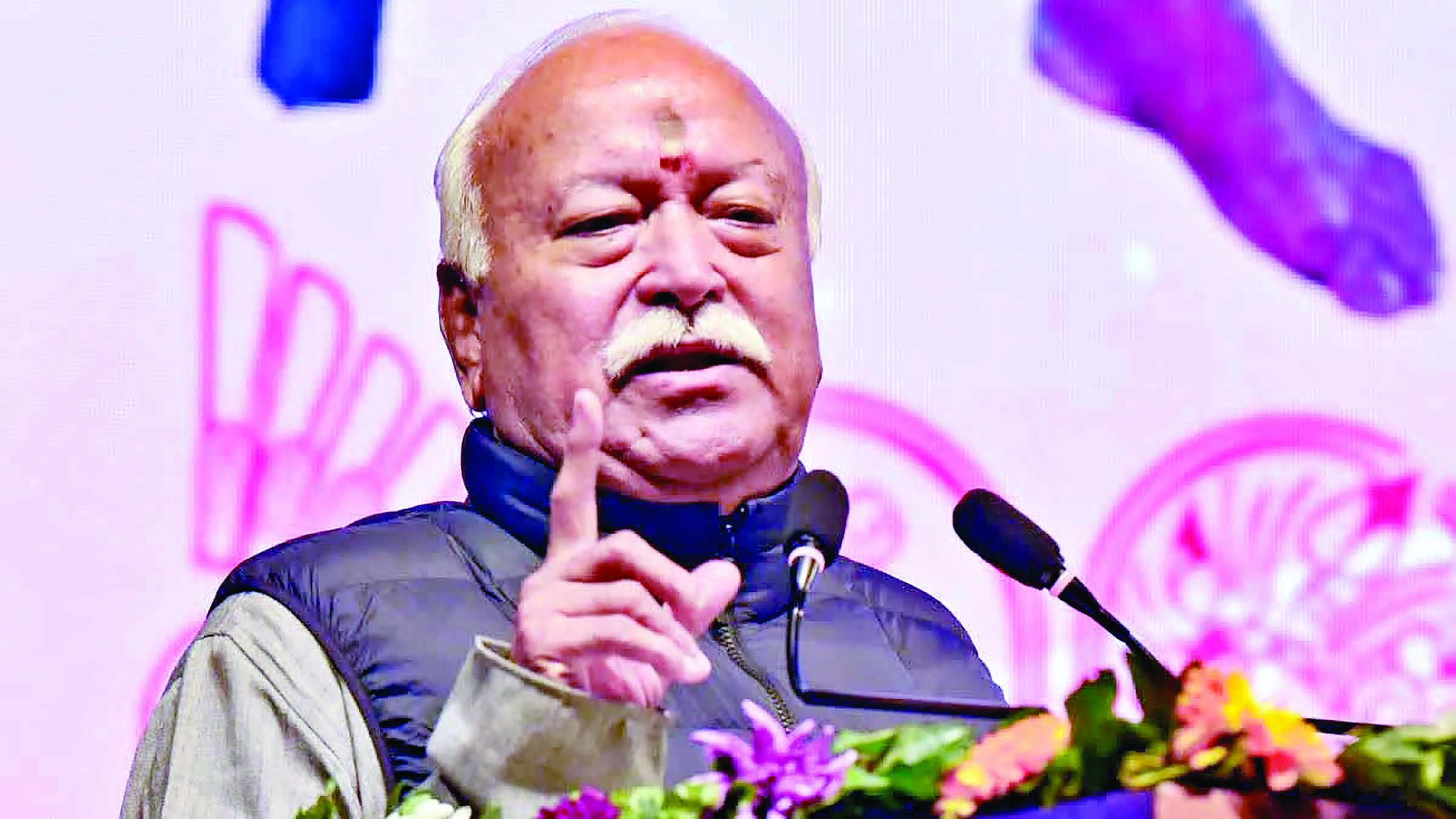
However, this chicanery did not produce a rejection of universality itself. Rather, it opened a more unsettling epistemological question within social sciences and political theory: whether Western universalism represents a neutral moral horizon, or globalisation of a culturally specific way of being human? Post-colonial societies such as Bharat have long had to negotiate this tension, seeking to remain rooted in its civilisational inheritance while simultaneously engaging with a universalism that emerged from a very different historical and cultural experience. It is in this wider intellectual context that organisations such as the Rashtriya Swayamsevak Sangh (RSS) have sought to preserve a sense of civilisational moral clarity. RSS Sarsanghchalak Dr Mohan Bhagwat’s recent address in Raipur, delivered at the Virat Hindu Sammelan on the occasion of the Sangh’s centenary year precisely reflects the same.

Grammar of Ethical Universality

Dr Bhagwat begins by returning to a foundational question – what does it mean to be together (sangathit)? The idea of sangathan, as he presents it, is not merely passive tolerance of difference or management of diversity. It essentially means to achieve something purposeful together. Unity, is thus, not achieved by erasing plurality but by cultivating a moral orientation that allows plurality to coexist without fragmentation. This thought is essentially rooted in the idea that the deepest crises facing individuals, societies, and nations today are not resolved through external strength, but through an inner moral orientation that looks for unity within. How, then, is such an inner moral orientation cultivated? This is where Dr Bhagwat outlines the Bharatiya imagination of ethical universality. One that does not rely on coercion, conversion, or ideological expansion but rather on ethical exemplarity which radiates from a society that has learned to live well with itself. He discusses five forms of ethical practices that can be undertaken within the ordinary rhythms of life, without the need for additional resources. The first is samajik samarasata (social harmony) where he urges individuals to form friendships across caste, sect, and linguistic boundaries, and to inhabit the conviction that all are one’s own.

The second is kutumb prabodhan (Family enlightenment). In our national imagination, moral values do not gain strength by detaching themselves from tradition. They become meaningful and widely shared when they are discussed at home, remembered through family histories, and practised across generations. Recognising that the fate of the individual and the family is inseparable from that of the nation, Dr Bhagwat raises a simple question – how much time and attention can one devote each day to society and country? It expands outwards in graduated form, from the self to the family, from the family to society, from society to the nation, and finally to the world. Each layer presupposes the health of the one before it. This appreciates the ideal that the world cannot be cared for meaningfully if the moral fabric of domestic life remains frayed.

Closely linked to this is the call to ecological responsibility and swabodh, ethical self-awareness. Caring for the environment is not a matter of rights and regulations but a matter of conscious daily practices that has beautifully been intertwined with traditions in Bharatiya culture. Swabodh extends this inward orientation further. Speaking one’s mother tongue at home, learning the language of the region one inhabits, supporting domestic industries, and sustaining traditional artisans are acts of ethical recognition which one must adopt. Language (bhasha), dress (bhusha), devotion (bhajan), dwelling (bhavan), food (bhojan), and travel (bhraman) in Hindu thought are not merely cultural markers but sites through which moral consciousness is formed in a civilised society.

And in the final dimension, Dr Bhagwat discusses issues of civic discipline. He speaks of the Constitution as a document shaped by the moral consciousness of the people of this country, and therefore, offers guidance on how dharma may be exercised in contemporary life. Obedience to law, respect for civic norms, and adherence to unwritten codes of conduct are not constraints, but expressions of active citizenship. He speaks about another set of rules that constitute the essence of being a Bharatiya through our samskaras. Respect for elders, generosity toward the vulnerable, and humility in public life may not be legally enforceable, yet they remain indispensable to moral excellence. Evidently, this framework stands in marked contrast to Western universalism. In contrast, the Bharatiya imagination articulated here offers a different route that does not attempt to impose moral frameworks across societies, but allows ethical conduct, patiently cultivated at home, to speak for itself in the wider world.

It is in this light that Dr Bhagwat’s much-noted assertion – that the prosperity of Bharat will bring prosperity to the world – must be read. Because if stripped of its moral context, the statement risks misinterpretation as civilisational assertion or geopolitical ambition. In Bharatiya civilisational thought, prosperity (samriddhi) is not reduced to economic growth or strategic dominance. It is moral, social, and ecological flourishing. A society that learns to live ethically with itself, contributes to the world not through imposition but through demonstration. This understanding of Vishva Kalyan – world welfare – differs fundamentally from missionary universalism. It does not seek to remake the world in its own image. Nor does it retreat into cultural relativism. Instead, it proposes that a civilisation secure in its ethical foundations can participate in global life without anxiety, coercion, or erasure. Thus, universality emerges not through convergence, but through meaningful coexistence. It is only when seen this way, that the RSS’s long-standing emphasis on social work, character formation, and civic discipline can be clearly understood not as ideological mobilisation but as civilisational preparation. With such an exemplary vision, Dr Mohan Bhagwat offers not a challenge to the world, but an invitation to rethink what universality can mean after the West.


Topics: Hindu Sammelan in RaipuHindu universalismDr Mohan BhagwatEthical UniversalityVishva Kalyan - world welfareBharatiya imagination
Mrinal Rai
Mrinal Rai
Meet Mrinal Rai, a dynamic web consultant and prolific writer at The Organiser, where she delves into the intricacies of topics revolving around RSS, VHP, ABVP, and associated organizations. With a keen passion for cultural resurgence and decoloniality, her articles are a captivating exploration of the intersections between tradition and modernity. Through her unique blend of intellect and dedication, Mrinal Rai invites readers to delve into the heartbeat of organizations and narratives that shape our cultural landscape. [Read more]
ShareTweetSendShareSend
✮ Subscribe Organiser YouTube Channel. ✮
✮ Join Organiser's WhatsApp channel for Nationalist views beyond the news. ✮
Previous News

Organiser Exclusive | Sheikh Hasina on Bangladesh Polls: “Fair elections impossible if independent candidates barred”

Next News

Strategic push by India & Canada to consolidate national security against Khalistani extremism ahead of PM Carney visit

Related News

RSS Sarsanghchalak Dr Mohan Bhagwat

Udaipur | Haldighati was a victory of Bharat’s civilisational resolve: RSS Sarsanghchalak Dr Mohan Bhagwat

RSS Sarsanghchalak Dr Mohan Bhagwat

The time of Bharat has arrived; we need to expedite our preparation: Dr Bhagwat at RSS Karyakarta Vikas Varg 2

Padma Bhushan awardee and noted industrialist Kumar Mangalam Birla Kumar Mangalam Birla addressing the Samapana Samaroh (Valedictory Function) of the Rashtriya Swayamsevak Sangh Karyakarta Vikas Varg – Dwitiya at Nagpur, on June 4, 2026

“RSS always stood by the society and nation”, Kumar Mangalam Birla at RSS Karyakarta Vikas Varg 2 in Nagpur

Union Home Minister Amit Shah

Home Minister Amit Shah announces high-level committee to probe demographic changes: “Infiltration a major challenge”

RSS Sarsanghchalak Dr Mohan Bhagwat

RSS sarsanghchalak Dr Bhagwat urges Swayamsevaks to be aware of global developments, calls to utilise AI positively

Former Sahakaryavahika of Rasthra Sevika Samiti Ma Rukmini Akka (File Photo)

RSS mourns demise of former Sahakaryavahika Ma Rukmini Akka, calls her life a “radiant example” of national service

Load More

Latest News

President Droupadi Murmu confers the Padma Shri on former civil servant R.V.S. Mani on June 23, 2026.

Former MHA official RVS Mani honoured with Padma Shri for contributions to internal security

Tamil Nadu: Temple funds only for temple property; TVK govt concedes before Madras High Court

Keralam’s former Industries Secretary, Mohammed Haneesh IAS (Right Side)

Keralam Cashew Scam: Former Industries Secretary Md Haneesh apologises before High Court after contempt proceedings

Tamil Nadu: Assembly Speaker directs all bureaucrats to strictly follow warrant of precedence after Mayor-MLA row

Kamakhya Mandir

Kamakhya Mandir’s Ambubachi Mela: The ancient tradition that honours the menstruation of mother Earth

Amazon in dock for mocking Hindu Gods

Amazon File: From Ganesha to Aryabhata-Has Amazon India become a platform for Anti-Hindu narratives?

The West Bengal Budget 2026–27 aims to drive growth through infrastructure, industry, innovation and welfare

Reimagining Bengal: How the West Bengal Budget 2026–27 seeks to balance growth, welfare & economic transformation

Pratiraksha is Gujarat Police's Aadhaar-based verification platform designed to identify illegal workers and prevent identity fraud in industrial sectors

Pratiraksha: How Gujarat police uses Aadhaar verification to secure industrial workforce against identity fraud

Israel-Iran crisis has highlighted not only shifting dynamics of West Asia but also growing confidence of India's foreign policy

India, Israel and the rise of strategic autonomy in an era of global geopolitical realignment

Saleem and Jaleel arrested in forced religious conversion case

Karnataka Conversion Case: Forced conversion of Hindu woman and minor son sparks outrage; Saleem and Jaleel arrested

Load More
  • Privacy
  • Terms
  • Cookie Policy
  • Refund and Cancellation
  • Delivery and Shipping

© Bharat Prakashan (Delhi) Limited.
Tech-enabled by Ananthapuri Technologies

  • Home
  • Search Organiser
  • Bharat
    • Assam
    • Bihar
    • Chhattisgarh
    • Jharkhand
    • Maharashtra
    • View All States
  • World
    • Asia
    • Africa
    • North America
    • South America
    • Europe
    • Australia
  • Editorial
  • Operation Sindoor
  • Opinion
  • Analysis
  • Defence
  • Culture
  • Sports
  • Business
  • RSS @ 100
  • Entertainment
  • More ..
    • Sci & Tech
    • Vocal4Local
    • Special Report
    • Education
    • Employment
    • Books
    • Interviews
    • Travel
    • Health
    • Politics
    • Law
    • Economy
    • Obituary
  • Subscribe Magazine
  • Read Ecopy
  • Advertise
  • Circulation
  • Careers
  • About Us
  • Contact Us
  • Policies & Terms
    • Privacy Policy
    • Cookie Policy
    • Refund and Cancellation
    • Terms of Use

© Bharat Prakashan (Delhi) Limited.
Tech-enabled by Ananthapuri Technologies