
National Selfhood in Science: Turning the tide with spiritual scienticism
June 23, 2026
  • Read Ecopy
  • Circulation
  • Advertise
  • Careers
  • About Us
  • Contact Us
Android AppiPhone AppArattai
Organiser
  • ‌
  • Bharat
    • Assam
    • Bihar
    • Chhattisgarh
    • Jharkhand
    • Maharashtra
    • View All States
  • World
    • Asia
    • Europe
    • North America
    • South America
    • Africa
    • Australia
  • Editorial
  • International
  • Opinion
  • RSS @ 100
  • More
    • Op Sindoor
    • Analysis
    • Sports
    • Defence
    • Politics
    • Business
    • Economy
    • Culture
    • Special Report
    • Sci & Tech
    • Entertainment
    • G20
    • Azadi Ka Amrit Mahotsav
    • Vocal4Local
    • Web Stories
    • Education
    • Employment
    • Books
    • Interviews
    • Travel
    • Law
    • Health
    • Obituary
  • Subscribe
    • Subscribe Print Edition
    • Subscribe Ecopy
    • Read Ecopy
  • ‌
  • Bharat
    • Assam
    • Bihar
    • Chhattisgarh
    • Jharkhand
    • Maharashtra
    • View All States
  • World
    • Asia
    • Europe
    • North America
    • South America
    • Africa
    • Australia
  • Editorial
  • International
  • Opinion
  • RSS @ 100
  • More
    • Op Sindoor
    • Analysis
    • Sports
    • Defence
    • Politics
    • Business
    • Economy
    • Culture
    • Special Report
    • Sci & Tech
    • Entertainment
    • G20
    • Azadi Ka Amrit Mahotsav
    • Vocal4Local
    • Web Stories
    • Education
    • Employment
    • Books
    • Interviews
    • Travel
    • Law
    • Health
    • Obituary
  • Subscribe
    • Subscribe Print Edition
    • Subscribe Ecopy
    • Read Ecopy
Organiser
  • Home
  • Bharat
  • World
  • Operation Sindoor
  • Editorial
  • Analysis
  • Opinion
  • Culture
  • Defence
  • International Edition
  • RSS @ 100
  • Magazine
  • Read Ecopy
Home Bharat

National Selfhood in Science: Turning the tide with spiritual scienticism

G SreedathanG Sreedathan
Jan 29, 2026, 08:30 pm IST
in Bharat, Books
Follow on Google News
FacebookTwitterWhatsAppTelegramEmail
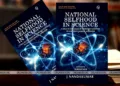
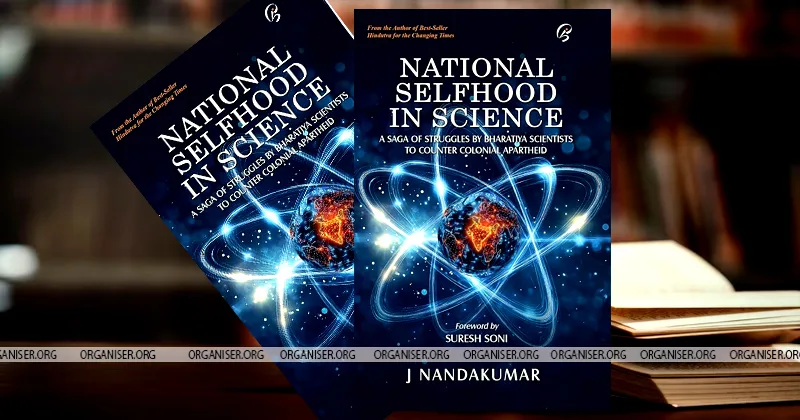
Publisher: Indus Scrolls Press; Pages: 206; Price: Rs 399; Author: J Nandakumar

“Science is more than a body of knowledge; it is a way of thinking.”
— Carl Sagan

At the Jaipur Literature Festival, while unveiling National Selfhood in Science: A Saga of Struggles by Bharatiya Scientists to Counter Colonial Apartheid by Shri J. Nandakumar, the national convener of Prajna Pravah, Shri Makarand Paranjape reminded the audience that even under the brute force of British suppression, Bharatiya scientists transformed science into a medium of national self-expression.

Nandakumarji’s book shows how the nationalisic zeal passionately roused by Bharatiya scientists tapered off during the last 70 years starting from Nehru’s era.

Science, though a quest for truth, has often been weaponised—not only to inflict physical destruction, but to colonise minds for generations and facilitate plunder. The British mastered this art, deploying every stratagem to stifle Bharatiyas engaged in scientific pursuit. Convinced that Europeans embodied the pinnacle of civilisation, George Nathaniel Curzon, the eleventh Viceroy of Bharat, ensured that no Bharatiya was elevated to leading positions in institutions of repute. His disdain was laid bare in his infamous declaration: “Because among all 300 million people of the subcontinent, there was not a single man capable of the job.”

Yet, just as Hemingway’s old man in The Old Man and the Sea proved that one can be destroyed but not defeated, Bharatiya scientists carved their niche by turning science into a banner of resilience. Their vision aligned with pioneers such as P. C. Ray, author of A History of Hindu Chemistry, and Bibhutibhushan Datta and Awadhesh Narayan Singh, who penned History of Hindu Mathematics. For them, science was not merely an intellectual pursuit but a Dharmic calling—a means of self-expression and service to Rashtra. They sought to reveal to the world the ennobling dimension of science and the deeper meaning of Rashtratva (too often mistranslated as “nationhood”). In the Vedic view, the purpose of Rashtra is not merely political organisation but the guidance of humanity toward the higher goal of moksha.

This civilisational perspective stood in stark contrast to the post-Independence narrative shaped by Jawaharlal Nehru and his Communist allies. They propagated the colonial notion that Bharat was a “nation in the making”—a multi-cultural, multi-ethnic, and multi-racial construct, allegedly birthed by the British. Hindu Dharma, they argued, was the root of the nation’s problems, and anything associated with it had to be relegated to the margins. Nehru’s policies, whether in foreign affairs or economics, repeatedly faltered. His much-vaunted Second Five Year Plan, intended to transform Bharat into an industrial giant, instead pushed the country to the brink of famine. On the geopolitical front, Bharat suffered a humiliating defeat at the hands of Communist China—ironically the very regime Nehru had championed globally, despite warnings from Sardar Patel and others. Strangely, each failure only strengthened the demand to persist with Nehruvian policies, while their apologists shifted blame onto Hindu Dharma. The phrase “Hindu Rate of Growth” remains a telling example of this distortion.

When Nehru’s daughter, Indira Gandhi, assumed power, the apparatus he had nurtured consolidated further. Positions in academia and institutions were bartered to loyal comrades, cementing ideological control. Jawaharlal Nehru University emerged as a citadel for these allies, who tirelessly promoted Nehru’s image while weaving “poisoned stories” about Hindu Dharma and Bharat. Nehru was elevated as the hero for all seasons, while the civilisational ethos of Bharat was systematically undermined.

After seven decades of intellectual morass and stagnation, Bharat now stands at a turning point. A more confident nation seeks to re-examine its place among the comity of nations, determined to shed the colonised mindset.

The foreword by senior Pracharak Shri Suresh Soni challenged the illusion that experimentation was a purely Western invention, recalling Acharya P. C. Ray’s contrast between the trivial debates of the Royal Society and the rigour of Bharatiya texts like Rasendra Cintāmani and Rasaprakāśa Sudhākara, where scholars insisted on personally verified experiments as the basis of true knowledge. This spirit of inquiry extended beyond chemistry into musicology, as Bharata’s Nātyaśāstra narrates how observation of natural sounds led to the invention of instruments, exemplifying Bharat’s epistemic cycle of observation, reflection, and innovation. Such traditions affirm that reason and experimentation flourished in Bharat long before the West, and rediscovering them today is vital to shed colonial illusions, cultivate self-reliance, and restore Bharat’s rightful place as a contributor to global knowledge.

Topics: NehruNational Selfhood in ScienceBharat nowHemingway’s old man
G Sreedathan
G Sreedathan
G Sreedathan is a Delhi-based journalist with more than 25 years of experience in print, digital and electronic media. He started his career as a trainee journalist in The Hindu before he shifted to Delhi. In Delhi, he had worked in Organiser, The Pioneer, Hindustan Times and Business Standard in various positions. Besides, he had written articles and columns for some of the leading Indian and foreign publications. He used to regularly contribute columns for Malayalam and Hindi dailies. He had authored two books and served as External Editor for the Gulf Research Centre. At present, he is working as Associate Editor of Organiser. He founded Indus Scrolls, a digital media initiative, and Indus Scrolls Press, a publication.@sreedath [Read more]
ShareTweetSendShareSend
✮ Subscribe Organiser YouTube Channel. ✮
✮ Join Organiser's WhatsApp channel for Nationalist views beyond the news. ✮
Previous News

India cracks the secret code of Rafale; DRDO develops indigenous Gallium Nitride chips & gains strategic superiority

Next News

Telangana: “Sammakka–Saralamma jatara is the Maha Kumbh for tribals,” says Union Minister Jual Oram

Related News

National Selfhood in Science: Turning the tide with spiritual scienticism

Questions mount over missing Sabarimala temple artefacts as Nehru family and Sonia Gandhi links to an overseas antiquities trade come under focus

Kerala: Sabarimala gold theft trail points to Nehru family & Italian antiquities network, BJP claims fuels wider probe

How Nehru turned his own birthday into ‘Children’s Day’: The forgotten history of a soviet-style PR exercise

Book review | The Nehru Years: An International history of Indian non-alignment

In 2012, following a controversy over a cartoon depicting Dr BR Ambedkar being chased by Jawaharlal Nehru in NCERT textbooks, HRD Minister Kapil Sibal apologised and ordered its removal

Congress and Ambedkar: Forced acceptance or natural Legacy?

Ambedkar and Congress: The obvious contrast

Load More

Latest News

Pratiraksha is Gujarat Police's Aadhaar-based verification platform designed to identify illegal workers and prevent identity fraud in industrial sectors

Pratiraksha: How Gujarat police uses Aadhaar verification to secure industrial workforce against identity fraud

Israel-Iran crisis has highlighted not only shifting dynamics of West Asia but also growing confidence of India's foreign policy

India, Israel and the rise of strategic autonomy in an era of global geopolitical realignment

Saleem and Jaleel arrested in forced religious conversion case

Karnataka Conversion Case: Forced conversion of Hindu woman and minor son sparks outrage; Saleem and Jaleel arrested

Bareilly Cantonment Emerges as Model for Sustainable Urban Development in India (Image Source X)

Uttar Pradesh: Bareilly Cantonment becomes India’s first carbon-negative cantonment

CM Yogi Adityanath making industry, investment and the connectivity revolution in Eastern Uttar Pradesh

The Purvanchal Growth Story: How industry, infrastructure, tourism & exports are fueling development in eastern UP

(Left) Fire at the coaching centre in Lucknow (Right) Members of ABVP extending all possible help

Lucknow Coaching Centre Fire tragedy is heartbreaking and deeply unfortunate: ABVP seeks action against culprits

Andhra Pradesh Minister and TDP National General Secretary Nara Lokesh

Nara Lokesh dismisses rumours of TDP sabotaging Modi government, reaffirms unconditional NDA support

With new military deployments, export opportunities and potential Russian production, BrahMos is entering a new era of strategic relevance

BrahMos enters high-volume production as military demand and global export orders surge

Dr Mahrang Baloch

Pakistan: Mahrang Baloch gets life sentence, Balochistan erupts in protest; BYC calls for shutdown

Prime Minister Narendra Modi

‘Maoism is breathing its last’: PM Modi highlights crackdown on red terror in last 12 years and growth in tribal areas

Load More
  • Privacy
  • Terms
  • Cookie Policy
  • Refund and Cancellation
  • Delivery and Shipping

© Bharat Prakashan (Delhi) Limited.
Tech-enabled by Ananthapuri Technologies

  • Home
  • Search Organiser
  • Bharat
    • Assam
    • Bihar
    • Chhattisgarh
    • Jharkhand
    • Maharashtra
    • View All States
  • World
    • Asia
    • Africa
    • North America
    • South America
    • Europe
    • Australia
  • Editorial
  • Operation Sindoor
  • Opinion
  • Analysis
  • Defence
  • Culture
  • Sports
  • Business
  • RSS @ 100
  • Entertainment
  • More ..
    • Sci & Tech
    • Vocal4Local
    • Special Report
    • Education
    • Employment
    • Books
    • Interviews
    • Travel
    • Health
    • Politics
    • Law
    • Economy
    • Obituary
  • Subscribe Magazine
  • Read Ecopy
  • Advertise
  • Circulation
  • Careers
  • About Us
  • Contact Us
  • Policies & Terms
    • Privacy Policy
    • Cookie Policy
    • Refund and Cancellation
    • Terms of Use

© Bharat Prakashan (Delhi) Limited.
Tech-enabled by Ananthapuri Technologies