As India prepares to celebrate its 77th Republic Day, the spotlight this year has fallen not just on political leaders or celebrities, but on ordinary Indians who have dedicated their lives to service. On January 25, 2026, the Government of India officially announced the Padma Shri 2026 awardees in the ‘unsung heroes’ category, recognising 45 remarkable individuals from across the nation.
The list of awardees includes people who have quietly transformed the lives of citizens in villages, towns, and border regions, yet often remain unknown to the broader public. These citizens represent the true spirit of service, contributing to education, healthcare, indigenous arts, culture preservation, and social empowerment.
From Bus Conductor to Bibliophile: Anke Gowda
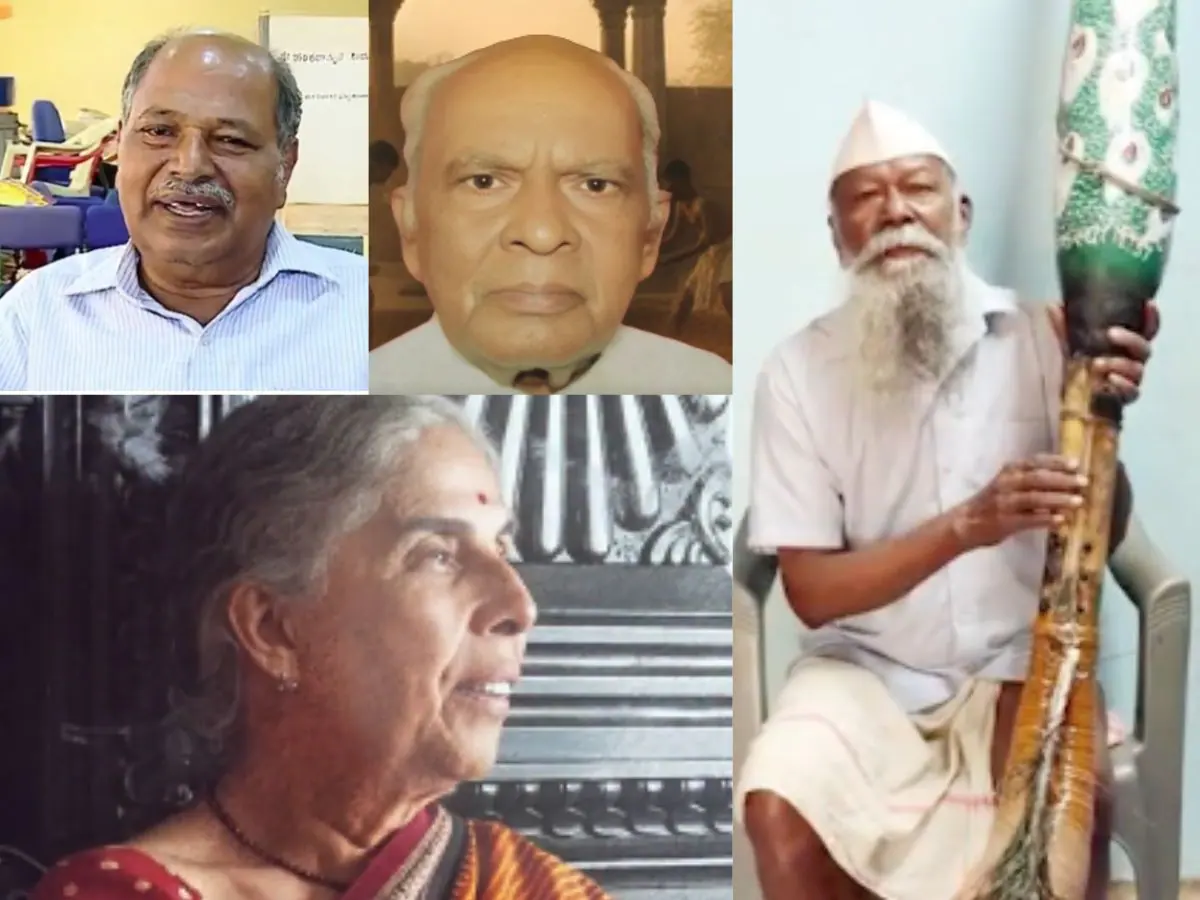
One of the most inspiring stories among this year’s awardees is Anke Gowda, a former bus conductor from Haralahalli village near Mysuru, Karnataka. Over decades, Gowda transformed his passion for reading into a monumental educational initiative.
He established ‘Pustak Mane’, the world’s largest free-access library, housing more than two million books in over 20 languages, along with rare manuscripts. His efforts have empowered thousands of students and lifelong learners across India, giving access to education and knowledge to those who might otherwise have no opportunity to read.
At 75 years of age, Gowda’s lifelong dedication exemplifies how ordinary individuals can create extraordinary public impact, earning him the Padma Shri in recognition of his unique contribution to education.
Healthcare Champions: Armida Fernandes and Others
This year’s Padma Shri awardees also highlight exceptional contributions in healthcare and medical innovation. Armida Fernandes, a Mumbai-based paediatrician, set up Asia’s first human milk bank, significantly improving the survival prospects of newborns, particularly preterm infants. Her efforts have saved countless lives, making her an emblem of innovation and compassion in Indian healthcare.
Other healthcare awardees include:
1. Shyam Sundar, who developed an inexpensive and highly effective test for detecting kala-azar (black fever), a disease endemic in several regions of India.
2. Suresh Hangavadi, a veteran haematologist, recognised for his work with haemophilia patients and advancing medical treatment protocols.
3. Padma Gurmet from Ladakh, known for promoting ancient Tibetan medicine and preserving traditional medical knowledge.
4. Kumarasamy Thangharaj, a Hyderabad-based geneticist, whose research on human migration from Africa to India has contributed to both scientific understanding and national pride.
These awardees have combined technical expertise with empathy, often working in remote and underserved regions where medical resources are scarce.
Preserving Indigenous Arts and Tribal Heritage
Several Padma Shri awardees have been recognised for their tireless efforts in preserving India’s rich cultural heritage, especially tribal music, martial arts, and performing arts.
Bhiklya Ladakya Dhinda, a 90-year-old tribal musician from Maharashtra, is a master of the Tarpa, a traditional instrument made of bottle gourd and bamboo. His dedication ensures that tribal musical traditions survive in modern times.
Yumnam Jatra Singh of Manipur, at the age of 100, continues to perform Nata Sankirtana, a ritual folk art form central to Manipuri cultural identity.
Bhagwandas Raikwar from Madhya Pradesh is a Bundeli war art trainer, keeping alive martial traditions that date back centuries.
K Pajanivel from Puducherry has nurtured Silambam, an ancient Tamil martial art using weapons, passing this knowledge to younger generations.
Dharmiklal Chunilal Pandya from Gujarat, an exponent of Maanbhatt, has dedicated decades to traditional Gujarati performing arts.
Taga Ram Bheel works to preserve the Algoza, a traditional double-flute instrument used in Rajasthan’s folk music.
These awardees not only preserve artistic heritage but also foster community identity, pride, and cultural continuity in a rapidly modernising country.
Education, Literature, and Language Preservation
Education and literacy have been central to many awardees’ contributions. Charan Hembram, a Santhali author-composer from Odisha, has worked to strengthen the Santhali language and literature, empowering tribal youth through knowledge and culture.
Kailash Chandra Pant, a senior journalist, has dedicated over 60 years to the propagation of Hindi, particularly in non-Hindi speaking states, strengthening national integration and linguistic harmony.
Khem Raj Sundriyal from Haryana has worked to revive traditional weaving techniques, including the Jamdani and Panipat ‘khes’, training thousands of artisans and introducing new designs using polyester yarn while preserving authenticity.
Chiranji Lal Yadav, an expert in intricate brass engraving from Moradabad, continues to mentor local craftsmen, keeping the centuries-old craft alive.
Social Work and Community Development
Several awardees have been recognised for their tireless social work, often under difficult circumstances:
Brij Lal Bhat from Jammu & Kashmir has worked extensively in educational development and rehabilitation programs.
Budri Thati established schools in Naxal-affected areas of Chhattisgarh, ensuring access to education in conflict zones.
Ramchandra and Sunita Godbole expanded rural healthcare services in Bastar, Chhattisgarh, bridging gaps in remote tribal areas.
Inderjit Singh Sandhu promoted sanitation and clean water initiatives.
Techi Gubin of Arunachal Pradesh has preserved the cultural heritage of the Nishi tribe while improving local livelihoods.
These individuals have worked to create social equity, especially among marginalised and tribally dominated regions, aligning with the government’s vision of inclusive development.
Sports and Empowerment
Unsung heroes have also been recognised in sports:
1. Harmanpreet Kaur Bhullar from Punjab, inspiring young girls through cricket achievements.
2. Rohit Sharma from Maharashtra, contributing to grassroots sports development.
3. Vladimer Mestvirishvili from Georgia (posthumously), promoting sporting excellence internationally.
These awardees demonstrate how sports can foster national pride, international recognition, and personal development at the grassroots level.
Environment, Agriculture, and Sustainability
A few awardees have been honoured for their contributions to environmental sustainability and agricultural innovation:
1. Mohan Nagar from Madhya Pradesh has advanced environmental conservation projects in rural areas.
2. Narayan Vyas, also from Madhya Pradesh, combines archaeological expertise with environmental awareness.
3. Jogesh Deuri of Assam has promoted sustainable agriculture practices in rural communities.
4. Prabhakar Basavprabhu Kore from Karnataka has worked in agricultural education and food security initiatives.
Through these efforts, unsung heroes ensure that environmental stewardship and sustainable livelihoods remain central to India’s development narrative.
The Broader Significance of the 2026 Padma Shri Awards
This year’s Padma Shri announcements underscore the government’s commitment to recognising individuals who work quietly yet profoundly, often without public acclaim or fame. These awards celebrate everyday citizens who:
1. Serve remote, tribal, or conflict-affected communities
2. Preserve ancient arts, languages, and cultural practices
3. Promote healthcare, sanitation, and women empowerment
4. Champion education, literacy, and skill development
In total, 45 individuals were honoured under the unsung heroes category, reflecting a truly pan-Indian representation, spanning Karnataka, Maharashtra, Madhya Pradesh, Odisha, Tamil Nadu, Telangana, Assam, Ladakh, Jammu & Kashmir, Arunachal Pradesh, Puducherry, West Bengal, Haryana, and beyond.
The Padma Shri 2026 for unsung heroes recognises ordinary Indians whose extraordinary contributions embody resilience, service, and a commitment to the nation. From the tribal musician preserving the Tarpa to the former bus conductor creating a library of millions of books, these citizens demonstrate that nation-building is not limited to public office or fame, it often happens quietly, in villages, classrooms, workshops, and rural hospitals.
This year’s awards reflect a conscious effort to celebrate grassroots impact, honouring individuals who have overcome personal hardships, social barriers, and resource constraints to serve society. Their stories inspire citizens across India to engage in selfless service, ensuring that the republic thrives through knowledge, culture, and compassion.