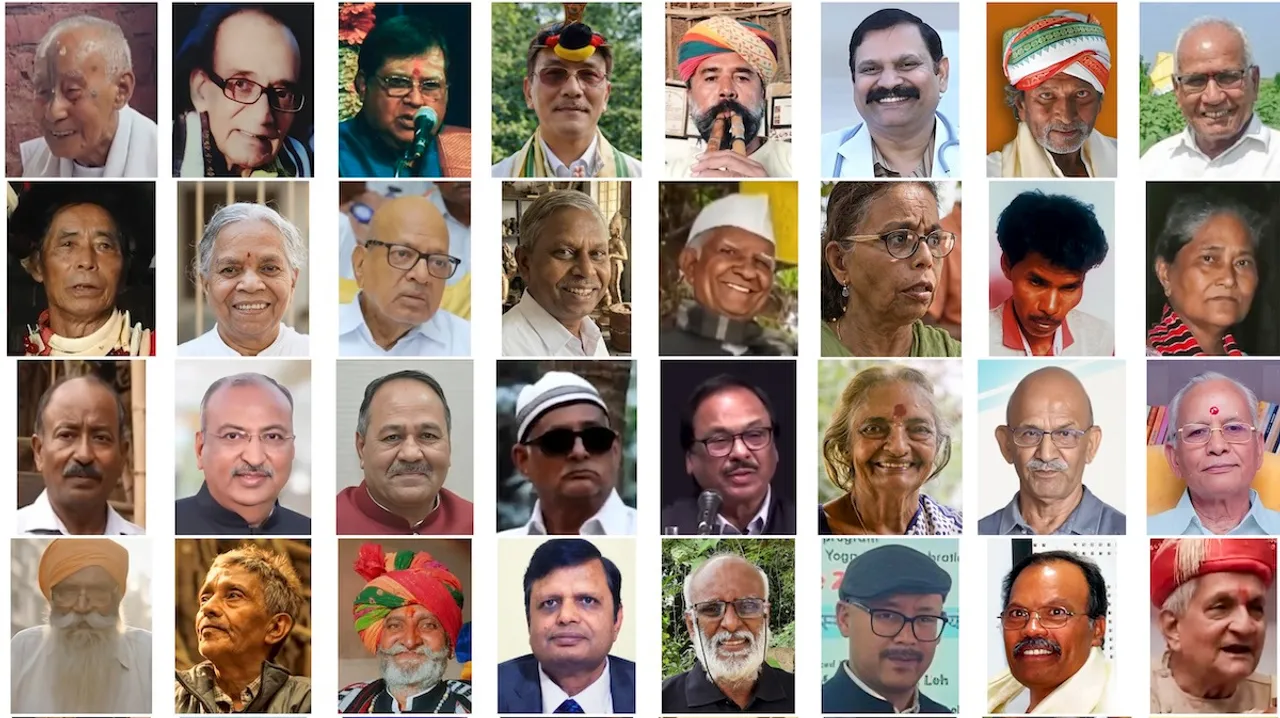
Continuing a long-standing Republic Day tradition, the Government of India announced the prestigious Padma Awards 2026, among the highest civilian honours in the country. The announcement, made on the eve of the 77th Republic Day, celebrates individuals who have demonstrated exceptional dedication, excellence, and service across a wide spectrum of human endeavour.
The Padma Awards, comprising Padma Vibhushan, Padma Bhushan, and Padma Shri, are conferred annually to honour achievements in fields such as public service, arts, literature, education, science and engineering, medicine, social work, sports, trade and industry, civil service, agriculture, archaeology, environmental conservation, and spiritual leadership.
Among the honours announced this year, 113 individuals have been selected for the Padma Shri, the fourth-highest civilian award, recognising “distinguished service of a high order.” The 2026 list stands out for its strong emphasis on grassroots contributors, cultural custodians, social reformers, educators, scientists, medical professionals, and sportspersons, many of whom have worked away from the national spotlight for decades.
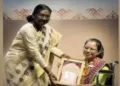
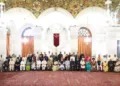
The awards will be formally conferred by the President of India at a ceremonial function at Rashtrapati Bhavan later this year.
Tribute to Unsung Heroes and Silent Nation-Builders
In recent years, the Padma Awards have increasingly focused on recognising individuals whose impact has been local yet profound. The 2026 Padma Shri list continues this trend, featuring social workers serving remote tribal regions, educators preserving indigenous knowledge systems, artists safeguarding folk traditions, and professionals whose innovations have quietly improved public welfare.
From Budhri Tati of Chhattisgarh, recognised for her social work among tribal communities, to Buddha Rashmi Mani of Uttar Pradesh, honoured for contributions to archaeology, the list reflects India’s civilisational diversity and the breadth of service that underpins national progress.
The inclusion of multiple posthumous awards also acknowledges those whose lifelong dedication continues to inspire long after their passing.
Padma Shri Awardees 2026: Full List (State/UT – Field)
A E Muthunayagam (Kerala) – Science and Engineering
Anil Kumar Rastogi (Uttar Pradesh) – Art
Anke Gowda (Karnataka) – Literature & Education
Armida Fernandes (Maharashtra) – Social Service
Arvind Vaidya (Gujarat) – Art
Ashok Khade (Maharashtra) – Trade and Industry
Ashok Kumar Singh (Uttar Pradesh) – Science and Engineering
Asok Kumar Haldar (West Bengal) – Literature & Education
Baldev Singh (Punjab) – Sports
Bhagwandas Raikwar (Madhya Pradesh) – Sports
Bharat Singh Bharti (Bihar) – Art
Bhiklya Ladakya Dhinda (Maharashtra) – Art
Bishwa Bandhu (Bihar) – Art (Posthumous)
Brij Lal Bhat (Jammu & Kashmir) – Social Work
Buddha Rashmi Mani (Uttar Pradesh) – Archaeology
Budhri Tati (Chhattisgarh) – Social Work
Chandramouli Gaddamanugu (Telangana) – Science and Engineering
Charan Hembram (Odisha) – Literature & Education
Chiranji Lal Yadav (Uttar Pradesh) – Public Service
Deepika Reddy (Telangana) – Art
Dharmiklal Chunilal Pandya (Gujarat) – Art
Gadde Babu Rajendra Prasad (Andhra Pradesh) – Art
Gafruddin Mewati Jogi (Rajasthan) – Art
Gambir Singh Yonzone (West Bengal) – Literature & Education
Garimella Balakrishna Prasad (Andhra Pradesh) – Art (Posthumous)
Gayatri & Ranjani Balasubramanian (Tamil Nadu) – Art (Duo)
Gopal Ji Trivedi (Bihar) – Science and Engineering
Guduru Venkat Rao (Telangana) – Medicine
H V Hande (Tamil Nadu) – Medicine
Hally War (Meghalaya) – Social Work
Hari Madhab Mukhopadhyay (West Bengal) – Art (Posthumous)
Haricharan Saikia (Assam) – Art
Harmanpreet Kaur Bhullar (Punjab) – Sports
Inderjit Singh Sidhu (Chandigarh) – Social Work
Janardan Bapurao Bothe (Maharashtra) – Social Work
Jogesh Deuri (Assam) – Agriculture
Juzer Vasi (Maharashtra) – Science and Engineering
Jyotish Debnath (West Bengal) – Art
K Pajanivel (Puducherry) – Sports
K Ramasamy (Tamil Nadu) – Science and Engineering
K Vijay Kumar (Tamil Nadu) – Civil Service
Kabindra Purkayastha (Assam) – Public Affairs (Posthumous)
Kailash Chandra Pant (Madhya Pradesh) – Literature & Education
Kalamandalam Vimala Menon (Kerala) – Art
Kewal Krishan Thakral (Uttar Pradesh) – Medicine
Khem Raj Sundriyal (Haryana) – Art
Kollakal Devaki Amma G (Kerala) – Social Work
Krishnamurty Balasubramanian (Telangana) – Science and Engineering
Kumar Bose (West Bengal) – Art
Kumarasamy Thangaraj (Telangana) – Science and Engineering
Lars-Christian Koch (Germany) – Art
Liudmila Viktorovna Khokhlova (Russia) – Literature & Education
Madhavan Ranganathan (Maharashtra) – Art
Maganti Murali Mohan (Andhra Pradesh) – Art
Mahendra Kumar Mishra (Odisha) – Literature & Education
Mahendra Nath Roy (West Bengal) – Literature & Education
Mamidala Jagadesh Kumar (Delhi) – Literature & Education
Mangala Kapoor (Uttar Pradesh) – Literature & Education
Mir Hajibhai Kasambhai (Gujarat) – Art
Mohan Nagar (Madhya Pradesh) – Environmental Work
Narayan Vyas (Madhya Pradesh) – Archaeology
Naresh Chandra Debbarma (Tripura) – Literature & Education
Nilesh Vinodchandra Mandlewala (Gujarat) – Social Work
Nuruddin Ahmed (Assam) – Art
Othuvaar Thiruthani Swaminathan (Tamil Nadu) – Art
Padma Gurmet (Ladakh) – Medicine
Palkonda Vijay Anand Reddy (Telangana) – Medicine
Pokhila Lekthepi (Assam) – Art
Prabhakar Basavprabhu Kore (Karnataka) – Literature & Education
Prateek Sharma (USA) – Medicine
Praveen Kumar (Uttar Pradesh) – Sports
Prem Lal Gautam (Himachal Pradesh) – Science and Engineering
Prosenjit Chatterjee (West Bengal) – Art
Punniamurthy Natesan (Tamil Nadu) – Medicine
R Krishnan (Tamil Nadu) – Art (Posthumous)
R V S Mani (Delhi) – Civil Service
Rabilal Tudu (West Bengal) – Literature & Education
Raghupat Singh (Uttar Pradesh) – Agriculture (Posthumous)
Raghuveer Tukaram Khedkar (Maharashtra) – Art
Rajastapathi Kaliappa Goundar (Tamil Nadu) – Art
Rajendra Prasad (Uttar Pradesh) – Medicine
Rama Reddy Mamidi (Telangana) – Animal Husbandry (Posthumous)
Ramamurthy Sreedher (Delhi) – Radio Broadcasting
Ramchandra & Sunita Godbole (Chhattisgarh) – Medicine (Duo)
Ratilal Borisagar (Gujarat) – Literature & Education
Rohit Sharma (Maharashtra) – Sports
S G Susheelamma (Karnataka) – Social Work
Sangyusang S Pongener (Nagaland) – Art
Sant Niranjan Dass (Punjab) – Spiritualism
Sarat Kumar Patra (Odisha) – Art
Saroj Mandal (West Bengal) – Medicine
Satish Shah (Maharashtra) – Art (Posthumous)
Satyanarayan Nuwal (Maharashtra) – Trade and Industry
Savita Punia (Haryana) – Sports
Shafi Shauq (Jammu & Kashmir) – Literature & Education
Shashi Shekhar Vempati (Karnataka) – Literature & Education
Shrirang Devaba Lad (Maharashtra) – Agriculture
Shubha Venkatesha Iyengar (Karnataka) – Science and Engineering
Shyam Sundar (Uttar Pradesh) – Medicine
Simanchal Patro (Odisha) – Art
Sivasankari (Tamil Nadu) – Literature & Education
Suresh Hanagavadi (Karnataka) – Medicine
Swami Brahmdev Ji Maharaj (Rajasthan) – Social Work
T T Jagannathan (Karnataka) – Trade and Industry (Posthumous)
Taga Ram Bheel (Rajasthan) – Art
Tarun Bhattacharya (West Bengal) – Art
Techi Gubin (Arunachal Pradesh) – Social Work
Thiruvaarur Bakthavathsalam (Tamil Nadu) – Art
Tripti Mukherjee (West Bengal) – Art
Veezhinathan Kamakoti (Tamil Nadu) – Science and Engineering
Vempaty Kutumba Sastry (Andhra Pradesh) – Literature & Education
Vladimer Mestvirishvili (Georgia) – Sports (Posthumous)
Yumnam Jatra Singh (Manipur) – Art (Posthumous)
About the Padma Awards
Instituted in 1954, the Padma Awards honour excellence and service in all fields of activity where public service is involved. The awards are open to all persons regardless of race, occupation, position, or gender, with the exception of those working with the government, except doctors and scientists.
How Padma Shri Awardees Are Selected
Nominations are invited from the public through the Rashtriya Puraskar Portal. Recommendations are examined by a Padma Awards Committee, constituted by the Prime Minister. Final approval is given by the President of India. The process emphasises integrity, long-term impact, and public service.