The near mad pursuit of grossly materialistic agricultural and industrial practices during the last 100 years and continuing today with greater pace has brought newer technologies and practices that appear glittery and materially bountiful but carry insidious harmful collateral effects that will manifest more and more with time. One such practice is the use of inorganic fertilizers in agriculture. But another, more recent, but much more benign is the practice of organic farming. Natural farming is, on the other hand, an ancient and time-tested practice.
In the year 2026 and beyond, global agricultural practices may get triggers of noticeable transformation, driven by an increasing awareness of the environmental, health and economic fallouts of chemical fertiliser-based agriculture. In private circles, a conspicuous shift towards sustainable agriculture that avoids synthetic chemicals including fertilizers has been gaining ground. Most important in this regard are natural farming and organic farming. Things are, however, quite different in large institutional, government sponsored areas where the usage of inorganic, chemical based products is rampant.
While both organic farming and natural farming de-emphasise synthetic chemical usage in agriculture, they are based on widely differing models for achieving the end purposes of core quality and sustainability. Since agriculture has been overly commercialised, environmental forces impinging upon agricultural output are becoming as important as economic and commercial factors. These factors have, naturally, caught the attention of policy makers and politicians too, of late.
Two approaches—interventionist and natural
Organic farming is a human structured and standardised system that involves institutional regulation and certification. Its primary objective is to maintain crop production without sacrificing crop and ecological balance. Organic standards have been formulated to provide guidelines for organic farming in India (NPOP). These standards regulate the use of outside organic inputs including compost, vermicompost, bio-pesticides and biological fertilizers. The underlying purpose is to achieve a balance for managing pests, weeds, soil fertility and crop health, keeping ecological balance intact.
In stark contrast, natural farming adopts a philosophy rooted in the principle of all self-sustaining farming which essentially involves zero external intervention. It is credited to Masanobu Fukuoka, a Japanese farmer and philosopher. Featured heavily in India as Zero Budget Natural Farming (ZBNF), this approach emphasizes working within the natural ecosystem’s inherent processes—like soil microbial activity, biological nutrient cycling and ecological balance—without applying external chemicals, including organic fertilizers or bio-pesticides. It is based on the thesis that nature, through biological and ecological mechanisms, already provides all necessary nutrients and pest control, thus making human interference unnecessary and even counterproductive.
Input management and soil health strategies
The most striking difference between organic and natural farming manifests clearly in the management of inputs and maintenance of soil health. Organic farmers, mired in the complexities of certification and compliance, tend to purchase a wide range of off-farm inputs—such as animal manure, compost, bio-fertilizers and bio-pesticides to comply with the prescribed standards. These inputs are often enhanced by scientific formulations aimed at ensuring consistent nutrient supply and crop health.
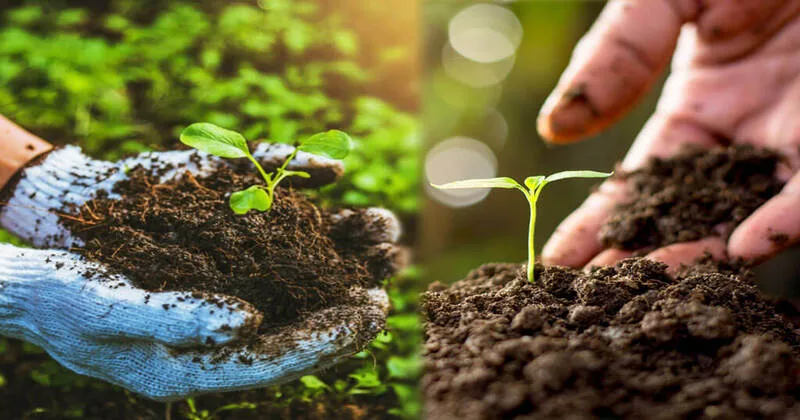
On the other hand, natural farming deliberately avoids all external inputs—organic or otherwise—relying instead on on-farm preparations and biological processes. A classic example is Jeevamrutha, a fermented microbial mixture composed of locally available cow dung and urine, jaggery and various organic flours, designed to stimulate soil microbial activity and improve soil fertility naturally. Similarly, Beejamrutha—a microbial inoculant applied to seeds—helps enhance germination and seedling vigour. Farmers practicing natural farming typically avoid deep tillage and weeding, believing that disturbed soil and unnecessary removal of weeds harm beneficial microbes and earthworms vital for natural aeration and nutrient cycling. This approach emphasizes minimal physical disturbance, allowing microbes, earthworms and natural ecological processes to naturally maintain soil health, rendering the system inherently self-sustaining over time.
Economic viability and market access
Economic considerations are often the decisive factor influencing farmers’ adoption of either system. Organic farming is appealing, attractive and expensive. It is estimated to have a potential market of around $132 billion globally as of 2026 which also needs considerable initial investments. These include costs related to purchasing certified organic inputs, maintaining compliance with standards and acquiring certification, which can be both time-consuming and expensive. The certification process itself often involves rigorous inspections, documentation and adherence to specific production practices, imposing additional operational burdens—particularly for small-scale farmers. However, the establishment of certified organic production can open access to high-value international markets, thus making it lucrative.
Conversely, natural farming’s economic appeal resides in its emphasis on low capital expenditure and minimal external input costs. Its original aim was to promote a zero-budget approach, where farmers could cultivate crops with negligible expenditure—sometimes even generating surplus income from the savings on inputs. For example, in regions like parts of India and Africa, small holder farmers practicing natural farming often report reducing production costs by as much as 60-70 per cent. Although lacking formal certification schemes recognized internationally, natural farming systems thrive on local trust, community-based verification and word-of-mouth reputation. This creates an accessible and resilient model—particularly suited for marginalized rural populations with limited financial resources, landholdings or access to formal markets. The emphasis on local consumption and barter further enhances its appeal and feasibility in resource-constrained settings typically obtaining in India.
Sri Lanka’s bad experience
A brief account of Sri Lanka’s bad experience with organic farming is worth mentioning. It has been four years since Sri Lanka scrapped an inorganic fertiliser ban that triggered protests, decimated harvests and exacerbated its financial collapse and the pain for farmers lingers on. According to Chairman of Sri Lanka’s largest rice farming association, the farmers couldn’t get a good harvest from just organic material and they became desperate. To ensure food supplies, it plans to expand rice cultivation to more than 800,000 hectares in the current season to February from 770,240 hectares in 2021, official data show. Fortunately or unfortunately, the nation has almost fully reverted to inorganic farming.
Domestic organic fertiliser startups have also been hit in Sri Lanka. More than 100 startups had invested $83 million in the sector amid the organic push, but only eight remain. The move was aimed at making Sri Lanka the world’s first fully organic farming nation. Instead rice output plunged and food inflation soared, deepening Sri Lanka’s worst financial meltdown in more than seven decades. Public anger culminated in a mass uprising that ultimately ousted their President Rajapaksa.
The way forward
Recent empirical studies undertaken in 2025-2026 indicate that both organic and natural farming systems tend to approach, over time, the yields achieved by conventional, chemical-dependent agriculture. But there are good number of examples in the Indian context which demonstrate that natural farming has delivered better and faster results, even in the medium term. We in Bharat need to invest more in natural farming by way of governmental patronage and support. The future of agriculture lies in reversion to natural farming supplemented by some traditional, time tested manures like cow dung or other animal excreta. We have to eventually revert to village centred economies and traditional, time tested practices of agriculture which are in sync with nature and long term sustainable.