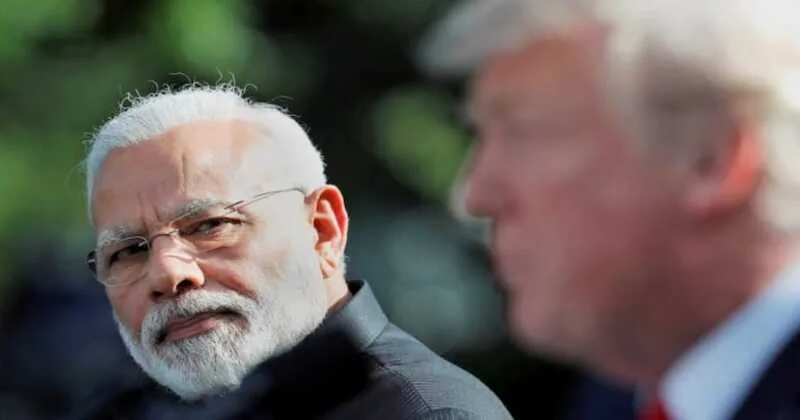
NEW DELHI: India has quietly retaliated against the United States after Washington imposed a steep 50 per cent tariff on Indian goods by levying its own tariff on a key American export. New Delhi has imposed a 30 per cent tariff on pulses imported from the US, a move that came into effect last October but was kept deliberately low-profile by the government. The decision marks a sharp shift in India’s trade policy, as tariffs on US pulses were earlier close to zero. The sudden hike has delivered a major setback to American farmers and exporters, particularly in states heavily dependent on the Indian market.
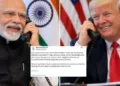
Following the disclosure of the tariff increase, two US senators have urged President Donald Trump to intervene and pressure Prime Minister Narendra Modi to roll back the decision. US Senators Kevin Cramer and Steve Daines wrote a joint letter to Trump, demanding immediate action. The letter was made public after details of India’s tariff hike emerged. The senators called on Trump to raise the issue directly with the Indian leadership and ensure that American products retain access to the Indian market, especially before any bilateral trade agreement is finalised. Cramer represents North Dakota, while Daines hails from Montana, two states that are among the largest producers of pulses in the US. India has traditionally been the biggest buyer of pulse exports from these regions. In their letter, the senators described India’s move to raise tariffs to 30 per cent as a severe blow to American farmers and warned that the US risks losing a highly competitive and crucial export market.
The development comes amid continuing uncertainty over the long-anticipated India–US trade agreement, the announcement of which has now been indefinitely delayed. Trump has repeatedly demanded that India open up its agricultural and dairy sectors, calling for tariff exemptions and greater market access for American farm and dairy products. However, meeting these demands would pose serious economic risks for India. Any major opening of the agricultural and dairy markets could severely impact Indian farmers. There are growing indications that India’s firm refusal to compromise on these sensitive sectors is a key reason behind the delay in finalising the trade deal.
Meanwhile, the European Union is moving swiftly to deepen its economic engagement with India, even before the India–US trade deal is finalised. European Commission President Ursula von der Leyen and European Council President Antonio Costa are set to visit India as chief guests at the Republic Day celebrations. During the visit, the two sides are expected to make significant progress towards signing a major free trade agreement between India and the European Union. For India, this development offers a clear strategic advantage. Unlike US President Donald Trump’s hardline position, particularly his demand that India open its agricultural and dairy markets, the European Union has adopted a more pragmatic, less rigid negotiating stance. Brussels has not pushed for sweeping concessions in sensitive sectors that could severely impact Indian farmers.
As a result, negotiations between India and the European Union have proceeded more smoothly, raising expectations that the long-pending trade agreement could be concluded soon. The EU’s flexible approach stands in sharp contrast to the stalled India–US talks and reinforces India’s position that it will not compromise domestic agricultural interests under external pressure.