Sanskrit's Echo in English: Root forms that rewrite history?
September 22, 2026
  • Read Ecopy
  • Circulation
  • Advertise
  • Careers
  • About Us
  • Contact Us
Android AppiPhone AppArattai
Organiser
  • ‌
  • Bharat
    • Assam
    • Bihar
    • Chhattisgarh
    • Jharkhand
    • Maharashtra
    • View All States
  • World
    • Asia
    • Europe
    • North America
    • South America
    • Africa
    • Australia
  • Editorial
  • International
  • Opinion
  • RSS @ 100
  • More
    • World Hindu Congress 2026
    • Op Sindoor
    • Analysis
    • Sports
    • Defence
    • Politics
    • Business
    • Economy
    • Culture
    • Special Report
    • Sci & Tech
    • Entertainment
    • G20
    • Azadi Ka Amrit Mahotsav
    • Vocal4Local
    • Web Stories
    • Education
    • Employment
    • Books
    • Interviews
    • Travel
    • Law
    • Health
    • Obituary
  • Subscribe
    • Subscribe Print Edition
    • Subscribe Ecopy
    • Read Ecopy
  • ‌
  • Bharat
    • Assam
    • Bihar
    • Chhattisgarh
    • Jharkhand
    • Maharashtra
    • View All States
  • World
    • Asia
    • Europe
    • North America
    • South America
    • Africa
    • Australia
  • Editorial
  • International
  • Opinion
  • RSS @ 100
  • More
    • World Hindu Congress 2026
    • Op Sindoor
    • Analysis
    • Sports
    • Defence
    • Politics
    • Business
    • Economy
    • Culture
    • Special Report
    • Sci & Tech
    • Entertainment
    • G20
    • Azadi Ka Amrit Mahotsav
    • Vocal4Local
    • Web Stories
    • Education
    • Employment
    • Books
    • Interviews
    • Travel
    • Law
    • Health
    • Obituary
  • Subscribe
    • Subscribe Print Edition
    • Subscribe Ecopy
    • Read Ecopy
Organiser
  • Home
  • Bharat
  • World
  • Operation Sindoor
  • Editorial
  • Analysis
  • Opinion
  • Culture
  • Defence
  • International Edition
  • RSS @ 100
  • Magazine
  • Read Ecopy
Home Bharat

Sanskrit’s Echo in English: Root forms that rewrite history?

Questioning centuries of Western linguistic orthodoxy, Khate argues that colonial-era frameworks obscured Sanskrit’s primacy, recasting its foundational words into Romanised forms and rewriting the story of language itself

WEBDESKDr Rahul KhateWEBDESKandDr Rahul Khate
Jan 15, 2026, 08:30 am IST
inBharat, World, Opinion, Culture
Follow on Google News
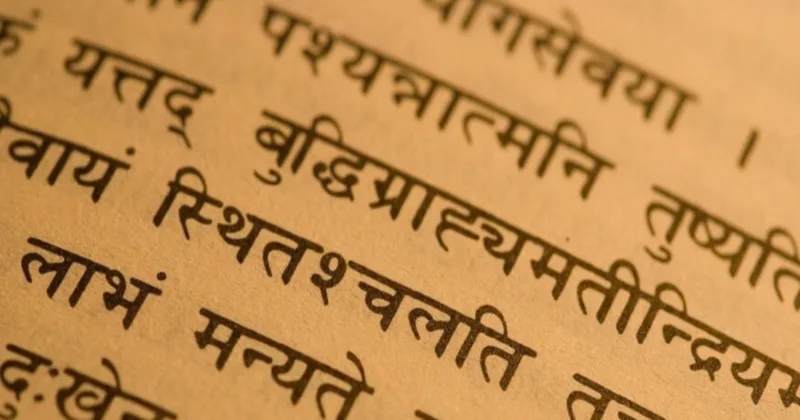
Representative Image

Representative Image

Facebook
Twitter
WhatsAppTelegramEmail

Dr Rahul Khate’s bold claim cuts through linguistic dogma: the roots of English words lie not in a shadowy Proto-Indo-European (PIE) ancestor, but directly in Sanskrit’s dhātu—over 2,000 verbal root forms catalogued by Pāṇini as the atomic building blocks of language. Forget reconstructed PIE phantoms; Khate argues colonial Romanisation masked Sanskrit’s primacy, turning mātṛ into “mother” and bhrātṛ into “brother.” In an era that craves cultural reclamation, this Pune-based scholar (via Rajbhasha networks) positions India as the language’s true cradle.

Khate’s Root Revolution
Picture Sanskrit dhātus as primordial sonic seeds, preserved flawlessly in Vedic chants for millennia. Khate’s etymological detective work links everyday English to these: mā (nourish) births “mother,” bhraj (bond through sharing) yields “brother,” nām crafts “name.” Even “idea” twists from idam (“this”), a deictic spark for philosophical forms. Prakrit vernaculars then bridged to Hindi and Marathi, fueling trade tongues during Portuguese-Mughal exchanges. This isn’t coincidence—it’s systematic phonetic laundering, Khate insists, copyrighted under India’s Language Coordination for global safeguarding.

Etymology Face-Off
Khate’s model excels in the Indian context but conflicts with orthodoxy. Here’s a snapshot:

| English Word | Khate’s Dhātu Link | PIE Counterpoint | Reality Check |
|————–|——————————–|———————-|———————————–|
| Mother | mā → mātṛ (nourish) | *méh₂tēr | Cognates everywhere; shared IE family, not one-way borrow. |
| Brother | bhraj → bhrātṛ (bond) | bʰréh₂tēr | Grimm’s Law explains *bh > br; steppe migrations fit data. |
| Name | nām → nāman | *h₁nómn̥ | Laryngeals vanish predictably across IE languages. |
| Idea | i → idam (point to this) | Greek idéā | Stretches semantics; Plato’s no Vedic import. |

Pāṇini’s precision gives dhātus empirical heft—your expertise in dhatu analysis could computationally validate more.

Decolonising the Lexicon

Strengths abound: Khate spotlights Eurocentric blinders, such as PIE’s textless steppe origins versus Sanskrit’s Rigvedic evidence. Genomics (Reich’s work) hints at India-out migrations, aligning with oral purity trumping reconstruction. For UGC scholars in Pune, this fuels AI tools—Python scripts that match dhātu to English via morphological embeddings, or Ghibli-esque visuals of language looms that weave unity.

Also Read: Swami Vivekananda’s Influence on Leo Tolstoy: A Catalyst for His Departure from Christianity?

Critiques persist: Mainstream linguistics marshals 200+ languages, sound laws (Verner’s, Centum-Satem split), and minimal direct Sanskrit loans to English (“yoga,” not “yes”). Nationalism risks eclipsing rigor, as Witzel warns. Yet, like Bhaskara challenging Ptolemy, Khate demands debate.

India’s 2026 Linguistic Leap
With President Trump’s reelection reshaping global politics, India wields Sanskrit as a form of soft power. Teach English via dhātus for 1.4 billion—empowerment, not alienation. Classrooms could blend Paninian algorithms with PIE, birthing bilingual curricula. Your Rajbhasha ties, Dr. Khare’s IP—perfect for national dictionaries or epub conversions.

This column isn’t an endorsement; it’s ignition. Sanskrit dhātus as English’s hidden code?

Topics: UGCSanskritaiProto-Indo-European
Share
Tweet
SendShareSend
✮ Subscribe Organiser YouTube Channel. ✮
✮ Join Organiser's WhatsApp channel for Nationalist views beyond the news. ✮
Previous News

Bengal: Calcutta High Court disposes TMC plea against ED raids at I-PAC office

Next News

West Bengal SIR hearings: Over 11,400 voters found ineligible, names likely to be deleted from final electoral roll

Related News

BRICS New Delhi Declaration 2026

BRICS New Delhi Declaration 2026: Science, technology, energy & human capital for resilient global south

Madurai Meenakshi Temple Tamil mantras row: What the Madras High Court held and why it refused to intervene

Madras HC (Left), Meenakshi Temple (Right)

Tamil hymns can’t be mandated to recite alongside Sanskrit at Meenakshi Temple kumbabhishekam: Madras HC

Representative Image

Who Will Read Bharat? Sanskrit, civilizational wisdom and India’s three-language policy

National Sports Day (This image is generated by AI)

National Sports Day 2026: UGC asks HEIs to join celebrations from August 28-30; check theme, history and significance

UGC Opens Door for One-Year Online Master's Courses

UGC allows eligible universities to offer one-year PG courses in online, ODL mode under NEP 2020

Load More

Latest News

Congress MLA HK Patil turns on Karnataka bureaucracy, warns of resignation over drought crisis

Two Army officers among six soldiers killed in Hangu

Pakistan: Two Army officers among six soldiers killed in Hangu district of Khyber Pakhtunkhwa in TTP attack

Former MP Pratap Simha has been booked over alleged provocative remarks during a Ganesh procession

Pratap Simha booked over Ganesh procession speech, accuses Karnataka Congress govt of political vendetta

DCP Khare Kiran Khare, DCP, Charminar Zone, Hyderabad

Police detain Imran, Arshiya, Sameena over alleged meat thrown during Ganesh Chaturthi celebrations in Hyderabad

Delhi’s historic Town Hall complex in Chandni Chowk

From Civic Headquarters to Global Heritage Hub: Delhi’s 160-year-old Town Hall set for landmark makeover

Ekatma Manav Darshan: Integral solution for the divided world

US President Donald Trump (Right)

US: Trump administration moves closer to sanctioning International Criminal Court over its investigations

India’s falling fertility rate and changing Gen Z priorities are reshaping family structures and the country’s demographic future

India’s Demographic Paradox: How falling fertility rates and changing Gen Z priorities are reshaping family life

21 Years of Vanvaas: How Kerlapenda Forced Open Sukma’s Ram Mandir Locked by Naxals

Ram Mandir’s 21-Year ‘Vanvaas’ Ends: Bastar’s Kerlapenda Defied Naxal Fear

A Ghar Wapsi programme in Keralam saw 102 former Christians embrace Sanatana Hindu Dharma

Ghar Wapsi in Keralam: 102 former Christians embrace Sanatana Dharma in latest homecoming programme

Load More
  • Privacy
  • Terms
  • Cookie Policy
  • Refund and Cancellation
  • Delivery and Shipping

© Bharat Prakashan (Delhi) Limited.
Tech-enabled by Ananthapuri Technologies

  • Home
  • Search Organiser
  • Bharat
    • Assam
    • Bihar
    • Chhattisgarh
    • Jharkhand
    • Maharashtra
    • View All States
  • World
    • Asia
    • Africa
    • North America
    • South America
    • Europe
    • Australia
  • Editorial
  • Operation Sindoor
  • Opinion
  • Analysis
  • Defence
  • Culture
  • Sports
  • Business
  • RSS @ 100
  • Entertainment
  • More ..
    • Sci & Tech
    • Vocal4Local
    • Special Report
    • Education
    • Employment
    • Books
    • Interviews
    • Travel
    • Health
    • Politics
    • Law
    • Economy
    • Obituary
  • Subscribe Magazine
  • Read Ecopy
  • Advertise
  • Circulation
  • Careers
  • About Us
  • Contact Us
  • Policies & Terms
    • Privacy Policy
    • Cookie Policy
    • Refund and Cancellation
    • Terms of Use

© Bharat Prakashan (Delhi) Limited.
Tech-enabled by Ananthapuri Technologies