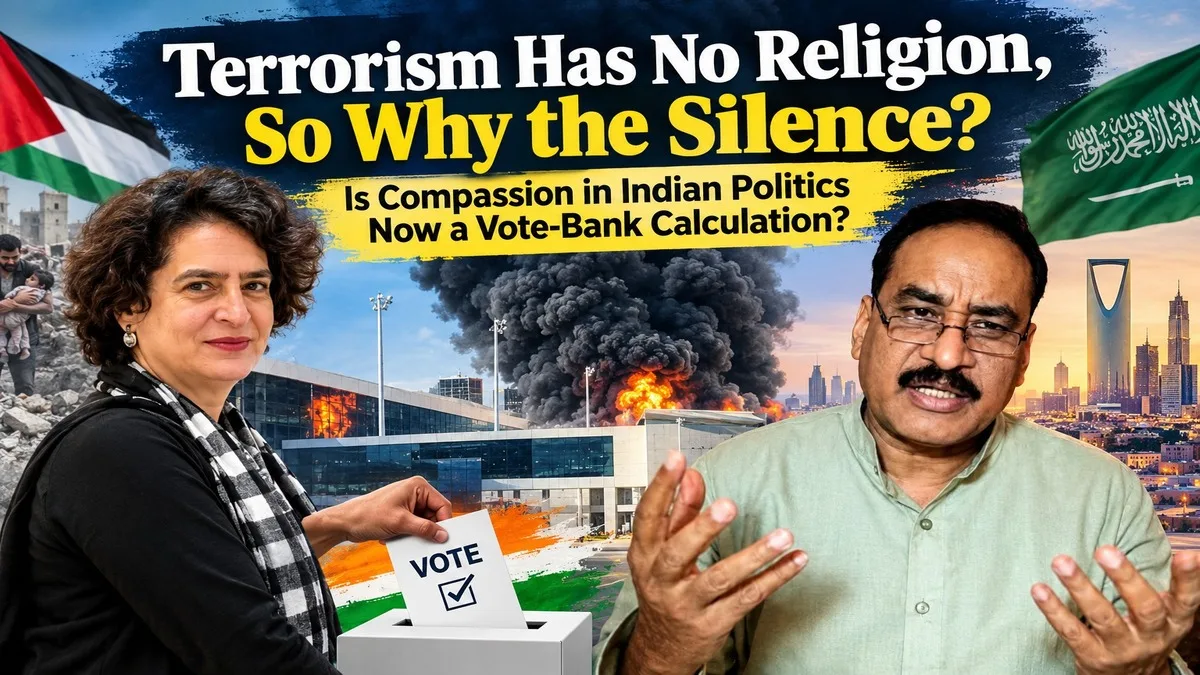
Tears for Gaza, silence on Riyadh! Is the blood of innocent people now judged by political ideology and vote-bank calculations? Is the condemnation of terrorism also determined by the faith of the attacker, the nationality of the victim and the political equations that might be disturbed by speaking out?
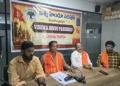
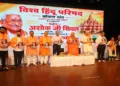
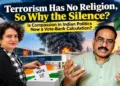
The attack by Houthi rebels on Riyadh, the capital of Saudi Arabia, has prompted Vishwa Hindu Parishad (VHP) national spokesperson Vinod Bansal to raise precisely these uncomfortable questions before Indian politics. His question is directed at leaders who have been vocal in their support for Palestine, including Congress leader Priyanka Gandhi Vadra and All India Majlis-e-Ittehadul Muslimeen (AIMIM) president Asaduddin Owaisi: where are their voices when innocent civilians come under attack?
The issue matters because the true test of political morality lies not in delivering speeches in support of one’s preferred side, but in standing by what is right even when circumstances are politically inconvenient. Speaking up against the deaths of innocent civilians in Gaza is a humanitarian responsibility. Condemning attacks on civilians in Riyadh is an equally important obligation. Compassion for one and silence over the other? Targeting innocent civilians is a crime. Opposition to terrorist violence must be universal, not selective.
Why Speak from Parliament to the Streets for Gaza, Yet Hesitate over Riyadh?
We have all witnessed how the Palestinian issue has remained a subject of sustained debate in Indian politics. Numerous opposition leaders, including those from the Congress, have voiced their views on Palestinian rights and the humanitarian crisis in Gaza. Priyanka Gandhi Vadra has publicly expressed her support for Palestine. Asaduddin Owaisi, meanwhile, raised the slogan ‘Jai Palestine’ while taking his oath as a member of the Lok Sabha, triggering a widespread political controversy.
Against this backdrop, Vinod Bansal’s question is straightforward: “If political leaders can be so vocal in their support for Palestine, why should the condemnation of the attack on Riyadh not be equally unequivocal? Should the principle of protecting innocent civilians not apply equally to every country and every conflict?”
There should, in fact, be no difficulty for any leader in taking this position. One can support the rights of civilians in Gaza while condemning violence by Houthi rebels. One can criticise an Israeli action while also declaring an attack on Saudi Arabia to be wrong. There is no contradiction between these positions. The contradiction arises when political expediency begins to take the place of principle.
Will Religious and Political Calculations Influence the Response to Terrorism Too?
Conflicts in the Middle East are complex. The confrontation between Saudi Arabia and the Houthi rebels is rooted in regional power struggles, security concerns and long-standing political disputes. Understanding these complexities is essential, but they cannot be used to justify attacks on civilians.
What makes the situation particularly striking is that both sides are Islamic, yet these attacks do not appear to threaten their shared religious identity. Even after innocent lives are lost, no voice of protest emerges from the more than 56 countries of the Muslim world! In a pluralistic democracy such as India, however, the responsibilities of political parties and religious organisations are all the greater.
The Modi government’s opposition to Houthi attacks has, in this respect, conveyed India’s position that the protection of human rights is the right of every community and every individual. Moral clarity in the fight against terrorism is essential to strengthening public trust.
Mecca and Medina: A Question of Moral Accountability
Saudi Arabia is home to Mecca and Medina, regarded as the two holiest cities in Islam. They hold profound religious significance for Muslims across the world. The questions raised by the attack on Riyadh therefore also invite scrutiny of the public positions adopted by religious organisations. If an organisation speaks for the rights and interests of the global Muslim community, it is reasonable to expect it to condemn unequivocally attacks on innocent civilians in Saudi Arabia or any other country.
The Gulf region, moreover, is far more than a source of energy supplies for India. Millions of Indian citizens work there, send money home to support their families and contribute to India’s economy. Regional instability can pose a serious threat to their lives, livelihoods and security. Condemning the attack on Riyadh is therefore not merely a matter of supporting or opposing a particular political party. It concerns civilian safety, opposition to terrorism and India’s national interests.
The Indian government’s official position is important, but political parties also have an independent moral responsibility to speak out on matters concerning national security. At present, however, that responsibility appears conspicuously absent from the Congress and certain other organisations in their response to this issue.
Indeed, parties that express independent views on Ukraine, Gaza and other international crises should also state their positions clearly on the attack on Riyadh. The point is that the questions Vinod Bansal has put to Priyanka Gandhi Vadra, Asaduddin Owaisi and political leaders active on the Palestinian issue deserve answers that go beyond mutual accusations and counter-accusations. Do they unequivocally condemn the attack on Riyadh? Do they accept that the same moral standard must apply to all sides when it comes to opposing terrorism?
Demanding answers to these questions is a basic expectation of public accountability, particularly from leaders who have remained silent on the incident. Of course, political parties in a democracy have every right to uphold their respective ideologies. However, ideology cannot justify indifference to the suffering of innocent people. The fight against terrorism is weakened whenever the response to a crime is determined by the identity of the perpetrator. If speaking up for the victims of Gaza is right, why should there be any hesitation in speaking up for the victims of Riyadh?
Terrorism has no acceptable form. There is no political justification for the killing of innocent people. And humanity has no vote bank. If Indian politics accepts these three simple truths, its discourse on international crises can become more credible, more ethical and more effective. Otherwise, the public will retain every right to ask whether the compassion displayed by its political leaders is genuinely rooted in humanity or reserved for issues from which they believe they can derive political advantage. In plain terms, this is what is known as selective politics.