
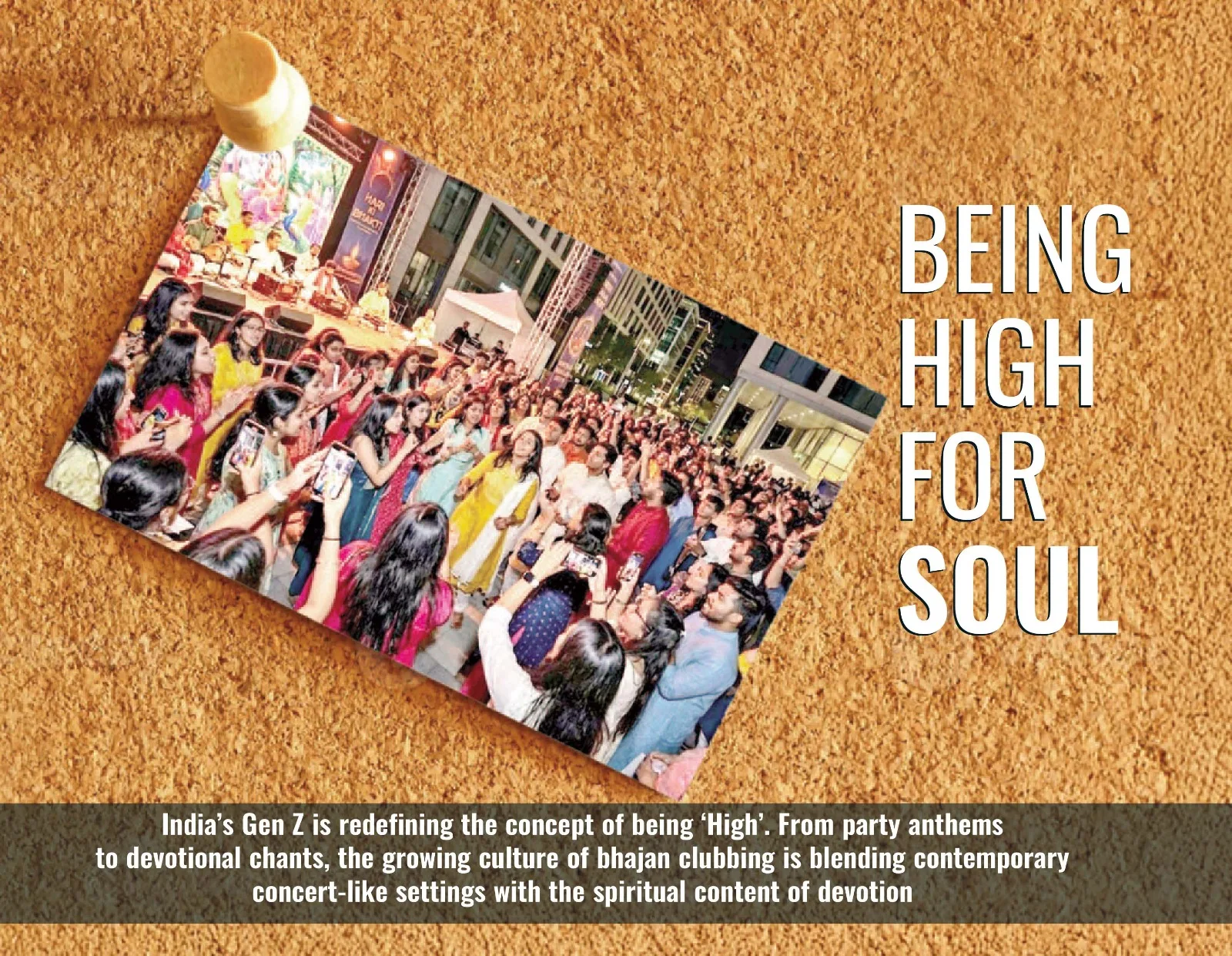
In recent times, while scrolling through Instagram reels, one notices a striking shift. Alongside trending dance numbers and party anthems, spiritual chants, bhajans, and mantras are appearing, not in temples or community halls, but in concert-like settings filled with lights, rhythm, and collective energy.
Youth, once largely associated with nightclubs, EDM beats (Electronic dance music), and late-night parties, is now discovering a different kind of high, one rooted in devotion, the divine, and shared spiritual experience. This emerging trend is popularly called ‘Bhajan Clubbing’, and it is rapidly gaining popularity across India, especially among the urban youth.
Bhajan clubbing is neither an attempt to replace religious practice nor an effort to turn devotion into a music concert. Instead, it represents a cultural convergence, where faith meets contemporary expression.
Bhajan: A Timeless Indian Tradition
Bhajan is not new to India. From the celestial realms of Indra Devta’s to the soulful devotion of Meera Bai, bhajans have always been an integral part of India’s spiritual life. Saints, poets, and devotees have used music as a medium to connect with the divine. What the youth is doing today is not new in spirit, it is only new in form, not faith.
Bhajan clubbing represents the modern expression of this ancient tradition. It blends traditional bhajans, kirtans, and mantras with contemporary soundscapes, electronic music, and acoustic fusion without disturbing their spiritual essence. Despite the modern setup, the atmosphere remains deeply dharmic.
From Party Beats to Bhakti Vibes
Bhajan clubbing marks a shift from “DJ wale babu mera gaana bajado” to“Achyutam Keshavam” without losing the vibe. There is no alcohol, no chaos, and no aggression.
The energy comes from collective singing, clapping, dancing, and chanting. The high is emotional, not chemical. Instead of cocktails, the high is collective. Instead of noise, there is rhythm. Instead of isolation, there is togetherness.
One of the most striking aspects of this trend is how Gen Z is moving from passive consumption to active participation. Instead of merely watching spiritual content on reels, young people are stepping into shared spaces where devotion is lived and felt.
This indicates that Gen Z is not discarding tradition but consciously reshaping it. The audience driving this trend is predominantly young. For many, bhajan clubbing offers what modern nightlife often fails to provide: meaning, belonging, and inner peace.
Divine Aspirations in Demand
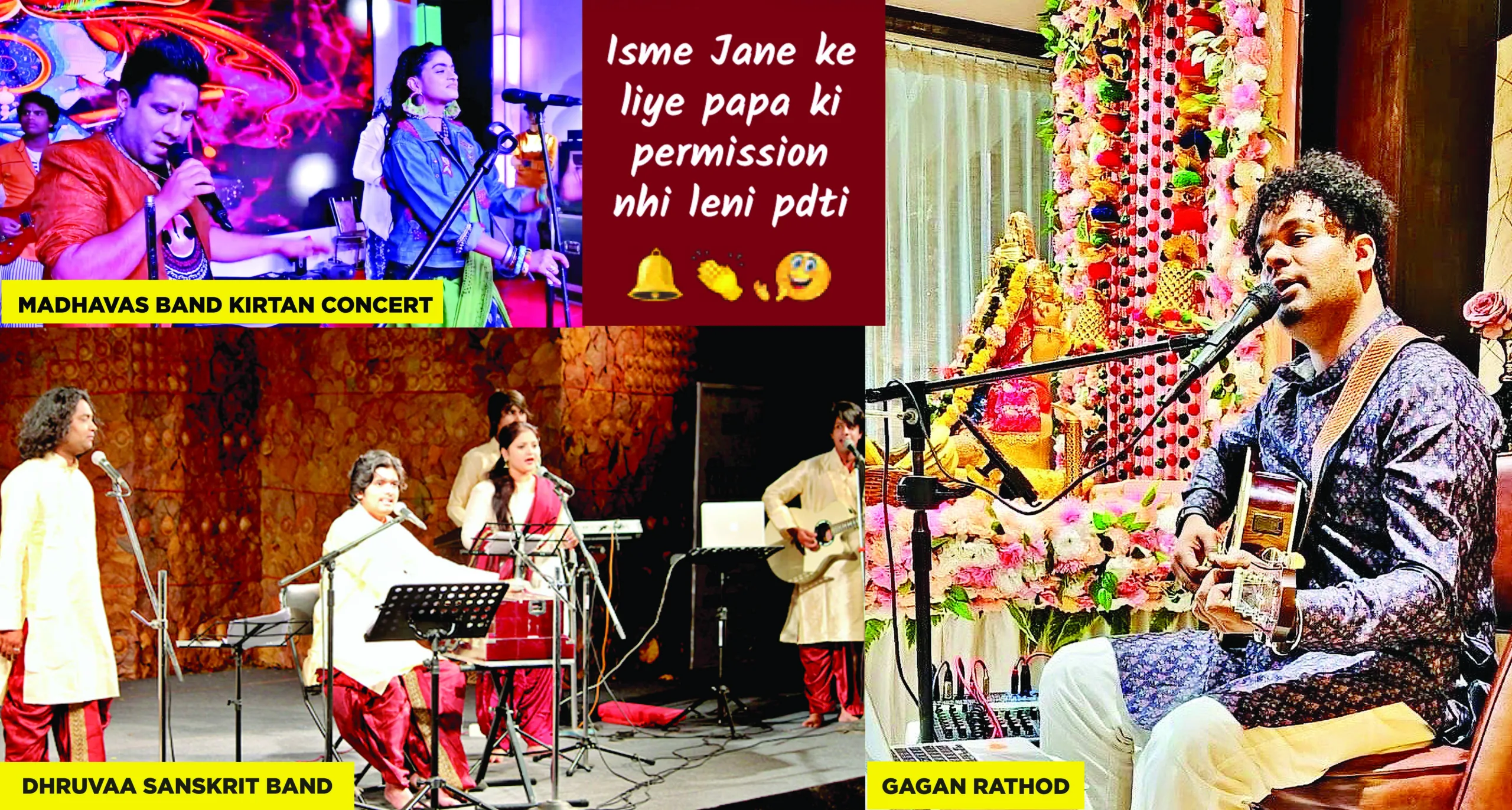
Speaking on this shift, Dr Sanjay Dwivedi, founder of the Dhruva Band, a Bhopal-based Indian musical group, told Organiser that bhajan clubbing is gaining popularity because today’s youth is highly aspirational and demanding. When goals are not achieved, many feel lonely, directionless, and emotionally drained. To address this inner vacuum, spirituality is emerging as a natural anchor.
Dr Dwivedi established Dhruva Band entirely in the Sanskrit language. He explained that while many countries proudly present music bands in their native languages, India lacked a band representing the world’s oldest living language. “To attract youth and guide them towards spirituality, bhakti must evolve without losing its soul,” he said.
The band’s genre is a fusion that uses Indian instruments like bansuri, shankha, tabla, pakhavaj, along with European instruments such as guitar, harmonium, and acoustic drums. Importantly, their compositions draw from the Rig Veda, works of Adi Shankaracharya, Shiv Tandav, Madhurashtakam, Bhaja Govindam, and even poetic expressions like Abhigyan Shakuntalam. All bhajans are performed in Sanskrit.
When asked how today’s youth connects with Sanskrit, Dr Dwivedi responded, “Music itself is a language, the emotion connects instantly.”
“The COVID-19 pandemic was a challenge for Indian youth. Isolation, existential anxiety, and digital overload prompted many young people to search for meaning. For Gen Z, spirituality is less about ritual and more about experience, connection, and healing”, he said.
A bhajan clubbing singer and artist Gagan Rathod while speaking to Organiser said “bhajan has always been integral to India’s spiritual tradition. However, to carry it forward to the younger generation, innovation in form was necessary”. He also observed that today’s youth is experiencing loneliness and emotional isolation. “When the youth walks on the path of bhakti and spirituality, it brings inner balance, purpose, and emotional healing. Through devotion, everything becomes possible,”
Rathod said. He added that young people today see God as a friend someone who listens without judgement and offers unconditional strength.
Echoing similar views, Nishant Jha, Coordinator of the Madhavas Band, told that today’s youth often seeks instant fulfilment, which leads to frustration. “What the youth truly seeks is bliss and a positive vibe, something material pursuits fail to provide,” he said.
Nishant Jha highlighted that bhajan clubbing is successfully connecting Gen Z with spirituality in a contemporary format. “The fusion of devotion with modern music is not diluting bhakti; it is deepening engagement,” he said, adding that gatherings often attract thousands of young participants. Notably, the Madhavas Band focuses on folk and spiritual music, ensuring the devotional essence remains intact. All of them emphasised that bhajan clubbing is not just a musical experiment but a spiritual movement, guiding India’s youth towards devotion, discipline, and inner bliss.
Impact on Culture and Values
Bhajan clubbing is shaping a new cultural narrative. It encourages emotional stability, collective harmony, and disciplined joy. It reconnects youth with Indian traditions while allowing them to remain modern and expressive.
Rather than rejecting global influences, Indian youth is blending them with indigenous values. This balance reflects a mature cultural confidence, accepting the world without losing roots. Indian Gen Z is not rejecting modern culture, Western music, fashion, and technology but is embracing it in an Indian way. From celebrating New Year with bhajans to gathering weekly for Hanuman Chalisa recitations outside cafes in cities like Gurugram, faith and modern life coexist naturally
Surge in pilgrimage reflects spiritual awakening
The growing spiritual inclination among the youth is also reflected in the sharp rise in pilgrim tourism across major religious centres. According to official data, between January and June 2025, Mathura recorded over 3.37 crore pilgrims, while Kashi witnessed an unprecedented 12.96 crore pilgrims. Ayodhya emerged as a major spiritual destination with 23.82 crore tourists during the same period. Notably, a large part of these pilgrims were youth. This surge is not merely about religious travel but indicates a broader cultural reawakening, where faith, heritage, and spirituality are once again becoming central to public life. The increasing footfall, especially of young devotees, mirrors the same shift seen in trends like bhajan clubbing, where a generation is reconnecting with its roots.
Rhythm not noise
Swami Vivekananda believed that youth must combine physical strength, moral values, and spiritual awareness. He saw spirituality not as escape, but as power that builds character and nation. Bhajan clubbing also reflects Vivekananda’s vision of joyful spirituality. As he envisioned, the youth of Bharat will rise not through noise and rebellion, but through rhythm, reflection, and rootedness.
In today’s global context, where youth movements in many countries are driven by protest and confrontation, Indian youth shows a distinct character. A large section is focused on education, careers, entrepreneurship, and inner growth. If one thought Gen Z was only about EDM nights and late parties, bhajan clubbing offers a powerful counter-narrative. It shows that India’s youth is not lost, it is searching, experimenting, and returning.