
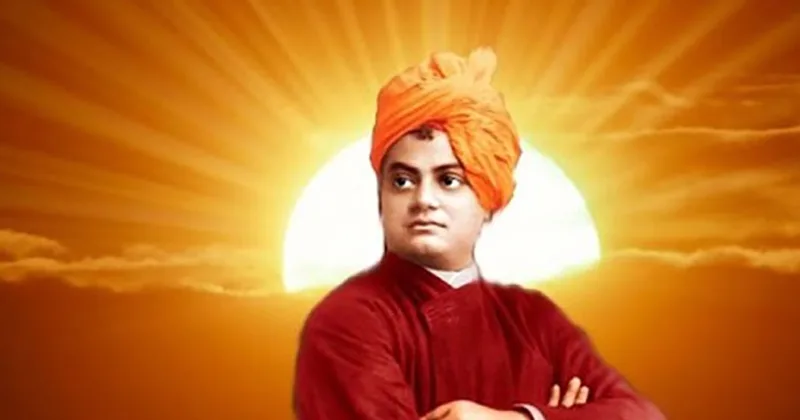
Today, millions of people, particularly Generation Z, are locked in an endless cycle of violence and mental issues around the world. Hundreds of thousands of people have died as a result of violence. Millions have been displaced. Millions of youngsters born during the battle have no future. Many causes contribute to violence, including political, economic, social, historical, and ideological motivations. The continuous wars have also caused geopolitical issues. Bharat, the land of Rama, Krishna, Buddha, Mahavir, Gurunanak, Adi Shankaracharya, Chhatrapati Shivaji Maharaj, Ahilyadevi, Maharana Pratap, Swami Vivekanand; the land of the philosophy of Vedas and Upanishads; the land of Ramayana and Mahabharata, may and should contribute to world peace and Prosperity.
Difficulties in the international sphere
It is not only the visible form of violence that should concern us. Conflicts within among ourselves are similarly intense. The advent of technology has brought not only opportunities, but also isolation and loneliness. People nowadays are afraid of technologies such as artificial intelligence, machine learning, and big data, which have the potential to replace human professions. Technology is creating both opportunities and worries. The mixing of cyberspace with the physical world is having unintended repercussions, including a growing detachment between self and surroundings. We are witnessing the consequences of naked materialism taking its toll on humans.
The nature of society is also evolving. It is incredibly difficult to comprehend how thousands of young children, leaving behind their privileged lifestyles, have been misled into travelling to conflict zones and exposing themselves to the tyranny of groups like the Islamic State. It’s tough to fathom how young people may be self-motivated to carry out lone-wolf attacks and ruin innocent lives and property in the name of dubious ideals. It is difficult to comprehend how totally sane people can spew bullets in schools and hospitals, killing innocent people with whom they have no prior interaction.
We must connect with our past in order to understand human difficulties. Epics such as the Mahabharata and Ramayana teach us about human problems and how to address them. Bharatiya ancient books are a fantastic source of learning that we appear to have overlooked in modern education. We are looking for a variety of answers in Western learning while ignoring what is already accessible. As a result, it is urged that, at the very least in the Bharatiya setting, an epic study be fostered in order to understand human paradoxes, strengths, and weaknesses.
How Swami Vivekananda’s teachings will assist Generation Z to improve themselves and their nation
Swami Vivekananda’s teachings are critical for today’s Generation Z to work for self- and nation-building without being swayed by incorrect beliefs and false media narratives. Swami Vivekananda’s teaching, based on Sanatan Dharma principles, will undoubtedly impact the destiny of Generation Z. Swamiji urged the youth to unite and move away from frivolous matters. Only in this way could they create a future for Bharat. According to him, the secret of society is the unity of thought. And the more you fight and squabble over trivialities like “Dravidian” and “Aryan,” the subject of Brahmins and non-Brahmins, and so on, the further you are from that buildup of energy and strength that will shape the future Bharat.”
“Choose your Guru from history…”Worship the world’s heroes. Don’t forget the Mahabharata and Ramayana. The true knight battles for duty rather than for gain. Select your favourite action heroes .Take the Upanishads’ motto: “Even if the path is as sharp as a razor blade, do not stop until the goal is achieved.” (Swami Ji, CW 5, p. 335). “Throw yourselves, children of Bharat, into the worship of your entire past.” Strive passionately for knowledge. Yours are the spades and mattocks of this dig. For it is your thoughts and language, not the foreigner’s, that will make it easy to discover the previous importance. Bharat’s entire hope rests on more inquiry, a more rigorous examination of facts.”
“Young people should believe in themselves,” Swami ji stated. He identified self-esteem as the most important trait that all young people should develop. He saw that young power was the only hope for Bharat’s future. He shouted to the youth, stating that there was no other option but to unleash their might to conquer the world. This conquest was very Bharatiya. It was to be accomplished by Bharatiya wisdom rather than the use of a gun.
Swami ji issued a clarion call to youngsters in Chicago, challenging them to ‘Awake, Arise, and continue moving until the goal is accomplished.’ His Chicago address became well-known around the world, increasing Bharat’s international standing. We are honouring Swami Vivekananda’s birthday today, January 12, a reminder of his messages we should constantly remember. The world’s youth must continue to work together to create a better world. Today, there is an increased desire to learn from Swami ji. He showed us how to be organised and work as a team. In any professional field, teamwork is essential.
The spirit of teamwork is crucial for today’s youngsters to exercise and emulate, regardless of the profession they choose. Swami Vivekananda established the Ramakrishna Mission, where teamwork for nation-building was practised. He organised the Sanyasis to focus on nation-building. Swami Vivekananda famously stated, “Faith in ourselves and faith in God-this is the secret of greatness.” He highlighted that self-belief is the foundation of all accomplishments. He found that a lack of confidence consumes mental energy and inhibits progress. His teachings inspire kids to have unwavering faith in their unlimited potential.
Swamiji stated, “Concentration is the essence of all knowledge.” He pushed for practical strategies to improve focus, such as controlled breathing and single-minded attention to activities. Imagine incorporating these tactics into your daily life, whether you’re preparing for exams or working on a creative project. Research and innovation are the key to success; hence, the intellectual fusion of analytical and research abilities with spiritual practices is essential. For example, devoting 10 to 20 minutes every day to focused meditation can dramatically boost productivity. These approaches assist youth in overcoming digital distractions, increasing productivity, and reducing the ‘fight or flight’ response, thereby encouraging rational decision-making. Such practices are part and parcel of Adhyayana, which is essential to Gurukul-style Shiksha.
“The world is not prepared for the weak,” Swamiji stated. Mental strength is developed via the cultivation of discipline, emotional equilibrium, and moral courage. Consider a young professional navigating workplace challenges with grace, guided by these ideals. Swami Vivekananda advocated tackling issues head-on so that individuals can unleash their inner power to overcome barriers. His experiences help us understand his unwavering confidence in the face of adversity and scorn. During one of his journeys, a group of young guys criticised him for wearing traditional robes and questioned why he picked such archaic clothing. Vivekananda calmly said, “In your country, the tailor makes a gentleman; in mine, character does.” This persistent confidence and emphasis on inner strength above external appearances exemplifies resilience and self-assurance for today’s youngsters. Swami Vivekananda’s contributions to the 1893 Chicago World’s Parliament of Religions emphasised Hindu Dharma’s universal and inclusive ethos. He rekindled global admiration for his intellectual depth. Studying his speeches enables today’s youngsters to reconnect with their ancestry and successfully convey it in a global context.
In this age of information overload, Vivekananda’s emphasis on mindfulness and mental clarity is more important than ever. His analogy was, “The mind is like water; when it’s turbulent, it’s difficult to see.” The phrase “When it’s calm, everything becomes clear” offers useful advice for handling today’s distractions. Mindfulness practices, such as journaling or screen-free hours, help youth overcome distractions and maintain mental clarity. Vivekananda’s teachings place a strong emphasis on balancing ambition with ethics. Professionals who innovate while upholding strong moral convictions are better positioned to make a lasting impact. Consider case studies of successful organisations that promote customer satisfaction and sustainability.
Vivekananda stated, “Character is repeated habits.” The key practices include: morning meditation and self-reflection. Reading inspiring literature and practising truthfulness. Performing physical exercise. Serving others without expectations. Swami Vivekananda thought that emotional intelligence is derived from self-awareness, emotional management, empathy, and balanced perspectives. It is important in both personal and professional settings. The youth may readily relate to his teachings and use them to manage team conflicts or empathise with peers, preventing our emotions from taking over our thinking and helping us reflect on ourselves.
Swami ji said, “Anyone else would have vomited blood” in response to the level of anguish he endured. We cannot understand how much he suffered for all of us and delivered such amazing words. His words touched the very core of our hearts and became a beacon of power for the youth. Salute to this great Param soul on his birth anniversary.