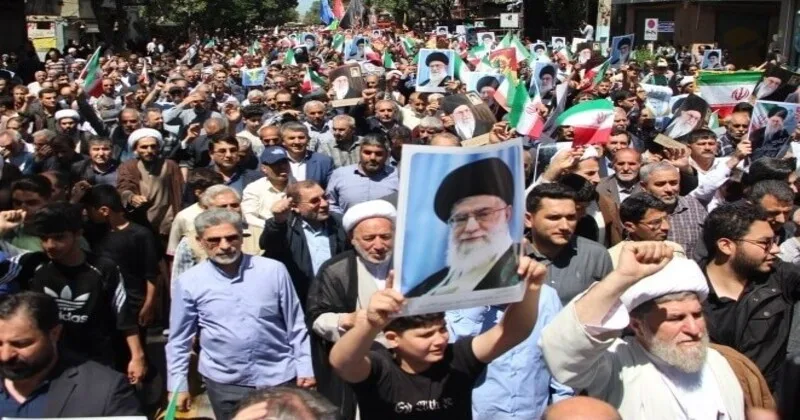
Tehran: Protests against Iran’s Islamic regime have intensified in Tehran and spread across the country, as mounting anger over a collapsing economy, soaring prices, Mullas, and harsh security crackdowns pushes thousands of Iranians into the streets. Demonstrators have openly challenged the ruling theocracy led by Supreme Leader Seyyed Ali Hosseini Khamenei, chanting slogans that directly target the foundations of the Islamic Republic.
As night fell and demonstrations grew louder, the Iranian government moved swiftly to isolate the country. Authorities cut off internet access and international telephone connections as crowds gathered in neighbourhoods across Tehran, shouting calls for “freedom” and denouncing the regime. Iran’s judiciary chief and senior security officials warned protesters of a harsh response, signalling that the state was prepared to escalate repression if unrest continued.
At least some protesters appeared to be responding to a call issued from exile by Crown Prince Reza Pahlavi, whose father, the last shah of Iran, fled the country shortly before the 1979 Islamic Revolution.
In a striking shift, demonstrations included chants praising the shah, something that in earlier decades could have resulted in severe punishment or even death. The slogans reflected both the depth of popular anger and a longing, among some, for life before the establishment of clerical rule.
Pahlavi had urged Iranians to demonstrate at 8 pm local time on Thursday and Friday. Witnesses said that as the clock struck the hour, chanting erupted simultaneously across multiple districts of Tehran. Cries of “Death to the dictator!” and “Death to the Islamic Republic!” echoed through the streets. Other slogans praised the monarchy, including shouts of, “This is the last battle! Pahlavi will return!” Before long, thousands were visible in public spaces, until communications with the outside world abruptly went dark.
“Iranians demanded their freedom tonight,” Pahlavi said in a statement. “In response, the regime in Iran has cut all lines of communication. It has shut down the Internet. It has cut landlines. It may even attempt to jam satellite signals.” He appealed to European leaders to stand alongside Donald Trump in pledging to hold Iran’s leadership accountable. Calling for international action, he urged governments to deploy “all technical, financial, and diplomatic resources available” to restore communication so that the voices of Iranians could be heard. “Do not let the voices of my courageous compatriots be silenced,” he said. Pahlavi indicated that he would outline further plans depending on how the protests evolve. His outspoken support for Israel has drawn criticism in the past, particularly after Israel’s 12-day war with Iran in June. While demonstrators in several cities have chanted in favour of the shah, it remains unclear whether this represents support for Pahlavi personally or a broader rejection of the post-1979 political order.
Protests are sweeping across Iran tonight with more cities joining by the minute despite violent regime crackdown. Videos are of the protests in Astara, Rasht, Khorramdarreh (Zanjan) and Mehran (Ilam) – people chant “we don’t want a clerical state!”#IranProtests#اعتراضات_سراسری pic.twitter.com/x708VX7mQ6
— Ali Javanmardi (@Javanmardi75) January 7, 2026
Protests have not been confined to Tehran alone. Demonstrations have erupted in cities and rural towns across Iran, with shopkeepers, workers, and ordinary citizens joining in. Markets and bazaars in multiple locations have closed in solidarity with protesters, a powerful gesture in a country where commerce is central to daily life. According to the US-based Human Rights Activists News Agency, at least 42 people have been killed in unrest so far, and more than 2,270 others have been detained by security forces.
The expanding demonstrations are placing mounting pressure on Iran’s civilian government and on Supreme Leader Khamenei himself. Internet infrastructure company Cloudflare and digital rights group NetBlocks both reported a nationwide internet outage, attributing it to deliberate interference by Iranian authorities. Attempts to call landlines or mobile phones in Iran from abroad, including from Dubai, failed to connect. In past protest waves, such shutdowns have often preceded intense security crackdowns.
Despite the scale of the unrest, the protest movement remains largely leaderless inside the country. Analysts say this lack of a clear, unified leadership has historically weakened Iranian protest movements. While many potential leaders exist, Iran’s security apparatus has systematically arrested, persecuted, or forced into exile those who might have emerged as transformational figures. The current unrest represents the largest wave of dissent in Iran in three years. It began last month in Tehran’s Grand Bazaar, where shopkeepers protested the free fall of the national currency. The unrest quickly spread nationwide as frustration deepened over economic hardship, political repression, and social restrictions.
Iran’s economy has been battered by years of mismanagement and Western sanctions. Inflation has surged, eroding purchasing power and pushing many families into poverty. According to the Statistical Centre of Iran, the official inflation rate reached 52 per cent year-on-year in December. The Iranian rial has collapsed, with the exchange rate hitting roughly 1.4 million rials to the US dollar, intensifying public anger.
Iranian authorities have acknowledged the economic pain faced by citizens but have accused foreign-linked networks of fuelling the protests. The civilian government led by reformist President Masoud Pezeshkian has attempted to strike a conciliatory tone. Pezeshkian has recognised protesters’ “legitimate demands” and urged officials to act to improve living conditions. “From an Islamic perspective… if we do not resolve the issue of people’s livelihoods, we will end up in Hell,” Pezeshkian previously said. However, he also admitted that his ability to address the crisis is limited, given the speed of the rial’s depreciation and the structural constraints of Iran’s political system, where ultimate authority rests with the Supreme Leader.
Iranian officials appear to be taking the latest protests seriously. The hard-line newspaper Kayhan published a video claiming that security forces would use drones to identify demonstrators. While authorities have not officially acknowledged the full scale of the protests, reports of violence involving security personnel have emerged.
The judiciary’s Mizan news agency reported that a police colonel died from stab wounds in a town near Tehran. The semiofficial Fars news agency said gunmen killed two security force members and wounded 30 others in a shooting in the city of Lordegan, in Chaharmahal and Bakhtiari province. In northeastern Iran, a deputy governor in Khorasan Razavi province said an attack on a police station in Chenaran killed five people. Late Thursday, the Islamic Revolutionary Guard Corps announced that two of its members were killed in Kermanshah. Iran has experienced repeated waves of nationwide protests in recent years, often triggered by economic shocks or political flashpoints. The latest demonstrations erupted soon after the rial collapsed further in December, following the economic strain imposed by sanctions and the aftermath of the recent war. Protesters have since openly challenged the Islamic Republic, chanting slogans that directly confront the system of clerical rule.
Massive protest in Tehran, Iran. People had enough. Not much mainstream media coverage. Why? https://t.co/RqIikXbW94
— Lily Tang Williams (@Lily4Liberty) January 8, 2026
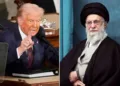
Adding an international dimension to the crisis, Trump warned last week that if Tehran “violently kills peaceful protesters,” the United States would respond. Speaking to radio host Hugh Hewitt, Trump reiterated his message, saying Iran had been warned “very strongly” against escalating violence.
“If they do that, they’re going to have to pay hell,” Trump said. When asked whether he would meet with Reza Pahlavi, the US president declined to commit. “I’m not sure that it would be appropriate at this point to do that as president,” he said. “I think that we should let everybody go out there, and we see who emerges.” As protests continue across Iran, the confrontation between an embattled population and a hardened state appears far from over. Whether the movement can sustain momentum or produce leadership capable of challenging the Islamic Republic, remains one of the most pressing questions facing the country today.