Bhubaneswar: Union Education Minister Pralhad Joshi will participate in the 13th BRICS Education Ministers’ Meeting scheduled to be held on Friday in Bhubaneswar, Odisha. The high-level gathering is a key event under India’s BRICS Chairship 2026 and is expected to shape the future direction of multilateral cooperation in education among member countries.
Joshi arrived in Bhubaneswar on Thursday and was received by Odisha government ministers, including Industries Minister Sampad Swain and Higher Education Minister Suryabanshi Suraj. His visit marks the beginning of a series of crucial engagements aimed at strengthening India’s leadership role in global education partnerships.
Delighted to welcome Hon’ble Union Minister for Education, Shri @JoshiPralhad , to Bhubaneswar for the 13th BRICS Education Ministers’ Meeting under India’s BRICS Chairship 2026.
Odisha is honoured to host this prestigious global gathering that will strengthen international… pic.twitter.com/RRDXmWdUkp
— Suryabanshi Suraj (@suryabanshibjp) August 6, 2026
Key Focus Areas for Ministerial Deliberations
The upcoming Education Ministers’ Meeting will deliberate on several priority areas that are central to building inclusive and future-ready education systems. These include Early Childhood Care and Education (ECCE), skill development, research and innovation, mutual recognition of academic qualifications, and academic leadership.
These themes reflect the shared priorities of BRICS nations in addressing emerging challenges in education while leveraging innovation and collaboration. The meeting is expected to culminate in the adoption of a joint declaration outlining a roadmap for enhanced cooperation and policy alignment.
India–Indonesia Talks Strengthen Academic and Research Collaboration
On the sidelines of the BRICS meeting, Pralhad Joshi held a bilateral meeting with Indonesia’s Minister Brian Yuliarto, focusing on expanding cooperation in education and research. The discussions highlighted the importance of strengthening collaboration in higher education, research, innovation, and academic exchanges.
Both sides emphasized building robust institutional partnerships and creating greater opportunities for students, scholars, and researchers in the two countries. The interaction also underscored the role of international collaboration in fostering innovation-driven growth and knowledge exchange.
Held a bilateral meeting with H.E. Brian Yuliarto, Hon'ble Minister of Higher Education, Science and Technology of Indonesia, on the sidelines of the BRICS Education Ministers' Meeting.
We discussed expanding India-Indonesia cooperation in higher education, research, innovation… pic.twitter.com/VM3HxL8G2I
— Pralhad Joshi (@JoshiPralhad) August 6, 2026
A significant outcome of the meeting was the signing of a Memorandum of Understanding between the IIT Madras Global Research Foundation and Indonesia’s Ministry of Higher Education, Science and Technology. The agreement is aimed at enhancing cooperation in research, innovation, and talent development, paving the way for deeper engagement between academic institutions.
Joshi expressed confidence that the growing partnership between India and Indonesia would open new avenues for learning, innovation, and academic excellence, thereby strengthening bilateral ties in the education sector.
India–South Africa Engagement Focuses on Skills and Digital Learning
In another key bilateral engagement, Pralhad Joshi met South African leaders Siviwe Gwarube and Buti Manamela to discuss strengthening ties in education and skill development. The meeting focused on enhancing cooperation in areas such as basic and higher education, research, innovation, and digital learning.
Both sides explored avenues to expand academic exchanges and deepen institutional partnerships. The discussions also highlighted the importance of leveraging technology to improve access to quality education and promote inclusive learning environments.
Had a bilateral meeting with Ms. @Siviwe_G, Minister of Basic Education, and Dr. @DM_DHET_DubeN, Deputy Minister of Higher Education and Training of the Republic of South Africa. Our discussions focused on strengthening collaboration in basic and higher education, skilling,… pic.twitter.com/k9K2CpMgdg
— Pralhad Joshi (@JoshiPralhad) August 6, 2026
During the meeting, the Indian delegation presented several flagship initiatives, including NIPUN Bharat, PARAKH, SWAYAM, and SAMARTH, as successful models that could be adapted to support international collaboration. These initiatives demonstrate India’s commitment to improving learning outcomes, assessment frameworks, digital education, and institutional governance.
The leaders also discussed the need to expedite ongoing education agreements to further strengthen bilateral ties and create more opportunities for students, educators, and researchers.
India–Iran Dialogue Highlights Civilisational Links and Future Opportunities
Pralhad Joshi also held a bilateral interaction with Iran’s Masood Shams-Bakhsh on the sidelines of the meeting. The discussions highlighted the longstanding civilisational ties between India and Iran, which continue to provide a strong foundation for modern partnerships in education and research.
The two sides focused on strengthening institutional linkages, promoting academic collaboration, and expanding opportunities for students and scholars. They also emphasized the role of digital education in enhancing knowledge-sharing and improving access to learning resources.
Interacted with H.E. Prof. Masood Shams-Bakhsh, Acting Minister of Science, Research and Technology of Iran, on the sidelines of the 13th BRICS Education Ministers' Meeting in Bhubaneswar.
Our enduring civilisational relationship offers a unique opportunity to build a modern… pic.twitter.com/AMPS7Iz0uc
— Pralhad Joshi (@JoshiPralhad) August 6, 2026
Joshi expressed optimism that enhanced collaboration between India and Iran would open new avenues of partnership, empower youth, and contribute to innovation-driven growth for the mutual benefit of both nations.
Gala Dinner Encourages Informal Dialogue Among BRICS Leaders
The day’s formal engagements concluded with a Gala Dinner attended by education leaders from BRICS countries. The event provided an opportunity for informal interaction and exchange of ideas in a warm and cordial environment.
Odisha Governor Hari Babu Kambhampati graced the occasion, adding significance to the gathering. The dinner served as a platform to strengthen interpersonal connections and foster a spirit of collaboration among participating nations.
Concluded the day with the Gala Dinner, which provided an excellent opportunity to engage with my fellow Education Ministers from the BRICS nations in a warm and cordial setting. The evening was graced by the presence of Hon'ble Governor of Odisha, Shri @DrHariBabuK ji, whose… pic.twitter.com/oCTHOxUlum
— Pralhad Joshi (@JoshiPralhad) August 6, 2026
The informal setting allowed leaders to engage in meaningful discussions beyond formal agendas, reinforcing shared commitments to advancing education, innovation, and global partnerships.
Senior Officials Meeting Lays Groundwork for Ministerial Decisions
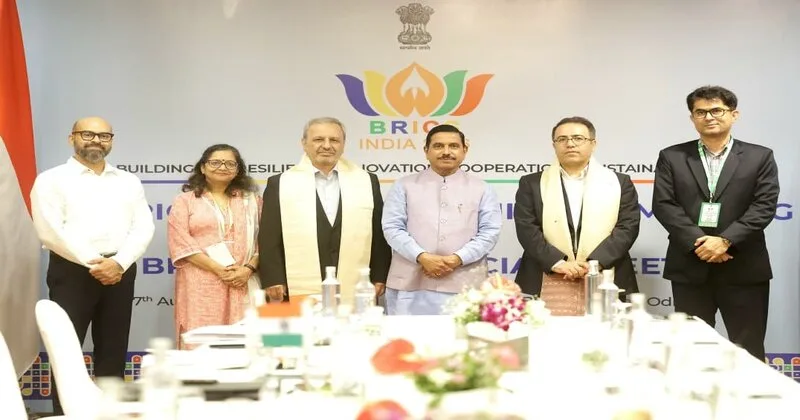
Ahead of the ministerial meeting, the Ministry of Education hosted the 3rd BRICS Senior Officials Meeting on August 5, 2026, in Bhubaneswar. The meeting brought together senior officials and delegates from BRICS member countries, including Brazil, Russia, China, South Africa, Indonesia, Iran, Ethiopia, and the United Arab Emirates.
Under India’s prestigious BRICS Chairship 2026, the Ministry of Education convened the 3rd BRICS Education Senior Officials’ Meeting in Bhubaneswar, bringing together senior officials and delegates from BRICS member countries.
The meeting held detailed deliberations on the… pic.twitter.com/UMWCvA184H
— Ministry of Education (@EduMinOfIndia) August 6, 2026
The meeting served as a preparatory platform to advance cooperation under the BRICS Education Track and to finalize key elements of the proposed Education Ministers’ Declaration.
Consensus Building on BRICS Education Ministers’ Declaration
A central focus of the Senior Officials Meeting was detailed deliberation on the draft BRICS Education Ministers’ Declaration. Representatives from member countries reviewed the proposed text, exchanged views and suggestions, and worked towards building consensus on the key elements to be presented for adoption at the ministerial meeting.
The discussions covered a wide range of priority areas, including Early Childhood Care and Education, Technical and Vocational Education and Training, collaborative research and innovation, mutual recognition of qualifications, academic leadership, and guiding principles on traditional and indigenous knowledge systems.
Delegates shared their perspectives and recommendations to ensure that the declaration reflects the collective aspirations and priorities of BRICS nations.
Strengthening Institutional Mechanisms and Knowledge Exchange
The deliberations also emphasized the importance of strengthening institutional mechanisms to support sustained collaboration. Participants highlighted the need to promote academic and research partnerships, facilitate the exchange of best practices, and enhance capacity-building initiatives.
The discussions reaffirmed a shared commitment to developing inclusive, resilient, and future-ready education systems through greater cooperation, innovation, and knowledge exchange. Member countries underscored the importance of aligning policies and leveraging collective strengths to address global education challenges.
BRICS Education Track meetings
Exploring key areas of academic excellence and innovation!
Under the BRICS chairship theme “Building for Resilience, Innovation, Cooperation, and Sustainability,” India warmly welcomes delegates to the BRICS 3rd Senior Officials’ Meeting (5th… pic.twitter.com/wFM1oZcfhW
— Ministry of Education (@EduMinOfIndia) August 6, 2026
The successful conclusion of the Senior Officials Meeting marks an important milestone in advancing the priorities of India’s BRICS Chairship 2026. It sets the stage for meaningful deliberations at the Education Ministers’ Meeting and reinforces India’s role as a key driver of global education cooperation.
As the ministerial meeting approaches, expectations are high that the outcomes will further strengthen multilateral partnerships and pave the way for transformative initiatives in education. The deliberations in Bhubaneswar are poised to contribute significantly to shaping a collaborative and innovation-driven global education landscape for the future.