London/Washington: US President Donald Trump has issued a stark warning of a strong military response against Iran if a new peace deal is not reached within ten days, reigniting global anxiety over a possible war in the Middle East. The ultimatum has placed Gulf nations on high alert and triggered intense diplomatic activity worldwide, as several countries attempt to restrain Washington’s increasingly unilateral approach.
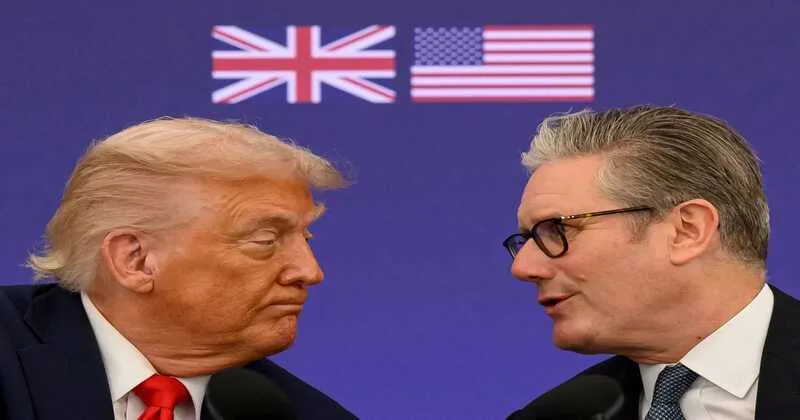
At the same time, Trump’s hardline posture is pushing key allies toward a diplomatic crisis. Britain and the United States now appear to be on a collision course after UK Prime Minister Keir Starmer firmly rejected Washington’s request to use British military facilities for potential strikes on Iran.
London says “No”, tensions rise with Washington
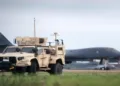
Relations between London and Washington deteriorated sharply after Starmer ruled out allowing US forces to launch attacks on Iran from British-controlled bases. Trump had reportedly sought permission to use RAF Fairford in Gloucestershire and Diego Garcia in the Indian Ocean for long-range bomber missions targeting Iran’s nuclear infrastructure. However, Britain’s Attorney General Lord Hermer advised that facilitating pre-emptive strikes would violate international law. Acting on this legal guidance, Starmer refused the request, signalling that the UK would not be drawn into an offensive campaign.
Trump reacted angrily on his Truth Social platform, accusing Britain of weakness. “Iran is a threat to Britain too. Starmer must show strength,” he wrote, warning against what he described as political hesitation. The fallout escalated further when Trump withdrew US support for Starmer’s plan to transfer sovereignty of the Chagos Archipelago to Mauritius, a move widely seen as a major diplomatic setback for the British government.
Despite declining to host US strike operations, Britain has quietly bolstered its regional military posture. Typhoon and F-35 fighter jets have been deployed to Qatar and Cyprus, intended primarily as defensive assets in case of Iranian retaliation. Meanwhile, the US has moved two aircraft carriers into the region as Trump’s ten-day deadline approaches, adding to a rapidly expanding military presence across the Gulf.
Trump’s ultimatum and the shadow of war
Speaking at the inaugural meeting of the “Board of Peace” in Washington, Trump reiterated his ultimatum to Tehran, warning of “heavy costs” if diplomacy fails. He said “bad things” would follow if Iran does not agree to meaningful concessions, adding that clarity would come within ten days. With negotiations stalled, the Pentagon has deployed additional fighter jets, submarines, and naval strike groups to the Middle East. US officials indicate that potential targets could include Iran’s nuclear facilities, ballistic missile installations, and major military bases.
Trump sought to frame his position as reluctant but resolute. “War costs a hundred times more than peace,” he told the gathering. “I’m not worried about the Nobel Prize. I don’t want to see people get killed.” He insisted his objective was to prevent bloodshed, even as he signalled readiness to authorise military action.
The president also reaffirmed a central red line that Iran must never be allowed to develop nuclear weapons. “There can be no peace in the Middle East if Iran has nuclear weapons,” Trump said, calling it a simple and non-negotiable reality.
He referenced last year’s covert US strikes on Iranian facilities, dubbed Operation Midnight Hammer, claiming they forced Tehran back to the negotiating table. Indirect talks are currently taking place in Geneva between US representatives Jared Kushner and Steve Witkoff and Iranian Foreign Minister Abbas Araghchi. White House spokeswoman Carolyn Leavitt acknowledged that while some progress has been made, “a significant gap remains between both sides.”
Iran, already weakened by sweeping economic sanctions, now faces mounting pressure from the growing US military buildup. Yet questions persist over whether Tehran is willing to accept an agreement that could limit its sovereignty and strategic autonomy.
Israel has taken the toughest position of all. Prime Minister Benjamin Netanyahu openly backed Trump’s warning, stating that an Iranian nuclear capability poses an existential threat to Israel. Netanyahu cautioned that any Iranian attack would invite unimaginable retaliation and pledged full support for US military action if diplomacy collapses.
As the countdown continues, the Middle East stands on edge. Allies are scrambling to contain the crisis, while Trump presses ahead with a strategy combining coercive diplomacy and overwhelming force. Whether this brinkmanship leads to a breakthrough or another devastating conflict may become clear within days.