Why Iran stands alone against the US-Israel axis while other Muslim states align with Washington
June 25, 2026
  • Read Ecopy
  • Circulation
  • Advertise
  • Careers
  • About Us
  • Contact Us
Android AppiPhone AppArattai
Organiser
  • ‌
  • Bharat
    • Assam
    • Bihar
    • Chhattisgarh
    • Jharkhand
    • Maharashtra
    • View All States
  • World
    • Asia
    • Europe
    • North America
    • South America
    • Africa
    • Australia
  • Editorial
  • International
  • Opinion
  • RSS @ 100
  • More
    • Op Sindoor
    • Analysis
    • Sports
    • Defence
    • Politics
    • Business
    • Economy
    • Culture
    • Special Report
    • Sci & Tech
    • Entertainment
    • G20
    • Azadi Ka Amrit Mahotsav
    • Vocal4Local
    • Web Stories
    • Education
    • Employment
    • Books
    • Interviews
    • Travel
    • Law
    • Health
    • Obituary
  • Subscribe
    • Subscribe Print Edition
    • Subscribe Ecopy
    • Read Ecopy
  • ‌
  • Bharat
    • Assam
    • Bihar
    • Chhattisgarh
    • Jharkhand
    • Maharashtra
    • View All States
  • World
    • Asia
    • Europe
    • North America
    • South America
    • Africa
    • Australia
  • Editorial
  • International
  • Opinion
  • RSS @ 100
  • More
    • Op Sindoor
    • Analysis
    • Sports
    • Defence
    • Politics
    • Business
    • Economy
    • Culture
    • Special Report
    • Sci & Tech
    • Entertainment
    • G20
    • Azadi Ka Amrit Mahotsav
    • Vocal4Local
    • Web Stories
    • Education
    • Employment
    • Books
    • Interviews
    • Travel
    • Law
    • Health
    • Obituary
  • Subscribe
    • Subscribe Print Edition
    • Subscribe Ecopy
    • Read Ecopy
Organiser
  • Home
  • Bharat
  • World
  • Operation Sindoor
  • Editorial
  • Analysis
  • Opinion
  • Culture
  • Defence
  • International Edition
  • RSS @ 100
  • Magazine
  • Read Ecopy
Home World Asia West Asia

Why Iran stands alone against the US-Israel axis while other Muslim states align with Washington

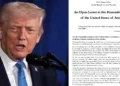
Iran today remains the only major Muslim-majority state openly confronting both the United States and Israel as a matter of state doctrine. While several Sunni Arab governments maintain strategic partnerships with Washington

WEBDESKWEBDESK
Mar 1, 2026, 08:30 am IST
in West Asia, South Asia, Asia
Follow on Google News
Why Iran Stands Alone Against Israel and the U.S. While Other Muslim States Align with Washington

Why Iran Stands Alone Against Israel and the U.S. While Other Muslim States Align with Washington

FacebookTwitterWhatsAppTelegramEmail

Before 1979, Iran under Shah Mohammad Reza Pahlavi was one of Washington’s closest partners in the Middle East and maintained quiet relations with Israel. The two countries cooperated on security and intelligence matters, reflecting Iran’s alignment with Western powers during the Cold War.

That alignment ended abruptly after the Islamic Revolution led by Ruhollah Khomeini. The new regime redefined Iran’s political identity around three central pillars: opposition to Western domination, rejection of Israel’s legitimacy, and governance rooted in Shia Islamic political theology.

As a result, hostility toward the U.S. and Israel became embedded in the structure of the state itself, rather than remaining a matter of foreign policy preference.

Religious identity and historical divide

Iran is the largest Shia Muslim-majority nation in the Middle East, while most Arab states are predominantly Sunni.

The Sunni-Shia split dates back to 632 CE, following the death of Prophet Muhammad. The dispute initially centered on leadership of the Muslim community:

1. Sunnis supported the selection of Abu Bakr, a close companion of the Prophet.
2. Shias believed leadership rightfully belonged to the Prophet’s family, specifically Ali.

Over time, this political disagreement evolved into deeper theological differences.

Today, an estimated 85-90 percent of Muslims globally are Sunni, while roughly 10-15 percent are Shia. Iran’s population is approximately 90-95 percent Shia. By contrast, most Arab states, including Saudi Arabia, Egypt, and Jordan are Sunni-majority.

The hidden Imam and political authority

A key theological concept in Twelver Shia Islam is the belief in the “Hidden Imam.” Shias believe the 12th Imam entered occultation and will one day return as the Mahdi.

This belief historically raised a political question: who should govern in the Imam’s absence?

For centuries, Shia clerics generally refrained from direct political rule, instead serving as moral and legal authorities within society. That approach shifted dramatically in 1979.

Velayat-e Faqih: Institutionalising clerical rule

Following the revolution, Khomeini introduced the doctrine of Velayat-e Faqih, or “Guardianship of the Islamic Jurist.”

Under this model, a senior Shia jurist assumes political authority to ensure Islamic justice until the return of the Hidden Imam. The system established:

1. A Supreme Leader with ultimate authority
2. Clerical oversight over elected institutions
3. A state structured explicitly around Shia jurisprudence

This framework remains unique in the Muslim world. No Sunni-majority country operates under a comparable system of clerical supremacy.

Regional Tensions: Theology meets geopolitics

Iran’s political system shapes its regional posture. Tehran positions itself as a protector of Shia communities and supports Shia-aligned movements in Iraq, Lebanon, and Yemen. It frames these policies as resistance against injustice and external domination.

Sunni monarchies, particularly Saudi Arabia, view this activism as a strategic challenge. Concerns include threats to regional influence and potential unrest among Shia minorities within their borders.

What is often described as sectarian conflict reflects a broader mix of religious identity, political legitimacy, and competition for regional influence.

Persian identity and civilisational distinction

Iran’s distinct identity adds another dimension. Unlike most Middle Eastern states, Iran is Persian rather than Arab. It speaks Farsi and draws on an imperial history that predates Islam.

Differences in ethnicity, language, historical memory, and religious orientation reinforce Tehran’s sense of separateness from Arab-majority states, compounding existing geopolitical rivalries.

Why Sunni states align with Washington

For many Sunni-majority governments, alignment with the United States is driven less by theology and more by strategic calculation.

Saudi Arabia maintains a longstanding oil-for-security partnership with Washington dating back to 1945 and prioritises regime stability. Jordan, a resource-poor state, relies heavily on U.S. economic and military assistance. Egypt, following the 1978 Camp David Accords, entered a strategic partnership with Washington and continues to receive significant military aid.

These governments are not necessarily ideologically aligned with Israel. Rather, they prioritise economic stability, security guarantees, and regime survival.

A contest for regional leadership

Beyond theology and foreign alliances lies a broader struggle for influence. Saudi Arabia presents itself as a leader of Sunni Islam, while Iran positions itself at the forefront of a “resistance” axis opposing Western and Israeli influence.

In this context, Iran’s isolation reflects a combination of revolutionary ideology, Shia political theology, Persian identity, and geopolitical rivalry, factors that together distinguish its posture from that of most other Muslim-majority states.
Topics: Ali KhameneiIslamic RepublicBenjamin NetanyahuIran strikesUS–Israel operationsDonald Trump
ShareTweetSendShareSend
✮ Subscribe Organiser YouTube Channel. ✮
✮ Join Organiser's WhatsApp channel for Nationalist views beyond the news. ✮
Previous News

Khamenei is dead, claims US-Israel; Is it end of the Islamic regime in Iran?

Next News

Massive row over TMC’s nomination of Menaka Goswami in Rajya Sabha as Maulana Razvi calls move ‘Against Islam’

Related News

Prime Minister Narendra Modi with US President Donald Trump

A Handshake, Not a Hug: Why PM Modi must assert India’s strategic red lines in his crucial meeting with Trump

Prime Minister Narendra Modi with US President Donald Trump

Hormuz Disruptions: “Several Indian civilians lost lives,” says PM Modi & expresses concern in presence of Trump

U.S. Consulate General Hyderabad Office
(Inside box- Telangana CM Revanth Reddy)

BJP Telangana questions Congress and CM Revanth Reddy over renaming a road in Hyderabad as ‘Donald Trump Avenue’

Israel Prime Minister Benjamin Netanyahu and Prime Minister Narendra Modi(File Photo)

PM Netanyahu & Israel’s Bonhomie with India: The discomfort of Congress as Bharat-Israel bond deepens

Strait of Hormuz at the centre of global energy crisis as US-Iran tensions reshape West Asia

West Asia Crisis: Why opening the Strait of Hormuz could be the key to lasting peace between Iran & US

Trump administration praises New Delhi over Bengal election win while reviving fake mediation claim on Operation Sindoor

Trump’s Diplomatic Double Game: Congratulates PM Modi on Bengal, pushing Pakistan’s narrative on ‘Operation Sindoor’

Load More

Latest News

Rahul Gandhi’s 2018 Panama Papers Remark: Congress leader apologetic in MP High Court, but political fallout continues

UP Govt orders audit of various coaching centres that are illegally constructed

Lucknow Coaching Fire: UP CM Yogi Adityanath orders statewide fire safety audit, forms special teams across districts

India’s education debate needs clarity, not noise

Scuffle at the Tiruvananthapuram Municipal Corporation on June 25

Keralam: Nine BJP councillors injured as CPM protest demanding Mayor’s resignation turns violent at Thiruvananthapuram

India's textile ambitions are being woven through local manufacturing strengths, innovation, sustainability and an expanding global trade footprint

National Textile Export Roadmap 2030: India’s strategic push for a $100 billion global textile presence

Vishva Hindu Parishad's International President Alok Kumar

Ram Mandir Donation Row: VHP’s Alok Kumar seeks fast-track trial; says culprits must be punished by court

Bhagwant Mann Government accused of promoting Christianity?

Punjab: Bhagwant Mann Government promoting Christianity? Over 15 crores allocated for Christian community buildings

Fifty years after the Emergency, India reflects on a defining test of democracy, freedom and citizen resilience

The Emergency at Fifty: Democracy’s darkest hour, India’s finest test

History of Venezuela Earthquakes: How the oil rich nation remains engulfed in natural, political, economic & crises

(Left) Bharatiya Kisan Sangha National General Secretary Mohini Mohan Mishra ji (Right) Padma Shri awardee Shrirang Devba Lad address the media on the issue of BT cotton

Bharatiya Kisan Sangh demands centre to de-notify BT Cotton varieties BG-I & BG-II amid production slump

Load More
  • Privacy
  • Terms
  • Cookie Policy
  • Refund and Cancellation
  • Delivery and Shipping

© Bharat Prakashan (Delhi) Limited.
Tech-enabled by Ananthapuri Technologies

  • Home
  • Search Organiser
  • Bharat
    • Assam
    • Bihar
    • Chhattisgarh
    • Jharkhand
    • Maharashtra
    • View All States
  • World
    • Asia
    • Africa
    • North America
    • South America
    • Europe
    • Australia
  • Editorial
  • Operation Sindoor
  • Opinion
  • Analysis
  • Defence
  • Culture
  • Sports
  • Business
  • RSS @ 100
  • Entertainment
  • More ..
    • Sci & Tech
    • Vocal4Local
    • Special Report
    • Education
    • Employment
    • Books
    • Interviews
    • Travel
    • Health
    • Politics
    • Law
    • Economy
    • Obituary
  • Subscribe Magazine
  • Read Ecopy
  • Advertise
  • Circulation
  • Careers
  • About Us
  • Contact Us
  • Policies & Terms
    • Privacy Policy
    • Cookie Policy
    • Refund and Cancellation
    • Terms of Use

© Bharat Prakashan (Delhi) Limited.
Tech-enabled by Ananthapuri Technologies