Maoists shift focus to Urban networks
June 20, 2026
  • Read Ecopy
  • Circulation
  • Advertise
  • Careers
  • About Us
  • Contact Us
Android AppiPhone AppArattai
Organiser
  • ‌
  • Bharat
    • Assam
    • Bihar
    • Chhattisgarh
    • Jharkhand
    • Maharashtra
    • View All States
  • World
    • Asia
    • Europe
    • North America
    • South America
    • Africa
    • Australia
  • Editorial
  • International
  • Opinion
  • RSS @ 100
  • More
    • Op Sindoor
    • Analysis
    • Sports
    • Defence
    • Politics
    • Business
    • Economy
    • Culture
    • Special Report
    • Sci & Tech
    • Entertainment
    • G20
    • Azadi Ka Amrit Mahotsav
    • Vocal4Local
    • Web Stories
    • Education
    • Employment
    • Books
    • Interviews
    • Travel
    • Law
    • Health
    • Obituary
  • Subscribe
    • Subscribe Print Edition
    • Subscribe Ecopy
    • Read Ecopy
  • ‌
  • Bharat
    • Assam
    • Bihar
    • Chhattisgarh
    • Jharkhand
    • Maharashtra
    • View All States
  • World
    • Asia
    • Europe
    • North America
    • South America
    • Africa
    • Australia
  • Editorial
  • International
  • Opinion
  • RSS @ 100
  • More
    • Op Sindoor
    • Analysis
    • Sports
    • Defence
    • Politics
    • Business
    • Economy
    • Culture
    • Special Report
    • Sci & Tech
    • Entertainment
    • G20
    • Azadi Ka Amrit Mahotsav
    • Vocal4Local
    • Web Stories
    • Education
    • Employment
    • Books
    • Interviews
    • Travel
    • Law
    • Health
    • Obituary
  • Subscribe
    • Subscribe Print Edition
    • Subscribe Ecopy
    • Read Ecopy
Organiser
  • Home
  • Bharat
  • World
  • Operation Sindoor
  • Editorial
  • Analysis
  • Opinion
  • Culture
  • Defence
  • International Edition
  • RSS @ 100
  • Magazine
  • Read Ecopy
Home Politics

Maoists abandon guns for influence: How India’s cities became the frontline of Red Terror

Crushed by security forces in forest strongholds, Maoists are shifting their strategy to cities, building ideological, legal and academic networks under a “United Front” model to sustain influence without overt violence

WEBDESKWEBDESK
Jan 3, 2026, 08:00 am IST
in Politics, Bharat, Chhattisgarh
Follow on Google News
Representative Image

Representative Image

FacebookTwitterWhatsAppTelegramEmail

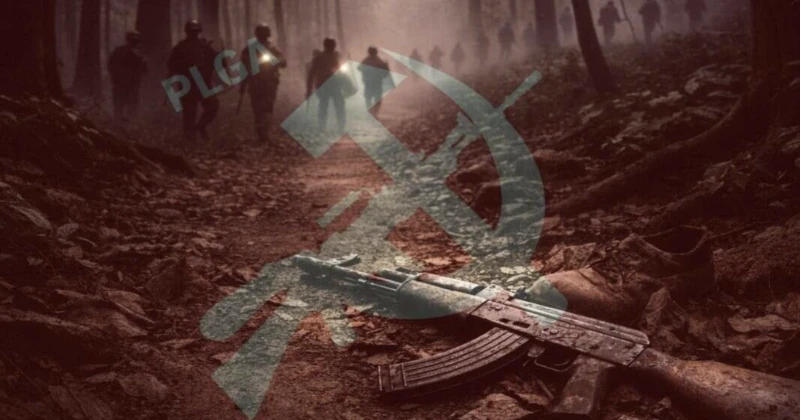
As sustained security operations dismantle Maoist strongholds in India’s jungles, the banned CPI (Maoist) has quietly recalibrated its strategy shifting the centre of gravity of its movement from forests to cities. Intelligence agencies and security officials warn that while the gun-toting insurgency has been severely weakened on the ground, Maoists are now aggressively expanding their ideological, legal and digital footprint in urban India through a sophisticated overground network.

This restructuring, detailed in Maoist internal documents, is described as the “United Front” model a multi-layered system of frontal organisations, intellectual influence, and legal activism that avoids direct violence while working to legitimise Maoist ideology, recruit sympathisers, and undermine the state from within.

Over the past decade, and especially in the last two years, relentless counter-insurgency operations have broken the backbone of Maoist terror in core areas such as Chhattisgarh, Jharkhand and Maharashtra. Top commanders have been eliminated, mass surrenders have taken place, and remaining armed cadres have either fled or been neutralised.

Security officials say the armed Maoist presence in several regions has been “virtually wiped out.” With the traditional jungle-based “party structure” collapsing, the organisation has redirected its surviving resources toward building urban units, transforming cities into what officials now describe as the Maoists’ new “strategic centre.”

While the shift appears tactical, intelligence assessments underline that cities were always central to Maoist strategy. Recruitment, funding, propaganda, legal aid and international advocacy have long been driven by urban networks operating far from conflict zones.

According to Maoist documents accessed by security agencies, the United Front operates through three distinct but interconnected layers designed to expand influence without overt violence:

1. Frontal Organisations: These groups operate under the guise of activism, focusing on sensitive issues such as human rights, labour rights, environmental protection, tribal welfare and land acquisition. While projecting themselves as civil society movements, officials say their campaigns often mirror Maoist narratives and work to delegitimise security forces and government institutions.

One cited example is the Moolvasi Bachao Manch in Bastar, which mobilised protests against a security forces camp in Silger, Sukma. Authorities later concluded that the agitation created a favourable environment for Maoists, and the organisation was subsequently banned.

2. Academic and Intellectual Ecosystem: Universities, research institutions and cultural platforms in urban centres have emerged as key channels for ideological dissemination. Seminars, panel discussions, academic papers and “alternative political discourse” are allegedly used to subtly normalise Maoist positions and portray the insurgency as a legitimate resistance movement.

Security agencies warn that this intellectual cover provides Maoists with credibility, recruits and long-term ideological sustainability especially among young students and academics.

3. Legal and Rights-Based Institutions: Legal aid groups and rights organisations form the third layer, offering legal defence, documentation of alleged human rights violations, and advocacy that aligns with Maoist objectives. Officials say this layer helps shield operatives, prolong judicial processes, and internationalise narratives critical of India’s internal security operations.

While the United Front deliberately avoids direct armed action, security officials stress that it remains an integral part of Maoist terror strategy. “This is not a parallel civil society movement,” an official said. “It is a calculated attempt to rebuild Maoism by changing its form.”

With armed capacity shrinking, the Maoists are betting on urban legitimacy, ideological influence and legal warfare to stay relevant and rebuild lost ground.

Over the past few years, the Maoist United Front’s activities have become increasingly reliant on digital media. Social media campaigns, targeted narrative creation, sharply emotional content on issues affecting youth, propaganda videos, and posts presenting alternative histories are all aimed at influencing public opinion and strengthening anti-democratic institutional narratives on sensitive issues.

Also Read: Magh Mela 2026: UP CM Yogi Adityanath orders strict ban on VIP protocol during major bathing days

The unregulated nature of the digital space allows Maoists to communicate, spread fear, or mobilise support without revealing their identities.

According to experts, the line between legitimate social work and a hidden political agenda is often very thin. The Urban United Front model takes advantage of this. While the work appears to be in the name of social justice, its ideological influence actually propagates the Maoist agenda.
Topics: CPIMRed terrorMoolvasi Bachao ManchMaoist United FrontUrban United Front model
ShareTweetSendShareSend
✮ Subscribe Organiser YouTube Channel. ✮
✮ Join Organiser's WhatsApp channel for Nationalist views beyond the news. ✮
Previous News

Odisha: Queue-based ‘Dhadi Darshan’ system at Puri Srimandir put on hold after technical glitch

Next News

Uttar Pradesh emerges as India’s sugar leader, surpasses Maharashtra in the current season

Related News

Former Keralam Chief Minister Pinarayi Vijayan, CPI(M) politburo Prakash Karat, Biman Bose, CPI General Secretary D. Raja and other leaders during the 24th party congress of CPI (M), in Madurai, Tamil Nadu in 2025.

Keralam 2026 Verdict Rattles CPI(M): Vijayan survives politburo revolt as national leadership edges towards explosion

Congress-led UDF’s sweeping victory in Keralam marks the end of communist rule in India after nearly half a century

Keralam Assembly Elections 2026: Collapse of a political myth

Keralam: CPM Leader P Jayarajan secretly visits Kodungallur Temple amid Party Electoral Setback, Skips filming

Tamil Nadu Governor Rajendra Vishwanath Arlekar CM Joseph Vijay Chief Minister.

Joseph Vijay sworn in as Tamil Nadu CM, ends decades of DMK-AIADMK dominance

Rajeev Chandrasekhar, V D Satheesan, Pinarayi Vijayan

Kerala Verdict: LDF Loses 13% Vote Share as UDF Touches 45.71%, NDA Reaches 14.43%

After Political Chaos, Vijay’s TVK Crosses Majority Mark with Left and VCK Backing

Tamil Nadu: Governor meets Vijay for third time as TVK finally shows numbers to form the government

Load More

Latest News

Screen grab of the viral video of Ayaaz Madare and the victim

Nagpur Conversion Case: Absconding Maulana involved in rape of Air Force officer’s wife arrested

Telangana: Secunderabad Cantonment renames 21 British-era roads after Indian military heroes and national icons

Keralam former CM Pinarayi Vijayan - Veena Vijayan (Left to Right)

Keralam CMRL Case: ED examines bank lockers of former CM Pinarayi Vijayan’s daughter Veena

A Constitutional Lesson for Priyank Kharge

Government employess of Balochistan begin indefinite strike against Pakistan

Balochistan on Boil: Govt employees start indefinite strike against Pakistan; 400 LPG bowsers stranded in Tuftan

Uttar Pradesh: Yogi govt unveils farm-to-consumer model to deliver chemical-free food via ‘Poison-Free Food’ mission

Hindu activists booked by Bhatkal police for attempting to save a Hindu girl who was being kidnapped by a muslim man

Karnataka: Hindu activists booked for rescuing girl being taken by Muslim man; Bhatkal police action sparks criticism

NTA Changes Prayagraj Exam Venue Ahead of NEET UG 2026 Re-Test, Releases New Admit Cards

NEET UG 2026 Re-Test: NTA moves Prayagraj centre, launches WhatsApp alerts and anti-fraud advisory

Security forces have arrested Aizaz Ahmad Khanday, Arbaz Ahmad Mir, and Nasir Ahmad Dar in Shopian after recovering explosive substances and Hizbul Mujahideen posters from their possession (Image Source: X)

J&K: High grade explosive PEK seized in Shopian from 3 OGWs working for HM; 2 held in Kishtwar for terror links

PM Modi’s Gift to Global Leaders: Kalamkari Mahabharat, Charaka Samhita reflects India’s timeless artistic heritage

Load More
  • Privacy
  • Terms
  • Cookie Policy
  • Refund and Cancellation
  • Delivery and Shipping

© Bharat Prakashan (Delhi) Limited.
Tech-enabled by Ananthapuri Technologies

  • Home
  • Search Organiser
  • Bharat
    • Assam
    • Bihar
    • Chhattisgarh
    • Jharkhand
    • Maharashtra
    • View All States
  • World
    • Asia
    • Africa
    • North America
    • South America
    • Europe
    • Australia
  • Editorial
  • Operation Sindoor
  • Opinion
  • Analysis
  • Defence
  • Culture
  • Sports
  • Business
  • RSS @ 100
  • Entertainment
  • More ..
    • Sci & Tech
    • Vocal4Local
    • Special Report
    • Education
    • Employment
    • Books
    • Interviews
    • Travel
    • Health
    • Politics
    • Law
    • Economy
    • Obituary
  • Subscribe Magazine
  • Read Ecopy
  • Advertise
  • Circulation
  • Careers
  • About Us
  • Contact Us
  • Policies & Terms
    • Privacy Policy
    • Cookie Policy
    • Refund and Cancellation
    • Terms of Use

© Bharat Prakashan (Delhi) Limited.
Tech-enabled by Ananthapuri Technologies